Understanding Art Movements & Styles
The story of art is not a linear progression, but rather a vibrant conversation across centuries – a dialogue between artists responding to their times, challenging conventions, and forging new paths of expression. To truly appreciate this rich tapestry, it’s essential to understand the concept of an art movement: a collective tendency or style driven by shared philosophies and goals. These movements aren't simply about aesthetics; they reflect broader cultural shifts, technological advancements, and intellectual currents. Before the 19th century, artistic styles often evolved gradually within established traditions, but with the rise of modernity came a desire for radical innovation, leading to a rapid succession of “avant-garde” movements each seeking to break from the past.
The very notion of ‘style’ itself is crucial. It's not merely what an artwork *depicts*, but how it depicts it – the distinctive manner that allows us to group works together, recognizing shared characteristics in technique, form, and subject matter. Style can be individual, reflecting the unique vision of a single artist, or collective, embodying the spirit of a particular period or school. Consider the dramatic contrasts between the meticulous realism of Renaissance masters like Leonardo da Vinci and the expressive brushwork of Impressionists such as Claude Monet; both are undeniably skillful, yet their stylistic choices reveal fundamentally different approaches to representing the world.
A Timeline of Western Art Periods: From Ancient to Modern
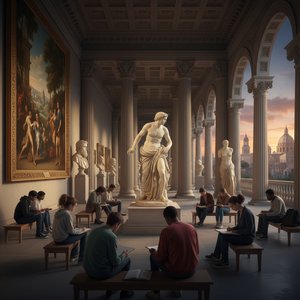
Tracing the evolution of Western art is a journey through millennia. It begins in antiquity with the monumental sculptures and architectural marvels of ancient Greece and Rome – civilizations that valued harmony, proportion, and idealized beauty. This classical tradition profoundly influenced subsequent periods, experiencing revivals during the Renaissance and Neoclassical eras. The fall of the Roman Empire ushered in the Medieval period, characterized by religious iconography and symbolic representation, as seen in Byzantine mosaics and Gothic cathedrals. The focus shifted from earthly realism to spiritual expression.
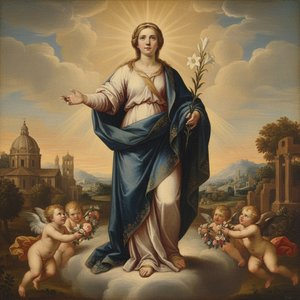
The 14th century witnessed the dawn of the Renaissance – a “rebirth” of classical ideals coupled with a renewed interest in humanism and scientific observation. Artists like Michelangelo and Raphael pushed the boundaries of anatomical accuracy, perspective, and composition. Following the Renaissance came Baroque, a period of dramatic intensity, opulent detail, and emotional fervor exemplified by artists such as Caravaggio and Bernini. The 18th century saw the elegance and restraint of Rococo give way to the rational order of Neoclassicism, inspired by archaeological discoveries in Pompeii and Herculaneum.
The 19th and 20th centuries were a period of unprecedented artistic experimentation. Romanticism celebrated emotion, imagination, and individualism; Realism sought to depict everyday life with unflinching honesty; Impressionism captured fleeting moments of light and color; Post-Impressionism explored subjective experience and formal structure; and movements like Cubism, Surrealism, and Abstract Expressionism shattered traditional conventions altogether, paving the way for contemporary art.
Key Characteristics of Major Artistic Eras
Each artistic era possesses a unique set of defining characteristics. Renaissance art, for instance, is marked by its emphasis on perspective, anatomical accuracy, and classical mythology. Baroque art, in contrast, is characterized by dramatic lighting, dynamic compositions, and intense emotionality. Impressionism’s hallmark is the use of broken color and loose brushstrokes to capture the ephemeral effects of light and atmosphere.
Consider these examples:
- Renaissance: Linear perspective, chiaroscuro (light-dark contrast), idealized human forms, classical themes.
- Baroque: Dramatic compositions, rich colors, ornate details, emotional intensity.
- Impressionism: Broken color, loose brushstrokes, emphasis on light and atmosphere, everyday subjects.
- Cubism: Fragmentation of form, multiple perspectives, geometric shapes, muted colors.
- Surrealism: Dreamlike imagery, illogical juxtapositions, exploration of the subconscious mind.
Understanding these characteristics isn’t about memorizing a checklist; it's about developing an eye for recognizing patterns and appreciating the nuances that distinguish one era from another. It allows you to move beyond simply *seeing* a painting to truly *understanding* its context and meaning.
Recognizing Style: How to Identify an Artist or Period
Developing the ability to recognize artistic styles is akin to learning a visual language. It requires careful observation, practice, and a willingness to immerse yourself in art history. Start by focusing on key artists within each movement – masters whose work embodies its defining characteristics. Study their techniques, compositions, and subject matter.
Look for clues: Is the brushwork smooth and blended, or loose and expressive? Are colors vibrant and saturated, or muted and subdued? Is there a strong emphasis on realism, or is the work more abstract and symbolic? Does the composition feel balanced and harmonious, or dynamic and unsettling?
Don’t be afraid to compare and contrast works from different periods. This will help you sharpen your eye and identify subtle differences in style. Museum visits, art books, and online resources are invaluable tools for this process. Remember that artists often draw inspiration from earlier traditions, so recognizing stylistic influences can provide valuable insights into their work.
Resources for Further Exploration
The journey of art historical discovery is a lifelong pursuit. Numerous resources are available to deepen your understanding and appreciation. Museums around the world offer extensive collections and educational programs. Art books and scholarly articles provide in-depth analysis and contextual information. Online databases, such as those offered by , provide access to high-quality reproductions and detailed artist biographies.
Embrace the opportunity to explore different styles, periods, and artists. Allow yourself to be moved by the beauty, power, and complexity of art – and remember that every artwork tells a story waiting to be discovered.