The Turbulent Life and Artistic Origins of Michelangelo Merisi da Caravaggio
 Wikipedia: Caravaggio
Michelangelo Merisi da Caravaggio (also Michele Angelo Merigi or Amerighi da Caravaggio; 29 September 1571 – 18 July 1610), known mononymously as Caravaggio, was an Italian painter active in Rome for most of his artistic life. During the final four y...
Michelangelo Merisi, known universally as Caravaggio, remains one of the most compelling and controversial figures in art history. Born in Milan in 1571, his life was a whirlwind of artistic genius intertwined with violence, scandal, and an unrelenting pursuit of realism that shattered established conventions. Unlike many artists of his time who benefited from extensive patronage early in their careers, Caravaggio’s path to recognition was forged through sheer talent and a willingness to challenge the status quo. His early training under Simone Peterzano, a pupil of Titian, provided him with a solid foundation in technique, but it was his move to Rome around 1592 that truly ignited his revolutionary style. The Lombard tradition he inherited – valuing direct observation and naturalistic detail – would become the cornerstone of his artistic vision, setting him apart from the prevailing Mannerist aesthetic.
The Milanese art scene, though rich in its own right, couldn’t contain Caravaggio's burgeoning ambition. Rome, a vibrant hub of religious fervor and artistic competition, proved to be both a crucible and a catalyst. He initially struggled, working for various workshops and facing financial hardship. However, his relentless dedication to capturing the raw essence of life – the grit, the emotion, the very *humanity* of his subjects – began to attract attention. This wasn’t merely technical skill; it was an almost visceral need to portray truth, even when that truth was unflattering or unsettling. His early commissions were modest, but they served as a proving ground for the techniques and themes that would define his career.
Tenebrism: Mastering Light and Shadow for Dramatic Effect
Tenebrism, from Italian tenebroso ('dark, gloomy, mysterious'), also occasionally called dramatic illumination, is a style of painting using especially pronounced chiaroscuro, where there are violent contrasts of light and dark, and where darkness be...
Central to understanding Caravaggio’s impact is his groundbreaking use of tenebrism, an extreme form of chiaroscuro. While not entirely inventing the technique – artists like Tintoretto had employed dramatic lighting effects before him – Caravaggio elevated it to a new level, transforming it into a powerful narrative tool. Tenebrism isn’t simply about contrasting light and dark; it's about using darkness as an active force, a void from which figures emerge with startling intensity. This wasn’t merely aesthetic preference; it was a deliberate choice to heighten emotional impact and draw the viewer directly into the scene.
Consider his paintings of religious subjects. Rather than depicting saints bathed in ethereal light, Caravaggio presented them as ordinary people – often models from the streets of Rome – illuminated by a harsh, almost theatrical spotlight. This stark contrast not only created a sense of drama but also imbued the scenes with an unprecedented level of realism and immediacy. The darkness wasn’t just *around* the figures; it felt like it was pressing in on them, mirroring their struggles and vulnerabilities. This technique served to make biblical narratives more relatable, grounding them in the tangible world and forcing viewers to confront the human cost of faith.
Realism Redefined: Caravaggio's Radical Departure from Renaissance Conventions
Caravaggio’s commitment to realism was nothing short of revolutionary. In an era where idealized beauty and allegorical representations were the norm, he dared to paint his subjects as they were – flawed, weathered, and undeniably human. He rejected the polished surfaces and graceful poses of High Renaissance masters like Raphael and Leonardo, opting instead for a directness that shocked and captivated audiences. His models weren’t mythical figures; they were laborers, prostitutes, and everyday people plucked from the streets of Rome.
This wasn't simply about artistic rebellion; it was a profound philosophical statement. Caravaggio believed that truth resided in the tangible world, in the imperfections and vulnerabilities of human existence. He meticulously studied anatomy, light, and shadow to capture every detail with astonishing accuracy. His paintings weren’t meant to be idealized representations of religious figures or historical events; they were meant to be visceral experiences, forcing viewers to confront the raw realities of life and death. This unflinching realism often led to criticism – some found his work vulgar or disrespectful – but it also earned him a devoted following who recognized the power and authenticity of his vision.
Religious Iconoclasm and the Power of Emotional Narrative in Caravaggio’s Paintings
 jusepe martínez
Explore the dramatic Baroque paintings of Jusepe Martínez, a Spanish master known for religious scenes & tenebrism. Discover his legacy at WikiArt!
Caravaggio's approach to religious painting was particularly controversial. He depicted saints not as ethereal beings, but as common people, often with dirt under their fingernails and expressions of intense emotion. This challenged traditional iconography and sparked debate about the appropriate way to represent sacred subjects. His The Calling of Saint Matthew, for example, depicts a humble tax collector being summoned by Christ in a dimly lit tavern – a far cry from the majestic scenes favored by his contemporaries.
However, this iconoclasm wasn’t about disrespect; it was about accessibility. Caravaggio sought to make religious narratives more relatable and emotionally resonant for ordinary people. By portraying saints as flawed individuals, he emphasized their humanity and underscored the universality of faith. His paintings weren't simply depictions of biblical events; they were explorations of human psychology, capturing moments of doubt, fear, and redemption with breathtaking intensity. The emotional power of his work stemmed from this ability to connect with viewers on a deeply personal level.
Caravaggio’s Legacy: Influence on Baroque Art and Beyond
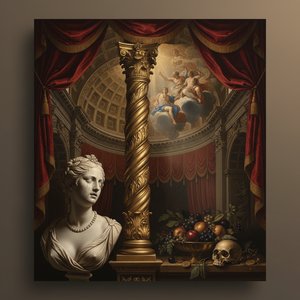 The Dramatic Flourish of Baroque Art: History, Characteristics & Enduring Influence
Explore the dramatic world of Baroque art! Discover its history, defining characteristics, and lasting influence on painting, sculpture & architecture. A comprehensive guide for art lovers.
Despite his tumultuous life and premature death in 1610, Caravaggio left an indelible mark on the history of art. His influence extended far beyond Italy, inspiring generations of artists across Europe – a group collectively known as the “Caravaggisti.” Artists like Artemisia Gentileschi, Jusepe de Ribera, and Georges de la Tour adopted his techniques and themes, further popularizing tenebrism and realism.
The impact of Caravaggio’s style can be seen in the broader development of Baroque art. While Baroque painting encompassed a wide range of styles, it shared Caravaggio’s emphasis on drama, emotion, and intense visual impact. His legacy wasn't limited to painting; his techniques also influenced sculpture and architecture. Even today, artists continue to draw inspiration from his work, recognizing the power of his vision and the enduring relevance of his themes. His commitment to portraying truth, even in its most unsettling forms, continues to resonate with audiences centuries later.
Key Works & Lasting Impact: Exploring Masterpieces like 'The Calling of Saint Matthew' and 'David with the Head of Goliath'
Two works exemplify Caravaggio’s genius: The Calling of Saint Matthew (1599-1600) and David with the Head of Goliath (c. 1610). The Calling of Saint Matthew, housed in the Contarelli Chapel, Rome, is a pivotal work that showcases his mastery of tenebrism and his ability to transform an ordinary scene into a moment of profound spiritual significance. The dramatic lighting, the realistic depiction of the tavern setting, and the psychological intensity of the figures all contribute to its enduring power.
David with the Head of Goliath, painted shortly before his death, is a haunting self-portrait disguised as a biblical scene. The painting’s somber mood, the unflinching depiction of violence, and the artist's own likeness in the face of Goliath suggest a profound sense of guilt and remorse. These works, along with countless others, demonstrate Caravaggio’s unparalleled ability to capture the complexities of human emotion and his unwavering commitment to portraying truth, even when it was uncomfortable or unsettling. His paintings are not merely historical artifacts; they are windows into the soul, offering a glimpse into the turbulent life and artistic genius of one of history's most remarkable artists.