The Foundation of Precision: Selecting Your Graphite Grades and Essential Tools
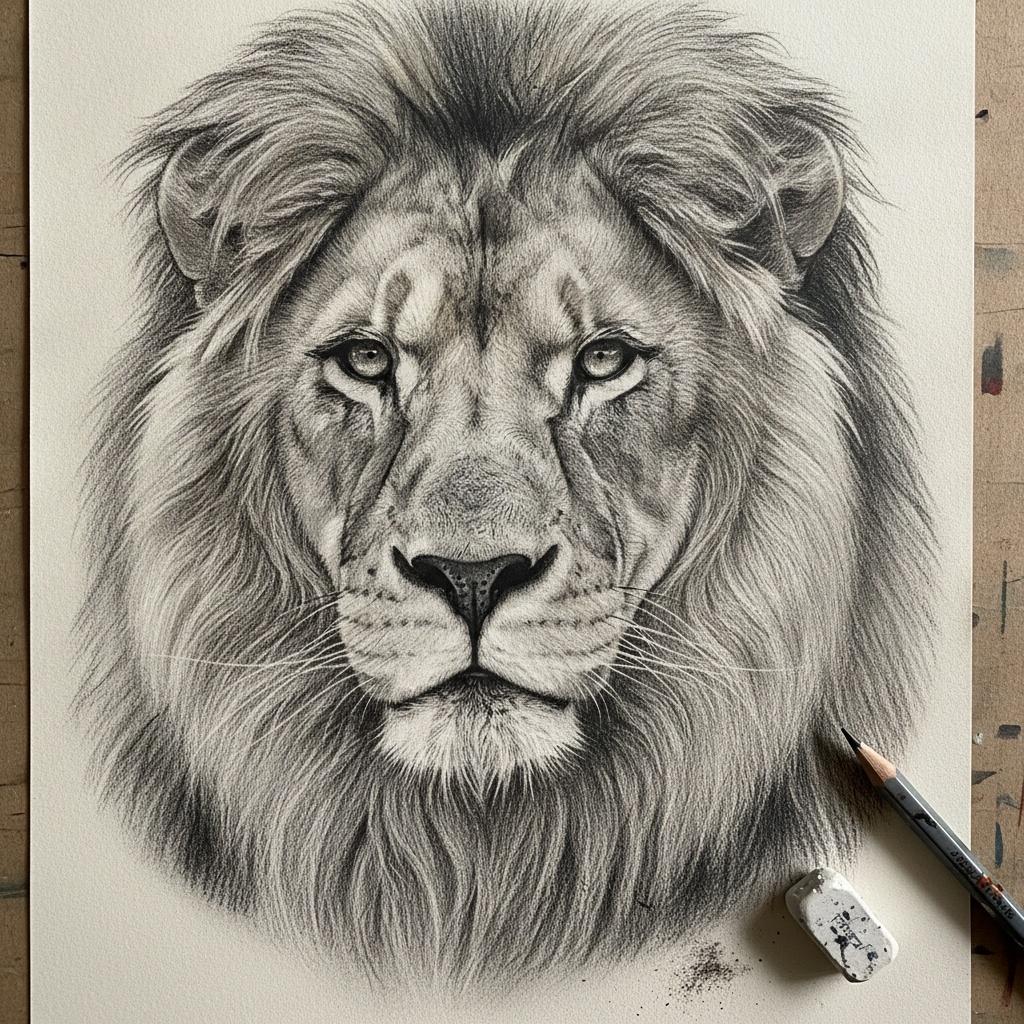
Every great masterpiece begins not with a stroke, but with a deliberate choice. For the aspiring artist, understanding the alchemy of graphite is the first step toward true mastery. Graphite is far more than mere carbon; it is a spectrum of possibilities ranging from the ethereal lightness of a 9H pencil to the profound, velvety darkness of a 9B. To navigate this spectrum, one must view pencils not as interchangeable sticks, but as specialized instruments of light and shadow. The hard grades, characterized by their high mineral content, offer the surgical precision required for fine architectural lines and initial structural mapping. Conversely, the soft grades possess a buttery consistency that allows for the sweeping, atmospheric transitions essential for rendering skin or storm clouds.
Beyond the pencils themselves, the supporting cast of tools dictates the success of your execution. A true professional understands that texture is often born from the interaction between lead and substrate. Selecting a paper with a subtle tooth—a slight graininess—is vital; without this microscopic landscape, the graphite has no anchor, resulting in flat, sliding marks that lack character. Furthermore, the integration of blending stumps, kneaded erasers, and chamois cloths allows the artist to manipulate the medium beyond the tip of the pencil. The kneaded eraser, in particular, acts as a sculptural tool, capable of lifting pigment to reveal highlights without disturbing the underlying paper fibers. By curating a toolkit based on technical intent rather than convenience, you lay the groundwork for an artwork that possesses both structural integrity and tactile soul.
Mastering Value Scales: Techniques for Creating Dimensional Depth and Contrast
The illusion of three-dimensionality on a two-dimensional plane is a feat of light management. To master graphite is to become a conductor of value. The concept of the value scale—the graduated transition from pure white to absolute black—is the heartbeat of realistic drawing. Without a disciplined approach to contrast, even the most detailed sketch will appear lifeless and "grayed out." The secret lies in the courage to embrace deep, rich blacks. Many students fall into the trap of mid-tone hesitation, fearing that dark shadows will overwhelm the composition. Yet, it is precisely the presence of these profound shadows that pushes the lighter elements forward, creating the optical tension necessary for depth.
Achiment of this depth requires a methodical approach to layering. Rather than applying heavy pressure immediately, which can crush the paper's tooth and create a shiny, unnatural sheen, one should build value through successive, light applications. This technique allows for a seamless gradient where the eye cannot discern where one tone ends and another begins. By carefully mapping out the core shadows, reflected lights, and occlusion shadows, you begin to sculpt the subject. When the transition from the brightest highlight to the deepest crevice is handled with rhythmic precision, the subject ceases to be a flat image and begins to occupy space, breathing with a palpable sense of volume and presence.
The Art of Texture: Mimicking Organic Surfaces through Layering and Pressure Control
Texture is the sensory language of graphite art; it is what allows a viewer to almost feel the roughness of bark or the silkiness of a petal through sight alone. Achieving this requires an intimate understanding of pressure control and the strategic use of layering. To replicate organic complexity, one must move away from uniform shading and toward a more varied, gestural application of the medium. For instance, creating the rugged, weathered surface of stone involves broken, irregular strokes and the deliberate use of hard pencils to scratch into the paper's grain, interrupted by soft, smudged areas that suggest recessed crevices.
In contrast, rendering smooth, reflective surfaces like polished metal or human skin demands an almost invisible hand. Here, the artist employs extremely light, circular motions, often using a blending tool to erase the boundaries of individual strokes. The challenge lies in the subtle interplay of micro-textures—the tiny pores, the fine hairs, or the slight imperfections that lend authenticity to a subject. By layering different grades of graphite, you can build a "topography" of texture. A soft 4B layer might provide the base warmth, while a sharp 2H pencil adds the minute, high-frequency details. This rhythmic oscillation between broad, atmospheric blending and sharp, tactile precision is what breathes life into the inanimate.
Advanced Rendering: Achieving Hyper-Realistic Details and Fine Line Work
As an artist moves toward hyper-realism, the focus shifts from the macro to the micro. This stage of development demands unparalleled patience and a microscopic eye for detail. The hallmark of advanced rendering is the ability to capture the "unseen" details—the tiny specular highlights in an eye, the minute cracks in a dried leaf, or the individual threads of a fabric weave. This level of precision requires the use of the sharpest possible graphite points, often maintained through constant sharpening with fine-grain sandpaper.
The difficulty in hyper-realistic rendering is maintaining the balance between detail and composition. There is a danger in becoming so lost in the minutiae that the overall form loses its cohesion. To avoid this, one must treat every fine line as a component of a larger structural truth. Every hair or wrinkle must follow the underlying anatomy of the subject. Using a combination of extremely hard pencils for the finest, most delicate lines and soft pencils to anchor those details in shadow creates a sense of hyper-clarity. It is in this meticulous execution—where the artist’s hand becomes nearly invisible—that the boundary between drawing and reality begins to dissolve.
Composition and Light: Integrating Shadows and Highlights for Structural Integrity
A technically perfect drawing can still fail if it lacks compositional light. Light is not merely an external force hitting a subject; it is the primary architect of form. In graphite, light is represented by the untouched white of the paper, while shadow is the accumulation of carbon. The strategic placement of these two extremes dictates the "flow" of the viewer's eye. A well-composed drawing uses highlights to lead the gaze toward the focal point, while shadows are used to frame the subject and provide a sense of grounding within the environment.
One must consider the directionality of the light source with scientific rigor. Is it a harsh, direct midday sun that creates sharp, high-contrast edges, or is it a soft, diffused light from a north-facing window that produces gentle, wrapping shadows? By understanding how light wraps around curved surfaces—creating "core shadows" and "reflected lights"—the artist can reinforce the structural integrity of the subject. Shadows should never be thought of as mere dark spots; they are volumes of space. When you treat shadow as a physical presence that occupies room, your compositions gain a monumental quality, transforming a simple sketch into a profound exploration of light and form.
Preservation and Presentation: Protecting Your Graphite Masterpieces for Longevity
The culmination of all your technical skill deserves a dignified and permanent home. Because graphite is a surface-level medium, it is inherently susceptible to smudging and environmental degradation. For the serious student and collector alike, preservation is an essential final step in the creative process. The first line of defense is the use of fixatives. A high-quality, archival-grade workable or final fixative can "lock" the graphite particles into the paper fibers, preventing the dreaded smudging that can ruin months of work. However, one must apply these with extreme care, as excessive moisture can darken the tones and alter the intended value scale.
Presentation is equally vital to the artwork's impact. Framing a graphite drawing requires an understanding of archival standards; using acid-free matting is non-negotiable to prevent the paper from yellowing or becoming brittle over time. Furthermore, creating a small air gap between the artwork and the glazing (glass or acrylic) prevents moisture buildup and direct contact, which could lead to smearing. When presented in a professional frame with proper lighting, your graphite work is transformed from a mere study into a museum-quality object of art. By respecting the chemistry and the physical needs of your medium, you ensure that your creative legacy remains as vibrant and profound for future generations as it was the moment the pencil left the paper.
At OriginalUniqueArt.com, we celebrate the enduring power of fine art and the meticulous skill required to create it. Whether through our professional reproductions of the Old Masters or our bespoke custom portrait services, we are dedicated to preserving the soul of human creativity. Our platform connects enthusiasts with master artists who hold the highest academic standards, ensuring that every stroke—whether in oil or graphite—is a testament to true craftsmanship.