The Roots of Romantic Rebellion: Füssli’s Early Life & Influences
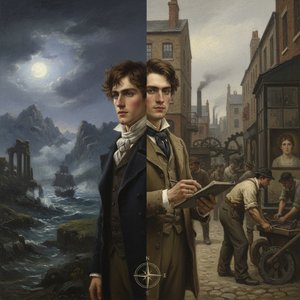
Johann Heinrich Füssli, known to the English-speaking world as Henry Fuseli, occupies a unique and often unsettling position in art history. He wasn't merely *of* the Romantic movement; he helped ignite it. Born in 1741 near Zurich, Switzerland, his path was far from conventional for an artist of his era. His father, Johann Rudolf Füssli, was a painter and engraver himself – though primarily known for elaborate firework designs and early art encyclopedias – and instilled in young Heinrich a rigorous artistic foundation. However, it was the intellectual ferment of 18th-century Europe, rather than familial tradition, that truly shaped his rebellious spirit. A brief foray into law proved stifling, quickly abandoned for the allure of literature, history, and, crucially, the burgeoning world of dramatic theatre. This early exposure to storytelling would become a defining characteristic of his work.
The Swiss landscape itself – its imposing mountains, shadowed valleys, and sense of untamed power – undoubtedly left an imprint on Füssli’s sensibility. But it was his travels to England in 1762 that proved transformative. He encountered not only a thriving artistic scene but also the works of Shakespeare, which would become a lifelong obsession. The raw emotion, psychological complexity, and supernatural elements within the plays resonated deeply with a young artist already questioning the Enlightenment’s emphasis on reason and order. This period marked a crucial shift away from the prevailing Neoclassical style towards something far more visceral and emotionally charged.
Shakespearean Visions & The Power of Dramatic Narrative
Füssli didn't simply illustrate Shakespeare; he *embodied* it. His paintings weren’t mere depictions of scenes, but rather explorations of the psychological states of his characters – their inner turmoil, their passions, and their descent into madness. He moved beyond straightforward representation, focusing instead on moments of intense drama and emotional climax. Consider his series of paintings inspired by A Midsummer Night's Dream. These aren’t idyllic portrayals of fairies; they are unsettling visions filled with ambiguous sexuality, lurking shadows, and a palpable sense of unease. He captured the play’s darker undercurrents, its exploration of desire, jealousy, and the irrational forces at play within the human psyche.
This fascination wasn't limited to Shakespeare. Füssli also drew inspiration from Milton’s Paradise Lost, creating powerful images that depicted the fall of Lucifer with a dramatic intensity rarely seen before. His ability to translate literary narratives into compelling visual form stemmed from his deep understanding of theatrical staging and character development. He understood how to build tension, create atmosphere, and evoke emotion through composition, color, and gesture. His paintings are essentially frozen moments of high drama, inviting the viewer to become a participant in the unfolding narrative.
‘The Nightmare’ & the Exploration of the Subconscious Mind
Perhaps Füssli's most enduring legacy is his 1781 painting, “The Nightmare.” This iconic work transcends its historical context to become a universal symbol of fear, anxiety, and the power of the subconscious. The image – a woman asleep in a vulnerable pose, crushed by a demonic incubus and haunted by a spectral horse peering through the window – is instantly recognizable and profoundly disturbing. It’s not simply a depiction of a bad dream; it's an exploration of the dark recesses of the human mind.
The painting was revolutionary for its time, rejecting the idealized forms and rational compositions favored by Neoclassical artists. Instead, Füssli embraced a raw, emotional intensity that foreshadowed the Symbolist movement. The incubus itself is not presented as a purely evil entity but rather as a manifestation of repressed desires and anxieties. The horse, often interpreted as representing death or the forces of fate, adds another layer of complexity to the scene. “The Nightmare” tapped into a growing fascination with the irrational, the supernatural, and the hidden depths of human psychology – themes that would become central to Romantic art and literature.
Füssli's Portraiture: Capturing Psychological Depth and Neoclassical Style
While celebrated for his fantastical scenes, Füssli was also a skilled portraitist. His portraits, however, were far from conventional. He wasn’t interested in simply capturing physical likeness; he sought to reveal the inner character of his sitters – their strengths, weaknesses, and hidden emotions. His “Portrait of a Young Woman” (1781), for example, is not merely a depiction of beauty but rather an exploration of vulnerability and introspection. The woman’s gaze is direct and unsettling, hinting at a complex inner life.
Interestingly, Füssli often employed Neoclassical techniques in his portraiture – precise draftsmanship, balanced compositions, and a restrained palette. However, he infused these traditional forms with a psychological depth that set him apart from his contemporaries. He used subtle gestures, expressive eyes, and carefully chosen props to convey the sitter’s personality and emotional state. This blending of Neoclassical style with Romantic sensibility is a hallmark of his work.
A Lasting Legacy: Füssli’s Impact on Symbolism and Modern Art
Johann Heinrich Füssli's influence extended far beyond his own lifetime. He paved the way for subsequent generations of artists who dared to explore the darker aspects of human experience, challenge conventional norms, and embrace the power of imagination. His work directly inspired William Blake, whose mystical visions share a similar intensity and emotional charge. The Symbolist movement, with its emphasis on dreams, mythology, and psychological symbolism, owes a significant debt to Füssli’s pioneering explorations.
Even today, his paintings continue to resonate with audiences captivated by their haunting beauty and unsettling power. He remains a pivotal figure in the transition from the Enlightenment to Romanticism, bridging the gap between reason and emotion, order and chaos. His exploration of the subconscious mind foreshadowed the psychological insights of Freud and Jung, solidifying his place as a visionary artist whose work continues to provoke and inspire.
Collecting Füssli Today: Finding Your Place in His Haunting World
Acquiring a work by Johann Heinrich Füssli is an investment in art history – a chance to own a piece of the Romantic revolution. While original paintings are rare and command significant prices, high-quality reproductions offer an accessible way to experience his captivating imagery. OriginalUniqueArt.com specializes in handmade oil paintings meticulously recreated by skilled artists, ensuring that the drama and emotional intensity of Füssli’s work are faithfully preserved. Whether you're drawn to the iconic “The Nightmare,” his Shakespearean scenes, or his compelling portraits, a Füssli reproduction can transform your space into a haven for contemplation and artistic expression.
Consider exploring different sizes and framing options to complement your décor. A custom reproduction allows you to tailor the artwork to your specific preferences, creating a truly unique piece that reflects your personal taste. For those interested in delving deeper into his world, OriginalUniqueArt.com also offers art consultation services to help you select the perfect piece for your collection.