Introduction: Benozzo Gozzoli and the Florentine Renaissance Context
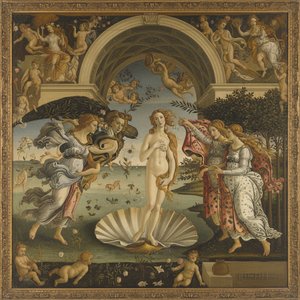
Renaissance art (1350 – 1620) is the painting, sculpture, and decorative arts of the period of European history known as the Renaissance, which emerged as a distinct style in Italy in about AD 1400, in parallel with developments which occurred in phi...
The mid-15th century in Florence was a crucible of artistic innovation, a period where the weight of medieval tradition began to yield to the burgeoning ideals of humanism and empirical observation. Within this dynamic milieu emerged Benozzo Gozzoli (c. 1420-1497), a painter whose work, though often overshadowed by contemporaries like Fra Angelico and Botticelli, represents a fascinating bridge between the International Gothic style and the full flowering of Renaissance naturalism. Gozzoli wasn’t necessarily a revolutionary in the same vein as Masaccio, but his unique contribution lay in his ability to synthesize existing artistic currents with an increasingly sophisticated attention to detail, narrative complexity, and—perhaps most strikingly—the depiction of contemporary life within sacred subjects. His paintings offer not just religious devotion, but a vibrant glimpse into the world of Medici Florence, populated by recognizable faces and imbued with a sense of worldly splendor.
Fra Angelico’s Influence & Early Works: Shaping a Unique Style
 Shrine of the Visitation
Explore Benozzo Gozzoli’s ‘Shrine of the Visitation,’ a vibrant Renaissance fresco showcasing procession scenes & classical elements. Discover its layered detail & symbolic narrative.
Gozzoli's artistic journey began as a pupil in the workshop of Fra Angelico, a master renowned for his ethereal frescoes and deeply spiritual compositions. Angelico instilled in Gozzoli a reverence for line, clarity of form, and a delicate use of color—qualities that would remain hallmarks of his style throughout his career. However, while Angelico prioritized otherworldly beauty and devotional intensity, Gozzoli demonstrated an early inclination towards more earthly concerns. His initial collaborations with Lorenzo and Vittorio Ghiberti on the third bronze door of the Florence Baptistery exposed him to a broader range of artistic influences, fostering a growing interest in narrative detail and decorative richness. Works like *The Raising of Lazarus* reveal this developing sensibility; while retaining Angelico’s grace, Gozzoli introduces a greater sense of spatial depth and a more pronounced focus on individual characterization.
The Magi Chapel Cycle: A Revolutionary Approach to Religious Narrative
Gozzoli's masterpiece, the fresco cycle adorning the chapel of the Palazzo Medici-Riccardi in Florence (1459-1461), stands as a testament to his artistic maturity and innovative spirit. Commissioned by Piero di Cosimo de’ Medici, the chapel was intended as a private space for family worship, yet its decoration transcends mere piety. Rather than focusing on the traditional Nativity scene, Gozzoli chose to depict the *Procession of the Magi*—the journey itself—as the central theme. This decision proved pivotal, allowing him to create a sprawling narrative filled with dynamic movement, opulent detail, and an unprecedented level of realism. The entire space is enveloped in vivid color and gold leaf, creating an immersive experience that transports viewers into the heart of the procession.
Portraits of Power: Secular Humanism and Contemporary Figures in Gozzoli's Frescoes
 Benozzo Gozzoli
Benozzo Gozzoli (1420-1497) was a Florentine Renaissance painter known for vibrant frescoes & detailed depictions of processions, blending International Gothic style with early Renaissance elegance. Explore his masterpieces like 'Journey of the Magi'
What truly sets the Magi Chapel apart is its remarkable inclusion of contemporary figures. Gozzoli populated his procession with portraits of prominent Florentine citizens, members of the Medici court, and even foreign dignitaries. This was a bold departure from convention; traditionally, religious scenes featured idealized types or anonymous figures. By embedding recognizable faces within this sacred narrative, Gozzoli subtly but powerfully asserted the Medici family’s status and influence. Lorenzo de’ Medici is widely believed to be depicted as Melchior, the youngest of the Magi, leading the procession with youthful vigor. Other identifiable portraits suggest a deliberate attempt to align the Medici with the wisdom, power, and piety of the biblical kings. This blending of sacred and secular realms exemplifies the spirit of Renaissance humanism—a celebration of earthly achievement alongside spiritual devotion.
Landscape as Storyteller: Realism, Detail, and the Tuscan Setting
Beyond the captivating portraits, Gozzoli’s frescoes are celebrated for their meticulous attention to landscape detail. The Tuscan hills that form the backdrop of the procession are rendered with remarkable accuracy, capturing the rolling terrain, lush vegetation, and atmospheric perspective. This wasn't merely decorative; it served a narrative function, grounding the biblical story in a recognizable geographical context. The artist’s careful study of realistic details—the textures of fabrics, the anatomy of horses, the architectural features of buildings—contributes to the overall sense of verisimilitude. He meticulously depicted costumes and accessories reflecting contemporary fashion, further blurring the lines between the sacred narrative and the world of 15th-century Florence. This commitment to realism wasn’t simply about technical skill; it reflected a broader Renaissance interest in observing and understanding the natural world.
Gozzoli’s Legacy: Bridging Gothic Traditions with Renaissance Innovation
Benozzo Gozzoli's legacy lies not in radical departures, but in his masterful synthesis of artistic traditions. He successfully bridged the elegance and decorative refinement of the International Gothic style with the emerging principles of Renaissance naturalism and humanism. His work offers a unique window into the world of Medici Florence—a world where religious devotion coexisted with political ambition, worldly splendor, and an increasing appreciation for individual characterization. While often overshadowed by his more celebrated contemporaries, Gozzoli’s frescoes continue to captivate viewers with their vibrant color, intricate detail, and enduring sense of narrative power. His paintings are a testament to the artistic richness of the Early Renaissance and a reminder that innovation can take many forms—sometimes it lies not in breaking with tradition, but in skillfully reinterpreting it. Explore the beauty and complexity of Gozzoli’s work through high-quality reproductions available at OriginalUniqueArt.com, bringing the splendor of the Magi Chapel into your own home.