Early Life & Influences: The Genesis of an American Visionary
Arthur Garfield Dove, born in 1880 in Canandaigua, New York, wasn’t destined for the canvas by familial decree. His father, a successful building contractor and brick manufacturer, envisioned a life of practical prosperity for his son – a path far removed from the uncertainties of artistic pursuit. Yet, even within this pragmatic upbringing, seeds of creativity were sown. Childhood explorations with neighbor Newton Weatherby, an amateur naturalist and painter, ignited a passion for the natural world, providing young Dove with canvases salvaged from Weatherby’s studio and fostering an early appreciation for observation. This initial connection to nature would become the bedrock of his artistic vision, though its expression would ultimately defy conventional representation.
Dove's formal education at Hobart College and Cornell University offered a foundation, but it was his subsequent move to New York City in 1903 that marked a turning point. Working as an illustrator for publications like Harper’s Magazine and The Saturday Evening Post honed his technical skills, yet the constraints of commercial art proved stifling. A brief sojourn to Europe in 1907-08, alongside his wife Florence, exposed him to the burgeoning avant-garde movements in Paris – Fauvism, Cubism, and the experimental spirit that permeated the artistic landscape. While he engaged with these new styles, it was a meeting upon his return to America that would truly shape his trajectory.
Breaking with Tradition: Dove's Pioneering Abstract Forms (1910-1920)
Arthur Garfield Dove (August 2, 1880 – November 23, 1946) was an American artist. An early American modernist, he is often considered the first American abstract painter. Dove used a wide range of media, sometimes in unconventional combinations, to p...
The encounter with Alfred Stieglitz in 1909 proved pivotal. Stieglitz, the renowned photographer and gallery owner, recognized a unique potential within Dove – a nascent ability to distill form and emotion into something wholly new. He provided not only encouragement but also a platform for exhibition at his groundbreaking 291 gallery. This support was crucial as Dove embarked on a radical departure from representational painting. By 1910, with works like “The Lobster,” he began to shed the vestiges of recognizable imagery, venturing into territories uncharted by American artists.
These early abstractions weren’t merely stylistic exercises; they were attempts to capture an *essence*, a spiritual undercurrent within natural forms. Dove described his process as one of “extraction,” stripping away detail to reveal the fundamental energy and structure beneath. He wasn't interested in depicting a lobster, but rather the feeling of being *with* a lobster – its texture, its movement, its very life force. This pursuit of inner experience, coupled with Stieglitz’s championing, established Dove as a key figure in the nascent American modernist movement.
The Stieglitz Circle & the Search for a 'Condition of Light'
Dove’s relationship with Stieglitz extended beyond mere patronage. It was an intellectual and artistic partnership rooted in a shared belief that art should embody modern spiritual values, rejecting both materialism and rigid tradition. The 291 gallery became a crucible for experimentation, showcasing not only Dove’s work but also that of other forward-thinking artists like John Marin and Marsden Hartley. This environment fostered a dialogue about the very nature of artistic expression.
Central to Dove's evolving aesthetic was his concept of “a condition of light.” He believed every object – flowers, trees, even people – possessed a unique luminosity, an inherent quality that defined its presence. His paintings became attempts to capture this ephemeral essence, employing expressive color and line to evoke not just visual appearance but also emotional resonance. This pursuit wasn’t simply about replicating what he *saw*, but rather conveying how it *felt* to experience the world around him.
Nature as Abstraction: Recurring Themes and Artistic Evolution
American modernism, much like the modernism movement in general, is a trend of philosophical thought arising from the widespread changes in culture and society in the age of modernity. American modernism is an artistic and cultural movement in the Un...
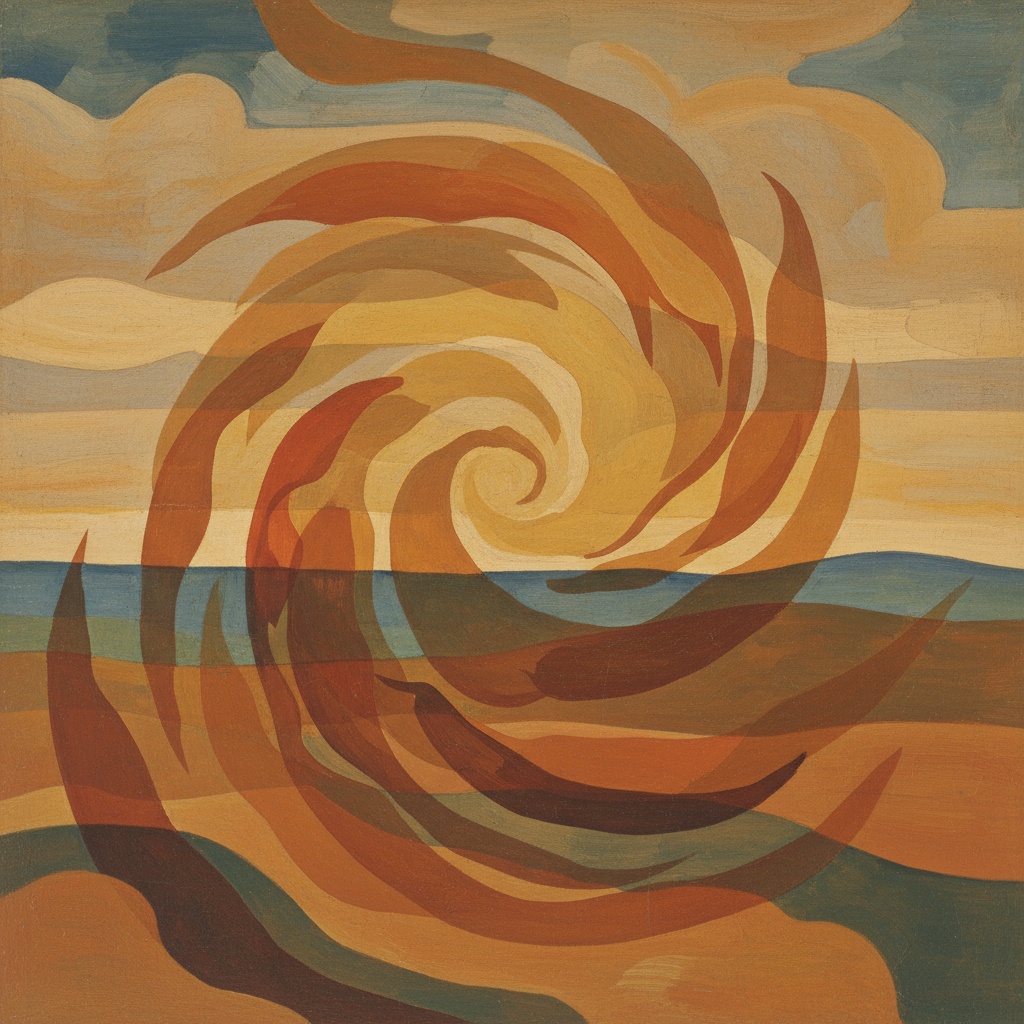
Throughout his career, Dove consistently returned to nature as a source of inspiration. However, his approach was far from conventional landscape painting. He didn’t seek to faithfully reproduce scenes; instead, he used natural forms – tides, weather patterns, seasonal cycles – as catalysts for abstraction. His paintings often feature simplified shapes, evocative color palettes, and dynamic compositions that suggest movement and energy.
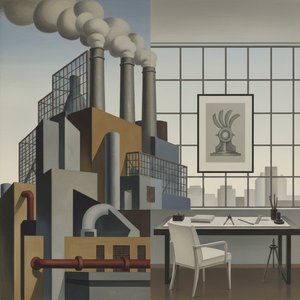
The 1920s saw a period of experimentation with various materials and techniques. Dove explored collage, creating layered works that incorporated found objects and unconventional textures. He also developed unique painting methods, combining hand-mixed oils and tempera over wax emulsions – exemplified in “Tanks” (1938) – to achieve distinctive visual effects. This willingness to push boundaries reflected a deep commitment to finding the most effective means of expressing his inner vision.
Dove’s Later Years & Legacy: A Lasting Impact on American Art
Despite periods of financial hardship and personal challenges, Dove continued to paint prolifically throughout his life. His move to Geneva, New York, in 1933, while initially reluctant, provided new subject matter and a renewed focus on the local landscape. He remained committed to his artistic principles, even as the broader art world shifted its attention towards other styles.
Arthur Garfield Dove died in 1946, leaving behind a body of work that fundamentally altered the course of American art. He is widely considered the first American abstract painter, paving the way for subsequent generations of artists to explore non-representational forms and emotional expression. His influence can be seen in the works of Abstract Expressionists like Jackson Pollock and Mark Rothko, who similarly sought to capture inner experience through spontaneous gesture and evocative color. Dove’s legacy lies not only in his pioneering techniques but also in his unwavering commitment to a poetic language of abstraction – a vision that continues to resonate with audiences today.
Collecting Arthur Dove: Investment Potential & Aesthetic Value
For collectors, acquiring an Arthur Dove painting represents more than simply owning a piece of art history; it’s investing in a foundational figure of American modernism. While his works command significant prices, the long-term investment potential remains strong due to his pivotal role and enduring influence. Dove's paintings are increasingly sought after by museums and private collectors alike.
Beyond financial considerations, however, lies the profound aesthetic value of Dove’s work. His paintings offer a unique opportunity to connect with nature on a deeply emotional level – to experience the world through the eyes of an artist who dared to break with convention and forge his own path. Whether it's the dynamic energy of his abstract landscapes or the subtle harmonies of his “condition of light,” Dove’s art invites contemplation, introspection, and a renewed appreciation for the beauty that surrounds us.