Introduction
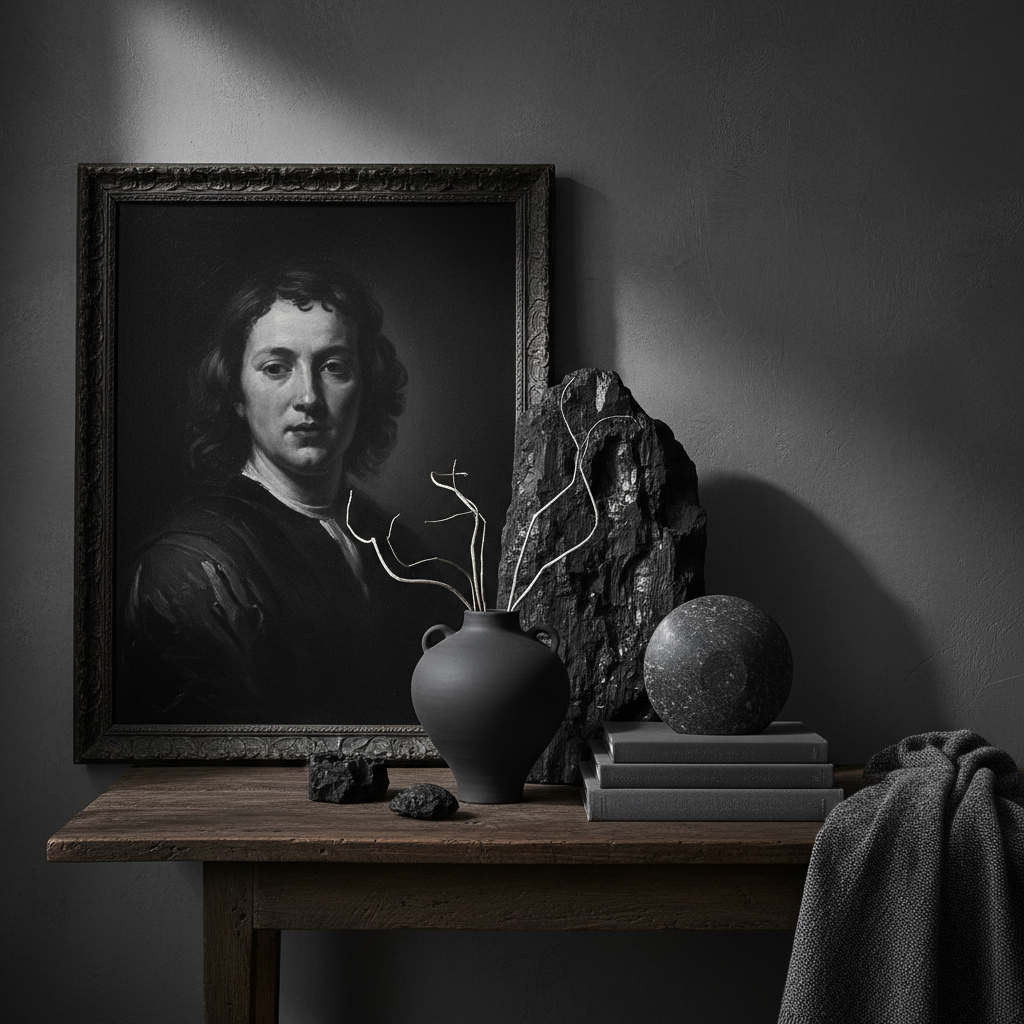
There's a quiet power in darkness, isn’t there? A depth that draws us in, a mystery that invites contemplation. Throughout art history, artists have harnessed this allure, and few shades embody it as profoundly as 'anthracite' – the rich, velvety black reminiscent of coal, of shadows deep within the earth. This isn’t merely the absence of light; it’s a presence, a weight, a mood that can transform a canvas into something truly unforgettable.
The use of dark tones in painting is as old as art itself. From the cave paintings of Lascaux, where charcoal captured the essence of prehistoric life, to the somber religious scenes of the Middle Ages and Renaissance, darkness has served as a backdrop for drama, spirituality, and introspection. The Dutch Masters of the 17th century – Rembrandt van Rijn in particular – elevated chiaroscuro (the interplay of light and shadow) to an art form, using deep blacks to create unparalleled realism and emotional intensity. Later, Romantic artists like Goya and Delacroix employed dark palettes to convey themes of turmoil, passion, and the sublime. These weren’t simply aesthetic choices; they reflected a changing world – one grappling with industrialization, political upheaval, and existential questions.
But why do these artworks continue to resonate so strongly today? Perhaps it's because they tap into something fundamental within us—a recognition of the complexities of life, the inevitability of loss, and the beauty that can be found even in the most challenging moments. They offer a space for quiet reflection, inviting us to confront our own shadows and find meaning in the depths. The paintings we’ll explore aren't just beautiful objects; they are windows into the human soul.
Prepare to journey through ten masterpieces where 'anthracite' tones dominate, shaping not only the visual experience but also the very essence of their enduring power. Each canvas tells a story, whispers a secret, and invites you to lose yourself in its captivating darkness.
A Sunday Afternoon on the Island of La Grande Jatte - Georges Seurat
 A Sunday Afternoon on the Island of La Grande Jatte - Georges Seurat
To encounter Georges Seurat’s A Sunday Afternoon on the Island of La Grande Jatte is to stand before a revolution, subtly rendered in shades that belie its radical nature. This masterpiece, completed in 1886, earns its place among the world's most celebrated paintings not through bombast, but through an almost scientific pursuit of light and color – a pursuit that birthed Pointillism.
Seurat’s meticulous application of tiny, distinct dots isn’t merely a technique; it’s an invitation to *see* differently. The canvas vibrates with life as the eye blends these individual pigments, creating a luminosity and depth rarely achieved through traditional methods. While not overtly dominated by 'anthracite' tones, Seurat masterfully uses darker shades – in the shadows beneath trees, the clothing of figures, and along the riverbank – to ground the composition and accentuate the brilliance of the lighter hues.
The painting’s enduring appeal lies in its quiet observation of modern life. Parisians enjoying a leisurely Sunday afternoon are captured with a detached precision that speaks volumes about the social shifts of the era. Its influence on generations of artists is undeniable, and today, a reproduction of La Grande Jatte brings a sense of refined elegance to any interior – a testament to timeless beauty and intellectual curiosity. It’s a piece that rewards contemplation, inviting viewers to lose themselves in its shimmering surface and subtle narratives.
Black Square - Kazimir Malevich
 Black Square - Kazimir Malevich
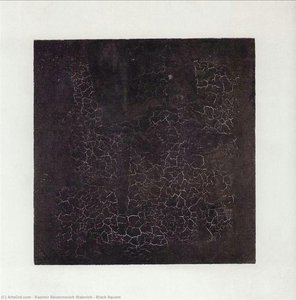
Imagine standing before Black Square by Kazimir Malevich – not as a void, but as an abyss of possibility. Created in 1915, this isn’t simply the absence of color; it's a potent declaration, a radical zero point from which all subsequent abstract art would spring. The painting’s power resides in its unsettling simplicity, challenging our very definition of what art *can* be.
Though seemingly monolithic, closer inspection reveals a subtle topography – a network of fine cracks and variations in tone that speak to the artist's hand and the passage of time. These imperfections aren’t flaws; they are integral to its character, hinting at fragility and the inherent impermanence of form. The 'anthracite' black isn’t flat but possesses a depth that draws you in, inviting contemplation.
Black Square emerged from a period of immense upheaval, mirroring the desire to dismantle old structures and forge new beginnings. Today, it continues to resonate as a symbol of artistic freedom and pure feeling. A reproduction of this iconic work isn’t merely a decorative element; it's an invitation to quiet reflection – a grounding presence that elevates any space with its understated power and timeless mystery.
The Blue Room - Suzanne Valadon
 The Blue Room - Suzanne Valadon
Before you stands The Blue Room by Suzanne Valadon – a space not of idyllic escape, but of quiet introspection and subtle rebellion. Painted in 1923, this work transcends the traditional nude, offering a strikingly modern vision of female experience that earns its place among the world’s most compelling canvases.
Valadon's masterful use of color is immediately arresting. Cool blues dominate, creating an atmosphere of melancholy and contemplation, yet are brilliantly offset by warm oranges and reds that pulse with life. The visible brushwork isn’t merely a stylistic choice; it lends a tactile quality to the scene, inviting us to feel the texture of the room and the weight of the figure's presence. While not overtly dominated by 'anthracite', darker shades define the shadows and create depth within the composition.
More than just a depiction of a reclining woman, The Blue Room is a statement about independence and self-possession. A reproduction of this painting brings a sense of quiet dignity to any space – a reminder that beauty can be found not in idealized forms, but in the complexities of real life.
Near the bed of death (fever) - Edvard Munch
 Near the bed of death (fever) - Edvard Munch
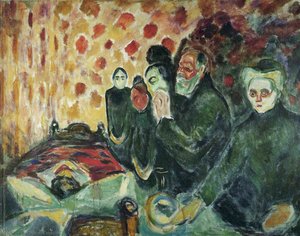
To gaze upon Near the Bed of Death (Fever) by Edvard Munch is to confront the raw, unvarnished truth of mortality. Painted in 1915, this Expressionist masterpiece isn’t merely a depiction of grief; it's an embodiment of it – a swirling vortex of anxiety and loss that continues to resonate with profound power.
The painting’s dominance of 'anthracite' tones—deep blues, greens, and blacks—creates a claustrophobic atmosphere, mirroring the internal turmoil of those gathered around the deathbed. Distorted figures and swirling compositions reject objective representation in favor of subjective emotional experience. The visible brushwork isn’t refined; it’s visceral, adding physicality to the scene and emphasizing the weight of sorrow.
This work earns its place among the world's most celebrated paintings not through beauty, but through honesty. A reproduction of Near the Bed of Death is a powerful statement piece – a reminder of our shared vulnerability and the enduring power of human emotion. It invites contemplation, prompting us to confront our own mortality and find meaning in the face of loss.
Heads Full of Clouds (Diptych) - Salvador Dalí
 Heads Full of Clouds (Diptych) - Salvador Dalí
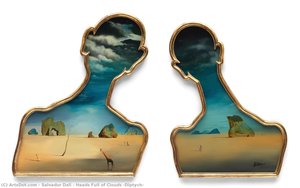
To encounter Heads Full of Clouds (Diptych) by Salvador Dalí is to step into a realm where dreams and reality intertwine. Created in 1936, this captivating work isn’t merely a painting; it's a visual poem that unlocks the subconscious mind, earning its place among the world’s most celebrated Surrealist masterpieces.
Dalí masterfully employs meticulous detail to depict desolate landscapes framed by head-shaped silhouettes. The contrast between the turbulent, dark blue skies and warm earthy tones creates a striking tension. While not overtly dominated by 'anthracite', the deep blues evoke a sense of melancholy and introspection, grounding the fantastical imagery.
This diptych’s enduring appeal lies in its exploration of duality – perhaps representing opposing facets of the psyche. A reproduction of Heads Full of Clouds brings a unique sense of quiet contemplation to any space—a testament to timeless beauty and intellectual curiosity, inviting viewers to lose themselves in its enigmatic world.
Modern Idol - Umberto Boccioni
 Modern Idol - Umberto Boccioni
To stand before Modern Idol by Umberto Boccioni is to encounter a vision that transcends portraiture, becoming instead an exploration of the human psyche and the burgeoning energy of modernity. Created in 1911, this masterpiece earns its place among the world’s most celebrated paintings through its innovative fusion of Futurism and Symbolism.
While vibrant floral hues command attention, it's the underlying use of 'anthracite' tones—the deep blues that shadow the face—that lend a sense of melancholy and introspection. These darker shades ground the composition, creating a striking contrast with the radiating lines and celestial motifs. Boccioni’s masterful technique, employing impasto and gestural brushwork, imbues the artwork with a tactile quality.
A reproduction of Modern Idol brings a unique sense of dynamism to any space—a testament to timeless beauty and intellectual curiosity. It invites contemplation on themes of nature, spirituality, and the ever-evolving human spirit.
Automat - Edward Hopper
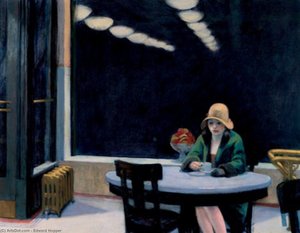 Automat - Edward Hopper
To encounter Automat by Edward Hopper is to glimpse a profound meditation on modern solitude. Painted in 1927, this iconic work isn’t merely a depiction of a woman in a diner; it's an embodiment of urban alienation—a quiet drama unfolding within the stark confines of American life.
While soft light illuminates the scene, it’s the underlying use of 'anthracite' tones—the deep blues and shadows that envelop the space—that lend a sense of melancholy and introspection. These darker shades ground the composition, creating a striking contrast with the woman’s attire and the bowl of fruit on her table.
A reproduction of Automat brings a unique sense of quiet contemplation to any space—a testament to timeless beauty and intellectual curiosity. It invites reflection on themes of loneliness, isolation, and the human condition in an increasingly modern world.
Pink Villas at Trouville - Gustave Caillebotte
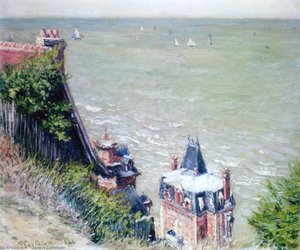 Pink Villas at Trouville - Gustave Caillebotte
To gaze upon Pink Villas at Trouville by Gustave Caillebotte is to be transported to a realm of serene coastal beauty. Painted in 1884, this Impressionist masterpiece isn’t merely a depiction of a seaside town; it's an embodiment of tranquility—a quiet escape from the bustle of modern life.
While soft hues of pink and orange dominate, it’s the underlying use of 'anthracite' tones—the muted greens, blues, and grays that define the landscape—that lend a sense of depth and introspection. These darker shades ground the composition, creating a harmonious balance with the lighter elements.
A reproduction of Pink Villas at Trouville brings a unique sense of calm to any space—a testament to timeless beauty and intellectual curiosity. It invites reflection on themes of nature, architecture, and the enduring allure of coastal living.
Summertime - Edward Hopper
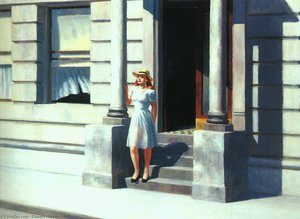 Summertime - Edward Hopper
To encounter Summertime by Edward Hopper is to witness a moment suspended in time—a poignant exploration of solitude and anticipation. Painted in 1943, this masterpiece isn’t merely a depiction of a woman on steps; it's an embodiment of modern American life, earning its place among the world’s most celebrated paintings.
While bathed in soft light, it’s the underlying use of 'anthracite' tones—the deep shadows cast by the imposing architecture—that lend a sense of depth and introspection. These darker shades ground the composition, creating a striking contrast with the woman’s attire and amplifying the painting’s psychological tension.
A reproduction of Summertime brings a unique sense of quiet contemplation to any space—a testament to timeless beauty and intellectual curiosity. It invites reflection on themes of loneliness, isolation, and the enduring human condition.
Newton - William Blake
 Newton - William Blake
William Blake’s 1795 (and reworked in 1805) monotype, “Newton,” is a visionary dissection of the scientific spirit—a potent statement on reason, imagination, and perception. More than a portrait, it's an exploration of intellectual vulnerability, rendered with extraordinary depth and textural richness.
The artwork’s inclusion in our Top 10 stems from its masterful use of 'anthracite' tones—the deep shadows that envelop Newton, symbolizing both the weight of knowledge and a potential disconnect from the natural world. This deliberate darkness isn’t absence; it’s a space for contemplation, a visual metaphor for the mysteries beyond empirical observation.
At , we believe in bringing such profound works into living spaces—allowing their energy to inspire and challenge. A reproduction of “Newton” is not merely decor; it's an invitation to engage with timeless questions about humanity’s place within the universe, a refined addition for homes and offices seeking intellectual depth.
Conclusion
As the light fades on these ten masterpieces, we are left not with relics of history, but with living presences—echoes of human creativity that continue to resonate across centuries. Each canvas, imbued with its own unique spirit and shadowed depths, offers a portal into another world, another mind, another heart.
The enduring power of these 'anthracite' tones lies not merely in their aesthetic beauty, but in their ability to evoke profound emotion—a sense of mystery, contemplation, and the quiet drama of existence. They remind us that even within darkness, there is light; within solitude, connection; within complexity, grace.
At , we believe these are not paintings to be simply admired from afar, but to be lived with—to become daily companions, subtle reminders of the beauty and wonder that surrounds us. To invite their texture, their emotion, into your own space is to cultivate a sanctuary for the soul, a testament to the enduring power of human creativity.
We invite you to explore our full collection and discover the artwork that speaks most deeply to your own heart. Let these masterpieces transform not just your walls, but your world—one brushstroke at a time.