Early Life & Training: Forging a Sculptor's Path
The story of Anthony de Francisci is one of immigrant ambition beautifully realized through the enduring medium of sculpture. Born Antonio de Francisci in 1887, in Palermo, Sicily, his early life was steeped in the artistic traditions of Italy – a heritage that would profoundly shape his aesthetic sensibilities. The family’s relocation to the United States in 1905 wasn't merely a geographical shift; it represented a leap into a burgeoning cultural landscape ripe with opportunity. De Francisci quickly immersed himself in the New York art world, seeking formal training and honing his skills under the tutelage of prominent sculptors like James Earle Fraser, Hermon Atkins MacNeil, and Adolph Alexander Weinman – figures already establishing reputations for their own interpretations of classical forms. This period was crucial; it wasn’t simply about mastering technique but absorbing a distinctly American approach to sculpture, one that blended European ideals with a growing national identity.
De Francisci's dedication led to his naturalization in 1913, solidifying his commitment to his adopted homeland. He didn’t merely replicate the styles of his mentors; he synthesized them, developing a unique voice characterized by both precision and emotional depth. This early foundation—a blend of Italian heritage and American innovation—would become the hallmark of his most celebrated works.
De Francisci and the Classical Revival in American Sculpture
The early 20th century witnessed a significant revival of classical forms in American art, a reaction against the perceived excesses of Victorian ornamentation. Sculptors sought inspiration from ancient Greece and Rome, not as slavish imitation but as models for beauty, order, and civic virtue. Anthony de Francisci emerged as a key figure within this movement. His work wasn’t simply about recreating mythological figures or historical scenes; it was about imbuing those forms with contemporary relevance. He understood the power of classical symbolism – the strength of the human form, the dignity of labor, the ideals of peace and prosperity—and skillfully translated these concepts into sculptures that resonated with a nation grappling with its own identity.
This embrace of classicism wasn’t accidental. It reflected a broader cultural desire for stability and meaning in a rapidly changing world. De Francisci's sculptures offered a visual language of enduring values, appealing to a public yearning for timeless ideals. His meticulous attention to detail, coupled with his ability to capture both physical likeness and emotional nuance, set him apart from many of his contemporaries.
The Iconic Peace Dollar: A Symbol of Post-War Optimism
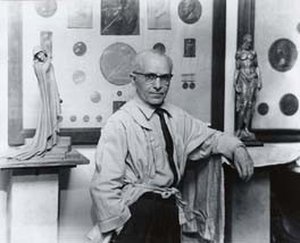 Anthony de Francisci
Sculptor Anthony de Francisci (1887-1964) designed the iconic Peace Dollar & medals, blending classical style with American spirit. Explore his art!
Perhaps no work embodies de Francisci’s artistic vision more powerfully than the Peace Dollar. Commissioned in 1921 to commemorate the end of World War I, the coin was intended as a symbol of hope and renewed prosperity. De Francisci won a competition judged by some of the most respected artists of the day, securing his place in numismatic history. The obverse features a profile portrait of Liberty, but it wasn’t a generic allegorical figure; it was modeled after his wife, Mary Teresa Cafarelli, transforming a personal connection into a national emblem.
The reverse depicts an eagle perched on a rock, clutching olive branches and arrows—symbols of peace and strength. The choice to include both elements was deliberate, representing the delicate balance between vigilance and hope. The Peace Dollar wasn’t just a coin; it was a carefully crafted statement about America's aspirations for a peaceful future. Its design, though initially met with some controversy due to its perceived modernity, ultimately captured the spirit of the era—a nation eager to move forward after years of conflict. The 1918 gold medal portrait of Henry Doherty Morrey, exemplifies his classical design and exquisite detail that would become synonymous with his work.
Beyond Numismatics: Medallic Works and Public Commissions
 William Lawrence Saunders Medal for Achievement in Mining (obverse)
Anthony de Francisci’s 1927 medal sculpture depicts a nude figure & horse, showcasing classical Roman influence. Explore this exquisite relief cast in silver/pewter.
While the Peace Dollar cemented de Francisci’s fame, his artistic output extended far beyond coinage. He was a prolific creator of medallic art, producing numerous commemorative medals honoring individuals and events. These works demonstrate his versatility as a sculptor, showcasing his ability to capture both grand historical narratives and intimate personal portraits. The 1927 William Lawrence Saunders Medal for Achievement in Mining, for example, reveals his mastery of relief sculpture, depicting a nude figure alongside a horse—a powerful image imbued with classical Roman influence.
De Francisci also undertook several public commissions, further solidifying his reputation as a leading American sculptor. His bronze high reliefs for the Sesquicentennial flagpole in Union Square, New York, are a testament to his ability to create large-scale works that engaged with civic themes. These projects weren’t simply about artistic expression; they were about contributing to the public landscape and shaping the visual identity of the nation.
A Legacy of Skill: De Francisci’s Enduring Influence on American Art
Anthony de Francisci's career spanned several decades, marked by a consistent commitment to classical ideals and exceptional technical skill. His work continues to resonate with collectors and art enthusiasts today, not only for its beauty but also for its historical significance. He served as an Academician of the National Academy of Design and a Fellow of the National Sculpture Society, accolades that recognized his contributions to the field.
De Francisci’s influence can be seen in the work of subsequent generations of sculptors who sought to revive classical forms and imbue them with contemporary meaning. His ability to blend European tradition with American innovation created a unique artistic voice that continues to inspire. OriginalUniqueArt.com offers a curated selection of reproductions celebrating his enduring legacy, allowing art lovers to experience the beauty and power of de Francisci’s sculptures firsthand. Explore our collection today and discover the timeless appeal of this remarkable artist.