Challenging Conventions: Neel’s Rejection of Artistic Norms
 Wikipedia: Alice Neel
Alice Neel (January 28, 1900 – October 13, 1984) was an American visual artist. Recognized for her paintings of friends, family, lovers, poets, artists, and strangers, Neel is considered one of the greatest American portraitists of the 20th century. ...
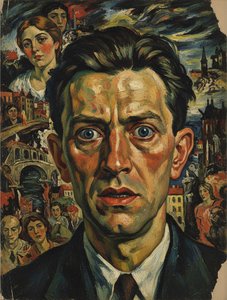
Alice Neel, a name now synonymous with unflinching portraiture, spent much of her career swimming against the tide of artistic fashion. While the 20th century championed abstraction – the exploration of form and color divorced from representational reality – Neel resolutely remained committed to depicting the human figure. This wasn’t merely a stylistic preference; it was a conscious rebellion. Born in 1900, she entered an art world increasingly dismissive of figurative work, yet she persevered, driven by a deep-seated belief that the most compelling subject matter lay not in theoretical constructs but in the lived experiences etched onto the faces and bodies before her. Her early training at the Philadelphia School of Design for Women instilled a foundation in realism, but it was her subsequent life – marked by personal tragedy, political awakening, and a restless spirit – that truly shaped her unique artistic vision. Neel wasn’t interested in capturing likeness; she sought to reveal character, vulnerability, and the complex inner lives of those who sat for her.
The ‘Collector of Souls’: Portraiture as an Act of Humanism
 Black Draftee (James Hunter)
Discover Alice Neel’s poignant ‘Black Draftee,’ a 1965 charcoal portrait of James Hunter. Explore its expressive lines, social commentary & raw emotion – a unique American artwork.
Neel famously described herself as a “collector of souls,” a phrase that encapsulates the profound empathy at the heart of her work. Her portraits aren’t simply representations of individuals; they are intimate psychological studies, imbued with a raw honesty rarely seen in art history. She painted friends, family, lovers, poets, activists – anyone who sparked her curiosity and offered a glimpse into the human condition. Unlike traditional portraiture that often emphasized status or wealth, Neel focused on the emotional landscape of her subjects. She wasn’t afraid to depict flaws, anxieties, and vulnerabilities, believing these imperfections were integral to understanding their humanity. This approach extended to her depictions of marginalized communities – Spanish Harlem residents, for example – offering a powerful counter-narrative to prevailing societal biases. Black Draftee (James Hunter), painted in 1965, stands as a particularly poignant example, its expressive lines conveying not just the likeness of a young man but also the weight of social injustice and the anxieties of the era.
Raw Honesty and Psychological Acumen: Decoding Neel's Brushstrokes
 Black Bottles
Alice Neel's 'Black Bottles' (1977) is a striking still life, blending Modernist and Expressionistic styles. Observe everyday objects with emotional intensity.
Neel’s technique is inextricably linked to her psychological approach. Her brushwork isn’t refined or polished; it’s deliberately raw, often leaving visible traces of her process. This lends a sense of immediacy and authenticity to her portraits, as if the viewer is witnessing the subject emerge directly from the canvas. She employed an expressionistic use of line and color, distorting forms and exaggerating features to convey emotional intensity. Black Bottles, painted in 1977, demonstrates this beautifully – a seemingly simple still life transformed into a powerful meditation on form and feeling through bold brushstrokes and a striking palette. She often worked from life, engaging in lengthy conversations with her sitters, allowing their personalities to inform the painting process. This extended engagement allowed her to capture not just physical resemblance but also subtle nuances of character and mood. The result is a body of work that feels remarkably intimate and revealing.
Social Commentary & Political Engagement in Neel’s Work
While often celebrated for her psychological portraits, it's crucial to recognize the strong current of social commentary running throughout Neel’s oeuvre. Her life was deeply intertwined with political activism, and this commitment is reflected in her choice of subjects and the way she depicted them. She painted activists protesting fascism and racism, offering a visual record of the struggles for social justice. Her time living in Spanish Harlem profoundly impacted her work, leading to portraits that challenged stereotypes and celebrated the resilience of marginalized communities. Even seemingly apolitical portraits often carried subtle undertones of resistance – a refusal to conform to societal norms or expectations. She wasn’t interested in creating idealized representations; she sought to expose the complexities and contradictions of American society. This commitment to social justice, coupled with her humanist principles, positioned Neel as a radical voice within the art world.
Late Recognition & Lasting Legacy: A Pioneer Rediscovered
Despite a career spanning seven decades, Alice Neel didn’t achieve widespread critical acclaim until the 1960s. For much of her life, she remained outside the mainstream art establishment, largely ignored by galleries and museums. This late recognition is perhaps a testament to her unwavering commitment to her own artistic vision – she refused to compromise her style or subject matter in pursuit of commercial success. Her work challenged prevailing aesthetic norms and confronted uncomfortable truths about American society, making it difficult for some to embrace during its time. However, the rise of feminist art and a growing interest in social realism paved the way for a reassessment of Neel’s contributions. Today, she is widely regarded as one of the greatest American portraitists of the 20th century, her paintings celebrated for their raw honesty, psychological depth, and enduring relevance. The retrospective *Alice Neel: People Come First*, showcased at The Metropolitan Museum of Art in 2021, solidified her place in art history, demonstrating the power of her vision to resonate with contemporary audiences. Her legacy continues to inspire artists and viewers alike, reminding us of the importance of empathy, authenticity, and a commitment to social justice.