
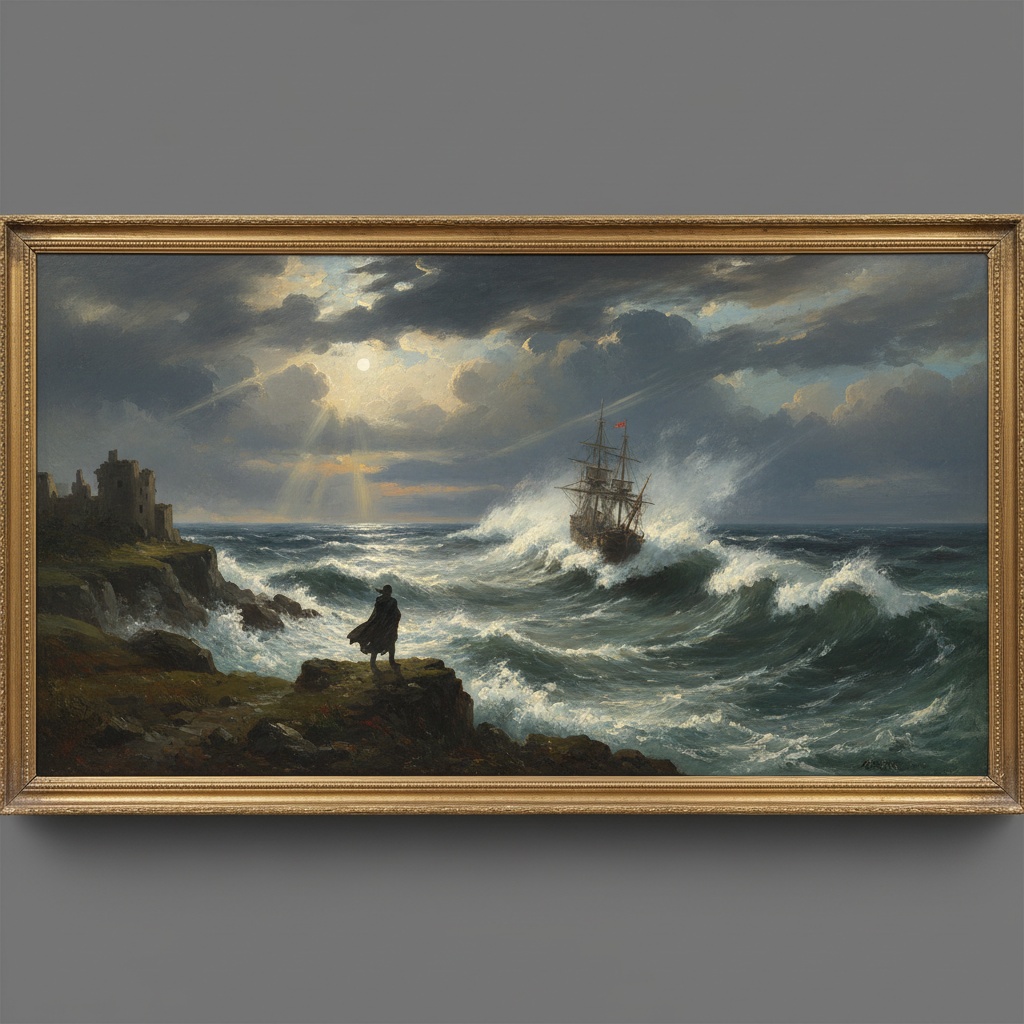
The Rise of Romanticism: A Rejection of Neoclassical Order
Romanticism (also known as the Romantic movement or Romantic era) was an artistic and intellectual movement that originated in Europe towards the end of the 18th century. The purpose of the movement was to advocate for the importance of subjectivity...
The early nineteenth century witnessed a seismic shift in artistic sensibilities, a turning away from the cool rationality and rigid formalism of Neoclassicism towards the passionate intensity and subjective experience of Romanticism. For decades, artists had meticulously emulated the perceived perfection of classical antiquity – its balanced compositions, idealized forms, and moralizing narratives. But a growing disillusionment with Enlightenment ideals, coupled with burgeoning nationalism and an increasing fascination with the sublime power of nature, fueled a desire for something more visceral, more emotionally resonant. This wasn’t merely a stylistic change; it was a fundamental re-evaluation of art's purpose – from didactic instruction to evocative expression. Artists began to prioritize individual feeling, imagination, and the untamed beauty of the natural world, paving the way for a new generation who dared to challenge convention.
Decamps's Early Life & Influential Travels in the Orient
Born in Paris in 1803, Alexandre-Gabriel Decamps emerged as one of the first French painters to wholeheartedly embrace this Romantic spirit. Unlike many of his contemporaries who remained tethered to academic tradition, Decamps actively sought inspiration beyond the confines of the Parisian art world. A pivotal moment in his artistic development was his journey to the Middle East in his youth. This wasn’t a grand tour undertaken for social prestige, but rather an immersive exploration driven by genuine curiosity and a thirst for authentic experience. He didn't simply observe; he *lived* amongst the people, absorbing their customs, landscapes, and daily life with remarkable fidelity. These travels proved transformative, imbuing his work with a freshness and vibrancy that immediately set him apart. The sun-drenched colors, exotic details, and dynamic compositions of his early Orientalist paintings were initially met with skepticism by conservative critics accustomed to more conventional depictions.
Bold Fidelity to Nature: Decamps’s Unique Orientalist Style
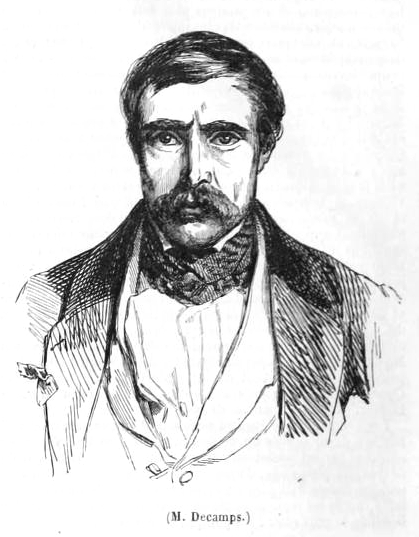 Wikipedia: Alexandre-Gabriel Decamps
Alexandre-Gabriel Decamps (March 3, 1803 – August 22, 1860) was a French painter noted for his Orientalist works. == Life == Decamps was born in Paris. In his youth he travelled in the East, and reproduced Oriental life and scenery with a bold fide...
What distinguished Decamps from other artists depicting the Orient wasn't merely his subject matter but *how* he depicted it. He eschewed idealized representations in favor of a raw, unvarnished realism. His scenes weren’t romanticized fantasies; they were imbued with a palpable sense of place and authenticity. This “bold fidelity to nature,” as critics later termed it, involved a masterful manipulation of light and shadow, creating dramatic contrasts that heightened the emotional impact of his work. He wasn't afraid to depict the harsh realities alongside the beauty – the dust, the poverty, the everyday struggles of life in the Middle East. His technique was characterized by rapid brushstrokes and a willingness to embrace imperfections, resulting in paintings that felt immediate and alive. This approach challenged the prevailing academic standards, which favored meticulous detail and polished surfaces.
‘The Experts’ and Satirical Subversion of Artistic Authority
Decamps's rebellious spirit wasn’t confined to his subject matter; it extended to a pointed critique of the art establishment itself. His satirical masterpiece, ‘The Experts’ (circa 1837), is a brilliant commentary on the often arbitrary nature of artistic judgment. The painting depicts elegantly dressed connoisseurs scrutinizing a landscape in the style of Nicolas Poussin – a deliberate juxtaposition highlighting the disconnect between academic ideals and genuine artistic merit. The scene is laced with irony, suggesting that these self-important figures are more concerned with upholding tradition than appreciating true beauty or innovation. This work, rejected by the Académie des Beaux-Arts initially, became a rallying cry for artists who felt stifled by its rigid conventions. It’s a testament to Decamps's courage and his willingness to challenge authority, even at the risk of professional repercussions.
Beyond Exoticism: Biblical Scenes and Genre Painting in Decamps’s Oeuvre
While celebrated as a pioneer of Orientalism, limiting Decamps to this single category would be a disservice to the breadth of his artistic vision. He fearlessly tackled a diverse range of subjects, including biblical scenes and genre painting. His depictions of stories from the Old Testament – ‘Joseph Sold by His Brethren’ and ‘Moses Taken from the Nile,’ for example – were groundbreaking in their naturalistic settings and relatable human portrayals. He moved away from the grand theatricality often associated with religious art, grounding his narratives in a tangible reality. Similarly, his genre paintings of French and Algerian domestic life are imbued with humor and keen observation. He possessed an exceptional ability to capture the nuances of everyday moments, elevating seemingly mundane scenes into compelling works of art.
Decamps's Legacy: A Bridge Between Romanticism and Modern Art
Alexandre-Gabriel Decamps’s influence extended far beyond his own lifetime. His bold style, rejection of academic constraints, and commitment to authentic representation paved the way for subsequent generations of artists. He served as a crucial bridge between the emotional intensity of Romanticism and the burgeoning Realist movement. Artists like Théodore Rousseau and Jules Dupré acknowledged his impact, recognizing him as a champion of artistic freedom and innovation. His work also resonated with writers such as Théophile Gautier, who described his Constantinople as an “immense verbal Decamps.” Decamps’s legacy lies not only in the beauty and originality of his paintings but also in his unwavering dedication to capturing the world as he saw it – a world filled with both wonder and complexity. His works continue to captivate audiences today, offering a glimpse into a pivotal moment in art history and reminding us of the power of individual vision.



