1891
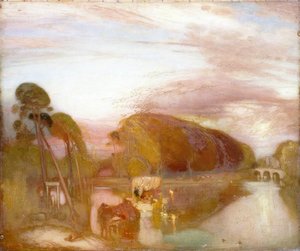
Silver Seas (William Shackleton, 1891)
William Shackleton (1872–1933) made Silver Seas. It dates from 1891. It is kept at Cecil French Bequest in London, United Kingdom. It measures 29 × 50 cm.
- 1891
- 29 × 50 cm
- Cecil French Bequest, London

 Preview

 Hand Made Oil Painting
 Send
 Share
 Fact sheet


 Download
 Similars
 X-Ray
 Diaporama
 Q&A

 Stats
Silver Seas, in brief
- Title
- Silver Seas
- Artist
- William Shackleton (1872–1933)
- Artist born in
- Bradford, United Kingdom
- Date
- 1891
- Dimensions
- 29 × 50 cm
- Where to see it
- Cecil French Bequest, London, United Kingdom
Which museum holds Silver Seas?
Cecil French Bequest
London, United Kingdom
A Hidden Sanctuary of Victorian Dreams: Exploring the Cecil French Bequest Nestled within the elegant streets of Kensington, London, lies a remarkable secret – the Cecil French Bequest. More than just a museum, it’s a portal into the heart of Victorian England, a meticulously curated collection offering an intimate and profoundly moving glimpse into a pivotal era of artistic and social transformation. This unassuming space, largely overlooked by mainstream tourism, holds within its walls a treasure trove of paintings and drawings, primarily dominated by the captivating Pre-Raphaelite world of Edward Burne-Jones, but extending to encompass the broader spectrum of 19th-century British artistry.


High-resolution images of Silver Seas

William Shackleton, Silver Seas (1891), Cecil French Bequest. Public domain.
Questions on Silver Seas, answered
Which museum holds the original "Silver Seas"?
You can see the original "Silver Seas" at the Cecil French Bequest, London, United Kingdom.
When was "Silver Seas" made?
"Silver Seas" dates from 1891. The date places the work within William Shackleton's career and its era.
How big is the original "Silver Seas"?
The recorded dimensions of "Silver Seas" by William Shackleton are 29 x 50 cm. Reproductions can be ordered in other sizes while keeping the same proportions.
Can the image of "Silver Seas" by William Shackleton be freely reproduced?
The copyright answer for "Silver Seas" by William Shackleton: the work is in the public domain - its copyright has expired. This determines whether reproductions of the image may be freely made.
Who created "Silver Seas"?
"Silver Seas" was created by William Shackleton. The information on this page describes William Shackleton's original work.
How old was William Shackleton when creating "Silver Seas" in 1891?
William Shackleton made "Silver Seas" at the age of 19. The artist was born in 1872 and the work is dated 1891.
Is "Silver Seas" by William Shackleton in the public domain, and why?
"Silver Seas" by William Shackleton is in the public domain - its copyright has expired. Copyright terms are measured from the artist's death, and William Shackleton died in 1933.
Is "Silver Seas" by William Shackleton kept in the artist's home country?
Yes - the artwork is kept in the artist's home country. "Silver Seas" is held in United Kingdom, while William Shackleton was born in United Kingdom.
About the artist, William Shackleton
1872–1933, United Kingdom
William Shackleton
The Soul of the British Landscape: The Life and Art of William Shackleton In the tapestry of early 20th-century British art, few threads are as delicately woven as those left by William Shackleton. Born in 1872 in the industrial heart of Wednesfield, Staffordshire, Shackleton emerged from a period of profound transition in the art world. His journey was one of constant refinement, moving between the rigorous academic traditions of his training and a deeply personal, atmospheric approach to the natural world. As a painter who mastered both the expansive grandeur of the Yorkshire Moors and the quiet, intimate beauty of a single bloom, Shackleton captured a sense of time and place that remains profoundly moving to the modern observer.
About William Shackleton Notable works by William Shackleton
 Phryne at Eleusis1907
 Autumn in Parham Park, West Sussex1904
 The Eternal Dream1924
 Winter Sunrise, Malham, Yorkshire1924