Preview
 Send
Send Share
Share
 Details
 Guide
Guide

 Download
 Similars
 X-Ray
X-Ray Diaporama
 Stats
StatsJohn Jervis, 1st Earl St Vincent


 Read More
Hand Made Oil Reproduction
Hand-painted oil on canvas in your size and frame, made to order by our artists. ( Switch to Print Switch to Digital Image)




P118B $10

P118H $10

P118W $10

P438Z $10

P508JH $12

P508YH $12

P805H $10

P805Z $10

P919BZ $10

P919G $10

P919XJ $10

P959ZH $10

P968JZ $12

W106C $8

W218G $10

W218JH $8

W218Y $10

W307PJ $10

W316G $10

W316PJ $8

W316Y $10

W398PJ $8

W4111J $10

W500HY $15

W500JH $15

W692G $12

W849H $8

W940BG $15

W953PJ $8




Pick from our preset sizes that match the artwork's original proportions.

Type the width and the height you need, to fit your frame or your wall. This is hand-painted, so for a size with a different shape the artist can paint a bit more around the picture, or cut a bit — you choose. We send you a digital mockup to approve before the painting starts. The picture shown on this page does not show the real result — only the mockup does.
After order, OriginalUniqueArt.com team will email client for instructions and provide a mockup preview
Worldwide Delivery () in 3/4 weeks instead of standard 5 weeks. (24 October). No compromise on quality.

Free Worldwide Express Shipping

High-Quality Linen Canvas

Full Shipping Insurance

Customs Tax Refund Guarantee

True Color Matching Guarantee

100-Day Return Policy (Defects Only)

100% Money-Back Guarantee

Bulk Discount Offer
 Glass option is only available in size under 110 CM

John Jervis, 1st Earl St Vincent
Reproduction Medium
Reproduction Size
-


Total Price
$ 300
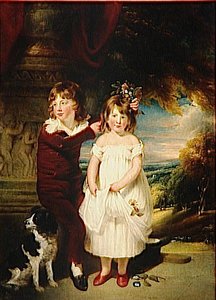
A Portrait of Courage: Examining William Beechey’s St Vincent
The canvas holds an arresting gaze – John Jervis, 1st Earl of St Vincent, rendered in meticulous detail by Sir William Beechey in 1807. This portrait transcends mere likeness; it embodies the spirit of naval leadership and reflects the artistic sensibilities of its time, offering a fascinating glimpse into British history and artistic achievement. Examining Beechey’s masterful execution reveals layers of significance beyond the surface appearance.- Subject Matter & Historical Context: St Vincent commanded HMS Rodney and HMS Collingwood during the Napoleonic Wars, achieving decisive victories against French naval forces at Trafalgar in 1805 – a triumph that secured Britain's dominance on the seas and fundamentally reshaped European geopolitics. Beechey’s decision to commemorate this pivotal moment speaks volumes about the importance placed upon military prowess within Victorian society.
- Style & Technique: Beechey adhered to the prevailing neoclassical style, prioritizing clarity of form and idealized representation. The portrait utilizes a three-quarter view, presenting St Vincent with dignified composure—a characteristic pose reflecting the aristocratic ethos of the era. Beechey’s technique is characterized by smooth brushwork and careful blending of colors, creating an illusionistic depth that captures the subtleties of light and shadow.
- Composition & Symbolism: The central figure dominates the canvas, framed against a muted background that serves to accentuate his presence. Lines delineate facial contours and clothing folds, establishing solidity and form—elements consistent with neoclassical principles. Subtle atmospheric perspective lends depth to the scene, hinting at the grandeur of St Vincent’s accomplishments.
- Color Palette & Lighting: Beechey employs a restrained color palette dominated by earthy tones – browns, creams, and ochres – reflecting the seriousness of subject matter. The upper left serves as the primary source of illumination, casting shadows across St Vincent's face and highlighting strands of hair—a deliberate artistic choice that conveys both realism and emotional resonance.
- Emotional Impact & Artistic Legacy: Beyond its factual accuracy, Beechey’s portrait communicates a profound sense of dignity and fortitude. The artist skillfully captures St Vincent’s gaze – direct yet contemplative – conveying an inner strength that transcends the confines of the canvas. This enduring image exemplifies the neoclassical ideal of portraying human subjects with grace and intelligence—a testament to Beechey's artistic skill and his contribution to British portraiture.
Questions & Answers
What feeling do the colors of "John Jervis, 1st Earl St Vincent" by Sir William Beechey create?
In "John Jervis, 1st Earl St Vincent", earthy colors accompany a reflective feeling.
How strong is the contrast in "John Jervis, 1st Earl St Vincent" by Sir William Beechey?
The contrast level of "John Jervis, 1st Earl St Vincent" by Sir William Beechey is bold.
Who is the artist behind "John Jervis, 1st Earl St Vincent"?
The artist behind "John Jervis, 1st Earl St Vincent" is Sir William Beechey. The work is catalogued under Sir William Beechey's name.
Artist Biography
Early Life and Artistic Beginnings
Sir William Beechey, born December 12, 1753, in the quaint Oxfordshire town of Burford, embarked on a life that would see him become a prominent figure in British portraiture. His early years were marked by tragedy; both his parents passed away while he was still young, leaving his upbringing to the care of his uncle, Samuel Beechey, a solicitor. Initially destined for a legal career, young William’s heart lay elsewhere—in the captivating world of art. Despite his uncle's aspirations, Beechey gravitated towards painting, an inclination that ultimately led him to London and admission into the Royal Academy Schools in 1772. This marked a pivotal moment, placing him within the orbit of established artists and setting the stage for his artistic development. His early training likely benefited from the guidance of Johan Zoffany, though concrete evidence remains elusive, shaping his initial style towards small-scale full-length portraits and intimate conversation pieces reminiscent of Zoffany’s own work.A Rising Star: Norwich and London
Beechey's artistic journey took him to Norwich in 1782, where he established a foothold as a portraitist among the region’s gentry. He secured commissions for portraits of prominent figures like John Wodehouse, and notably contributed four works to the collection of civic portraits at St Andrew’s Hall—a testament to his growing reputation. However, London beckoned, and in 1787 he returned to the capital, determined to make his mark on a larger stage. The late 1780s saw Beechey steadily gaining recognition, exhibiting works that showcased his developing skill and refined technique. A turning point arrived with his portrait of John Douglas, Bishop of Carlisle, exhibited in 1789—a work that garnered considerable attention and solidified his position within the London art scene. He skillfully navigated the conventions of the time, drawing inspiration from masters like Joshua Reynolds while forging a style uniquely his own.Royal Patronage and National Recognition
The year 1793 proved transformative for Beechey. Through a fortunate turn of events—a disgruntled sitter bringing his portrait to the attention of King George III and Queen Charlotte—Beechey found himself appointed as Queen Charlotte’s official portrait painter. This royal endorsement catapulted him into the upper echelons of artistic society, opening doors to a stream of prestigious commissions. He was elected an associate member of the Royal Academy that same year, further cementing his status. The following year brought even greater acclaim; in 1798, he painted *George III and the Prince of Wales Reviewing Troops*, a large-scale composition that earned him a knighthood and full membership to the Royal Academy. Though tragically lost in the 1992 Windsor Castle fire, this work exemplified Beechey’s ability to handle grand historical scenes alongside his more intimate portraiture. His success during this period was not merely artistic; it was deeply intertwined with the social and political landscape of Britain, reflecting a growing national pride and a flourishing aristocratic culture.Style, Legacy, and Lasting Influence
Beechey’s style is characterized by its refined elegance, subtle coloring, and meticulous attention to detail. He favored neoclassical compositions, often depicting his sitters in graceful poses reminiscent of classical sculpture. While not a radical innovator like some of his contemporaries—such as Thomas Lawrence—his consistent quality and ability to capture the likeness and character of his subjects earned him widespread acclaim. His portraits possess a dignified restraint, avoiding excessive drama or flamboyant flourishes. This approach appealed particularly to the royal family and the upper classes, who valued decorum and understated elegance. Despite some criticism leveled by Samuel Redgrave in 1890—who found Beechey’s work lacking in grace and his drapery somewhat clumsy—Beechey maintained a respectable position among British portraitists. His works continue to be celebrated for their technical skill and insightful portrayals of prominent figures from the late 18th and early 19th centuries, including Lord Nelson, John Kemble, and Sarah Siddons. His legacy endures not only through his paintings but also as a testament to the enduring power of portraiture in capturing the spirit of an era.Family and Further Contributions
Beechey’s personal life was marked by both joy and sorrow. He married Mary Ann Jones in 1778, and following her death, he wed Anne Phyllis Jessop, a successful miniature painter, in 1793. Through these unions, he fathered several children who also pursued artistic careers. His sons, Henry William Beechey—a painter and explorer—and Frederick William Beechey—a naval officer, geographer, and writer—carried on the family tradition of creative endeavor. Beechey’s influence extended beyond his own paintings; he was known for his generosity towards aspiring artists, particularly John Constable, whom he mentored. He retired to Hampstead in 1836, where he passed away in 1839, leaving behind a rich artistic legacy that continues to captivate and inspire. His contributions to British art remain significant, offering valuable insights into the lives and times of those who shaped the nation’s history.
Sir William Beechey
1753 - 1839 , United Kingdom
Quick Facts
- Full Name: Sir William Beechey
- Nationality: British
- Date Of Birth: 1753
- Date Of Death: 1839
- Place Of Birth: Burford, United Kingdom
- Notable Artworks:
- Duchess of York Portrait
- George III Reviewing Troops
- Artistic Movement Or Style: Portraiture, Neoclassical
- Artists Who Influenced This Artist:
- Johan Zoffany
- Joshua Reynolds
Related Articles

Oil on Canvas: A Historical & Technical Exploration of a Timeless Artistic Medium
Explore the rich history & enduring techniques of oil painting on canvas. Discover the science behind its longevity, conservation practices, and contemporary relevance. Expert insights for art enthusiasts.

The Enduring Legacy of Oil on Canvas: Technique, History & Contemporary Practice
Explore the rich history & enduring techniques of oil painting on canvas. Discover the science behind its longevity, conservation practices, and contemporary relevance. Expert insights for art enthusiasts.

The Enduring Legacy of Oil on Canvas: Technique, History & Aesthetic Impact
Explore the rich history & techniques of oil painting – from Renaissance masters to Impressionism. Discover pigments, layering methods, and why this timeless medium endures. Expert insights for artists & art enthusiasts.
The Timeless Charm of Oil on Board: Reimagining Texture and Light through the Impressionist Lens
Discover the profound intimacy of oil on panel. Explore how Impressionist masters used rigid supports to capture light, texture, and impasto depth through exquisite, handmade oil reproductions for discerning collectors.

The Enduring Power of Painting: A Historical & Contemporary Exploration of Form and Emotion
Explore the rich history & enduring techniques of oil painting with OriginalUniqueArt. Discover masterpieces, learn about art collecting, and find authentic handmade reproductions crafted by skilled artists.