 Preview
 Send
Send Share
Share
 Details

 Download
 Similars
 X-Ray
X-Ray Diaporama
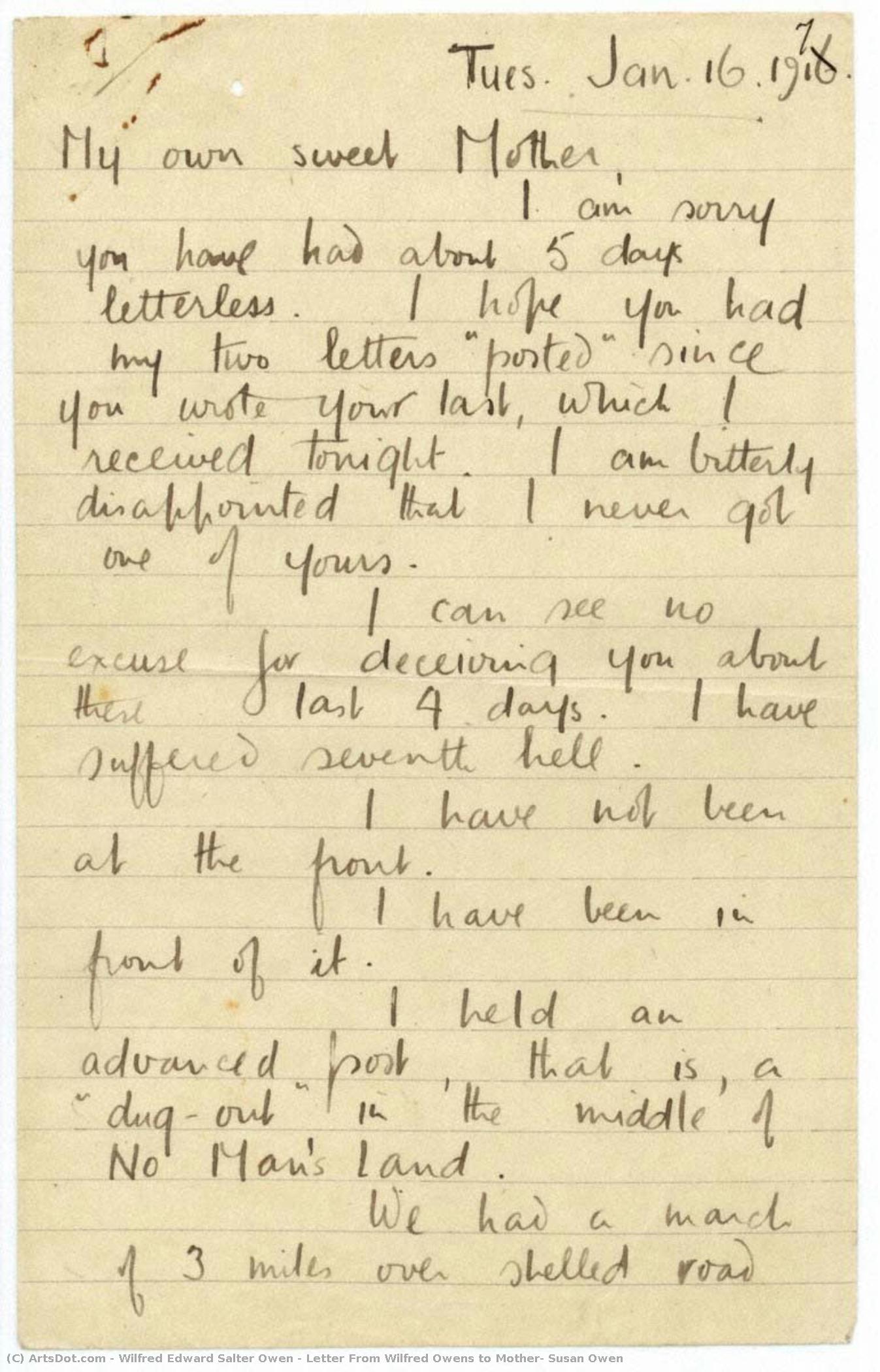
Letter From Wilfred Owens to Mother, Susan Owen


 Read More
Hand Made Oil Reproduction
Hand-painted oil on canvas in your size and frame, made to order by our artists. ( Buy Print Buy Image)




































Pick from our preset sizes that match the artwork's original proportions.

You may enter your own dimensions to fit a specific frame or space. If your selected size does not match the original image's proportions, we will either crop the artwork or extend the painting with additional hand-painted elements. A digital mockup will be sent for your approval before production begins.
Please note that the on-screen preview does not reflect the actual cropping or extension. Only the mockup will accurately show the final composition.
While custom sizes are available, we recommend selecting a dimension from the predefined list to preserve the original proportions.
After order, OriginalUniqueArt.com team will email client for instructions and provide a mockup preview
Worldwide Delivery () in 3/4 weeks instead of standard 5 weeks. (14 August). No compromise on quality.

Free Worldwide Express Shipping

High-Quality Linen Canvas

Full Shipping Insurance

Customs Tax Refund Guarantee

True Color Matching Guarantee

60-Day Return Policy (Defects Only)

100% Money-Back Guarantee

Bulk Discount Offer
 Glass option is only available in size under 110 CM

Letter From Wilfred Owens to Mother, Susan Owen
Reproduction Medium
Reproduction Size
-


Total Price
$ 300
Artist Biography
Wilfred Owen: A Voice of the Silent Trenches
Wilfred Edward Salter Owen, born in Oswestry, Shropshire, on March 18, 1893, remains one of the most profoundly influential and tragically short-lived voices of the First World War. His poetry, forged in the crucible of trench warfare and fueled by a searing empathy for his fellow soldiers, transcends mere documentation; it’s an indictment of war itself, a lament for lost innocence, and a testament to the enduring power of human experience. Owen's life was marked by a complex interplay of familial expectations, personal disillusionment, and ultimately, a fierce commitment to bearing witness through his verse. His untimely death on November 4, 1918 – just seven days before the armistice – robbed the world of a poet whose insights were desperately needed, yet his words continue to resonate with an unsettling clarity over a century later.Early Life and Influences
Owen’s childhood was rooted in a modest Shropshire landscape, shaped by the realities of post-industrial decline. His father, Thomas Owen, worked as a railway clerk, while his mother, Susan (née Shaw), instilled in him a strong sense of morality and compassion. The family's move to Birkenhead, a bustling port town, exposed young Wilfred to the stark contrasts of urban poverty and the anxieties of industrial life. This early exposure to hardship would profoundly inform his later poetry. He received an education at Birkenhead Institute and Shrewsbury Technical School, developing a love for literature, particularly the Romantic poets Wordsworth and Keats – figures who valued emotion, nature, and individual experience. Crucially, Owen’s time as a lay assistant to the Vicar of Dunsden provided him with a critical perspective on social injustice and religious hypocrisy, experiences that would later find expression in his unflinching depictions of war's brutality. His early influences were deeply intertwined with a nascent sense of social conscience and a yearning for artistic expression.The Shaping Influence of Siegfried Sassoon
Owen’s poetic trajectory took a dramatic turn when he entered Craiglockhart War Hospital in Edinburgh in January 1917. There, he encountered Siegfried Sassoon, a renowned poet and officer who was undergoing treatment for shell shock. Their relationship proved to be transformative. Initially, Owen held Sassoon in contempt, viewing him as aloof and detached from the realities of the front line. However, through intense discussions and shared experiences, they forged a deep intellectual bond. Sassoon’s own poetry, characterized by its sharp critique of war and its passionate advocacy for peace, profoundly influenced Owen's developing style and subject matter. Sassoon challenged Owen to move beyond patriotic verse and confront the horrors of trench warfare with unflinching honesty. This mentorship shifted Owen’s focus from heroic ideals to a stark portrayal of suffering, loss, and the psychological toll of war—a shift that would define his poetic legacy.The Poetry of the Trenches: Major Works
Owen's wartime poetry is characterized by its visceral realism, its unflinching depiction of trench life, and its profound exploration of human emotion in the face of unimaginable suffering. His most celebrated works—"Dulce et Decorum Est," "Insensibility," “Anthem for Doomed Youth,” “Futility,” “Spring Offensive,” and “Strange Meeting”—offer a harrowing glimpse into the physical and psychological realities of trench warfare. “Dulce et Decorum Est,” perhaps his most famous poem, vividly portrays the grotesque spectacle of a gas attack, culminating in a horrifying image of a dying soldier struggling to rise from the mud. "Insensibility" explores the emotional numbness experienced by soldiers exposed to constant bombardment, while “Anthem for Doomed Youth” captures the chaotic and dehumanizing nature of modern warfare. Owen’s use of vivid imagery, unflinching detail, and innovative poetic techniques—including free verse and irregular rhythms—broke with traditional war poetry conventions, forcing readers to confront the brutal truth of the conflict.Legacy and Historical Significance
Wilfred Owen's premature death on November 4, 1918, a week before the armistice, tragically cut short his promising career. Only a handful of his poems were published during his lifetime, but after his death, his work was championed by Siegfried Sassoon and Edith Sitwell, who played a crucial role in bringing his poetry to a wider audience. Owen’s collection *Poems* (1920) became an instant success, establishing him as one of the leading poets of the modernist movement. His unflinching portrayal of trench warfare challenged the romanticized notions of heroism prevalent at the time and offered a powerful indictment of war's senseless brutality. Owen’s legacy extends far beyond his individual poems; he is remembered as a pivotal figure in 20th-century poetry, whose work continues to inspire reflection on the human cost of conflict and the enduring power of art to bear witness to suffering. His voice—a voice born from the mud and blood of the trenches—remains profoundly relevant today.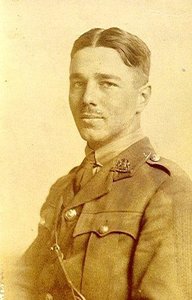
wilfred edward salter owen
1893 - 1918 , United Kingdom
Quick Facts
- Artistic Movement Or Style: Modernist poetry
- Artists Or Movements Influenced By This Artist: ['Romantic poets']
- Artists Who Influenced This Artist: ['Siegfried Sassoon']
- Date Of Birth: March 18, 1893
- Date Of Death: November 4, 1918
- Full Name: Wilfred Edward Salter Owen
- Nationality: British
- Notable Artworks:
- Dulce et Decorum Est
- Insensibility
- Anthem for Doomed Youth
- Futility
- Strange Meeting
- Place Of Birth: Oswestry, UK
Related Articles

William Owen: A Poetic Vision of War & Landscape in British Modernism
Explore the poignant war poetry of Wilfred Owen, a key figure in British Modernism. Discover his innovative style, themes of loss & camaraderie, and lasting impact on 20th-century literature. Analysis & historical context included.
Echoes of Time: Nostalgia, Technique & Cultural Significance in Vintage Paintings
Explore the captivating world of vintage paintings! Discover key styles, cultural significance & collecting tips from art experts at OriginalUniqueArt. Find authentic reproductions and elevate your home décor.
Echoes of Time: Exploring the Enduring Appeal of Vintage Artwork
Explore the captivating world of vintage art! Discover its history, enduring appeal, & how to build your own collection. Expert advice, custom reproductions & museum-quality prints at OriginalUniqueArt.

Echoes of Time: Exploring the Enduring Appeal & Historical Context of Vintage Art Prints
Explore the captivating world of vintage art prints! Discover their history, collecting tips & enduring appeal. Expert insights on chromolithography and building a legacy collection with OriginalUniqueArt.
Echoes of Eras Past: Exploring Themes & Techniques in Vintage Art Collections
Explore the captivating world of vintage art! Discover historical movements, iconic themes & collecting tips. Find handmade reproductions & expert appraisal at OriginalUniqueArt.