Preview
 Send
Send Share
Share
 Details

 Download
 Similars
 X-Ray
X-Ray Diaporama
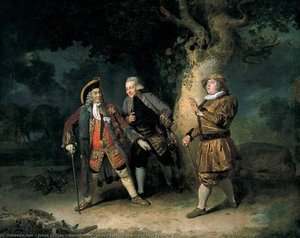
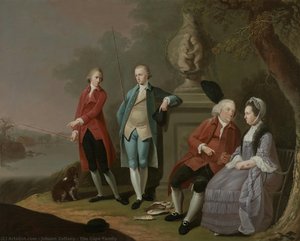
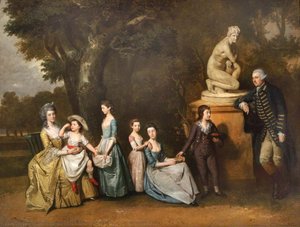
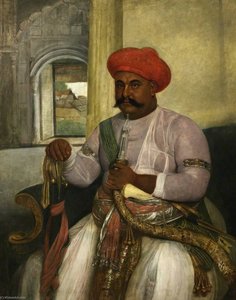
John Carbonell (1760–1837), in the Grounds of His House at Windsor
 Oil On Canvas
- WallArt
- Neoclassicism
 63.0 x 82.0 cm
 National Trust
 Read More
Hand Made Oil Reproduction
Hand-painted oil on canvas in your size and frame, made to order by our artists. ( Buy Print Buy Image)




P118B $10

P118H $10

P118W $10

P438Z $10

P508JH $12

P508YH $12

P805H $10

P805Z $10

P919BZ $10

P919G $10

P919XJ $10

P959ZH $10

P968JZ $12

W106C $8

W218G $10

W218JH $8

W218Y $10

W307PJ $10

W316G $10

W316PJ $8

W316Y $10

W398PJ $8

W4111J $10

W500HY $15

W500JH $15

W692G $12

W849H $8

W940BG $15

W953PJ $8




Pick from our preset sizes that match the artwork's original proportions.

You may enter your own dimensions to fit a specific frame or space. If your selected size does not match the original image's proportions, we will either crop the artwork or extend the painting with additional hand-painted elements. A digital mockup will be sent for your approval before production begins.
Please note that the on-screen preview does not reflect the actual cropping or extension. Only the mockup will accurately show the final composition.
While custom sizes are available, we recommend selecting a dimension from the predefined list to preserve the original proportions.
After order, OriginalUniqueArt.com team will email client for instructions and provide a mockup preview
Worldwide Delivery () in 3/4 weeks instead of standard 5 weeks. (15 August). No compromise on quality.

Free Worldwide Express Shipping

High-Quality Linen Canvas

Full Shipping Insurance

Customs Tax Refund Guarantee

True Color Matching Guarantee

60-Day Return Policy (Defects Only)

100% Money-Back Guarantee

Bulk Discount Offer
 Glass option is only available in size under 110 CM

John Carbonell (1760–1837), in the Grounds of His House at Windsor
Reproduction Medium
Reproduction Size
-


Total Price
$ 300
Artwork Description
John Carbonell (1760–1837), in the Grounds of His House at Windsor
Johann Zoffany’s “John Carbonell (1760–1837), in the Grounds of His House at Windsor” isn't merely a portrait; it’s a meticulously crafted tableau vivant—a snapshot of aristocratic leisure captured with breathtaking precision and imbued with subtle symbolic resonance. Painted around 1807, this canvas resides within the National Trust’s impressive collection, offering visitors a glimpse into the opulent world of Georgian England and the burgeoning fascination for capturing fleeting moments of social life.A Scene Steeped in Context
The painting depicts John Carbonell, a prominent wine merchant to King George III, standing serenely amidst Virginia Water—a landscaped lake commissioned by Cumberland Lodge’s benefactor, Henry Frederick Duke of Cumberland—with his loyal dog. This setting is crucial to understanding the artwork's significance. Virginia Water was conceived as an idealized retreat from urban pressures, embodying Enlightenment ideals of harmony with nature and demonstrating the power of landscape design to elevate human experience. Zoffany skillfully incorporates this visual language into his composition, reflecting the broader cultural preoccupation with portraying beauty and tranquility. The Duke’s patronage underscored the importance of artistic endeavors within the royal court, cementing Zoffany's reputation as a favored artist among the elite.The Painter’s Technique: Neoclassical Mastery
Zoffany’s mastery lies in his ability to fuse observation with theatrical illusion—a hallmark of the neoclassical style he championed. He employed a technique known as *sfumato*, blurring edges and softening contours to create an atmosphere of diffused light and depth, characteristic of the era's fascination with classical ideals. The artist meticulously rendered textures – from the bark of trees to the fur of Carbonell’s dog—demonstrating exceptional draughtsmanship. Furthermore, Zoffany skillfully utilized perspective to convey a sense of spaciousness and grandeur, mirroring the architectural ambitions of his time.Symbolism Beyond Appearance
Beyond its aesthetic beauty, “John Carbonell” speaks volumes about social status and familial bonds. Carbonell’s dignified posture conveys confidence and wealth, while the dog symbolizes loyalty and companionship—values highly esteemed in Georgian society. The inclusion of two artists – Zoffany himself and Edmund Bristow – adds another layer of complexity to the scene. Bristow, a landscape painter known for his idealized depictions of English countryside, contrasts sharply with Zoffany’s focus on portraiture, highlighting the diverse artistic interests prevalent during the period. This juxtaposition underscores the painting's exploration of both individual identity and broader cultural trends.Emotional Resonance: Tranquility and Reflection
Ultimately, “John Carbonell” evokes a profound sense of serenity and contemplation. The dappled sunlight filtering through the trees creates an inviting ambiance, encouraging viewers to linger on the canvas and immerse themselves in its tranquil beauty. Zoffany’s masterful portrayal captures not just a visual likeness but also an emotional state—a moment of quiet repose amidst the grandeur of Virginia Water. It remains a testament to the enduring power of art to transport us back in time and inspire reflection on themes of nature, nobility, and human connection.Artist Biography
Johann Zoffany: Life and Legacy
Early Life and Training
Johann Zoffany, born Johannes Josephus Zaufallij in 1733 in Freiburg, Germany, was a painter who achieved renown primarily in England and Italy. Details of his early childhood remain scarce, but it is known he received artistic training from a young age. He initially apprenticed with a sculptor, possibly Melchior Paulus in Ellwangen, before studying with Martin Speer in Regensburg. This foundational period laid the groundwork for his future career.
Journey to Italy and England
In 1750, Zoffany traveled to Rome, entering the studio of Agostino Masucci where he honed his skills within the Italian artistic tradition. He later moved to England in 1760, initially supporting himself by creating decorative designs for clocks made by Stephen Rimbault. This period marked a turning point as he began to establish connections and gain recognition within London’s art scene.
Royal Patronage and Artistic Development
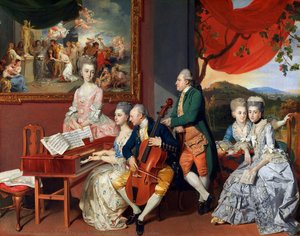
Zoffany quickly attracted the attention of King George III and Queen Charlotte, becoming a favored portraitist of the royal family. His ability to capture informal moments – such as Queen Charlotte and Her Two Eldest Children (1765) – distinguished him from more formal court painters. He was also popular with Austrian imperial family and created a baron of the Holy Roman Empire in 1776 by Empress Maria Theresa.
The Master of ‘Conversation Pieces’
Zoffany became celebrated for his “conversation pieces,” or *conversazione* – informal group portraits depicting social gatherings. He excelled at capturing the personalities and interactions within these scenes, often featuring prominent figures from society, theatre, and literature. His works like The Cope Family (1775) exemplify this style, offering glimpses into the lives of his patrons.
Major Achievements and Notable Works
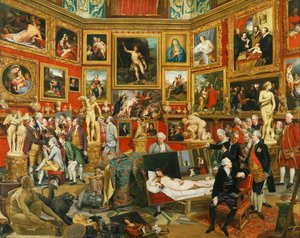
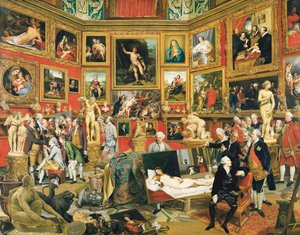
- Tribuna of the Uffizi (1772-1778): Perhaps his most famous work, a meticulously detailed depiction of the Uffizi Gallery in Florence.
- Dr William Hunter Teaching Anatomy at the Royal Academy (1779): A fascinating portrayal of medical education and scientific inquiry.
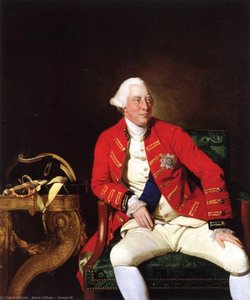
- George III (1771): A regal portrait showcasing the King’s power and elegance.
- Colonel Mordaunt's Cock Match (1784-1786): A vibrant depiction of colonial life in India, capturing a unique cultural event.
Years in India and Later Life
From 1783 to 1789, Zoffany resided in India, where he painted portraits of prominent figures like Warren Hastings and Asaf-ud-Daula. His experiences there influenced his artistic style and subject matter. A remarkable story from this period involves a shipwreck off the Andaman Islands, where survivors resorted to extreme measures for survival.
Influences and Legacy
Zoffany’s work reflects influences from both German precision and Italian artistry. He was influenced by artists like Agostino Masucci and drew inspiration from the Baroque tradition. His style, in turn, influenced contemporaries and later artists interested in portraiture and social commentary. He bridged artistic traditions and left a lasting impact on 18th-century art.
Historical Significance
Johann Zoffany’s paintings provide valuable insights into the social customs, intellectual life, and cultural values of his time. His “conversation pieces” offer intimate portraits of prominent individuals and their world, while his depictions of India contribute to our understanding of colonial history. He remains a significant figure in the history of art, celebrated for his technical skill, insightful observations, and unique artistic vision.

johann zoffany
1733 - 1810 , Germany
Quick Facts
- Birth Date: 1733
- Birth Place: Frankfurt, Germany
- Death Date: 1810
- Movement:
- Neoclassicism
- Realism
- Expressionism
- Name: Johann Zoffany
- Nationality: German
- Notable Works:
- Tribuna of the Uffizi
- Dr William Hunter Teaching Anatomy at the Royal Academy
- George III
- The Flower Girl
- Colonel Mordaunt's Cock Match
Related Articles
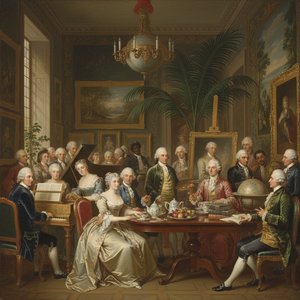
Johann Zoffany: Capturing Georgian Society with Brushstrokes of Cosmopolitan Flair
Explore the captivating world of Johann Zoffany, master portraitist of Georgian society. Discover his unique 'conversation pieces,' imperial commissions & lasting legacy. A guide for discerning collectors.

Gordon Parks: A Poetic Lens on American Life – Photography, Social Justice & Storytelling
Explore the profound work of Gordon Parks, a groundbreaking photographer who documented American life with unparalleled empathy and artistry. Discover his iconic images & lasting impact on social justice through Life magazine & beyond.
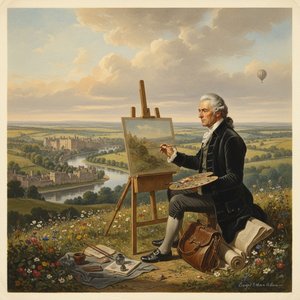
Thomas Sandby: Pioneering Watercolourist & Topographer of Georgian England
Explore the life & art of Thomas Sandby (1721-1798), a pioneering English watercolourist and architect. Discover his innovations, role in founding the Royal Academy, and lasting legacy at OriginalUniqueArt.
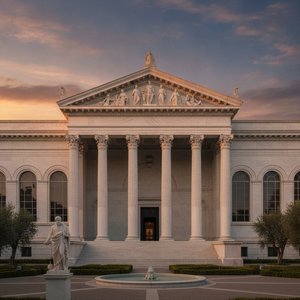
Neoclassicism Explained: The Timeless Elegance of Order, Reason, and the Classical Ideal
Explore the profound elegance of Neoclassicism. Discover how the Enlightenment era embraced Greek and Roman ideals of order, reason, and symmetry to redefine art history through masters like Mengs and Hamilton. A definitive guide for history lovers and art collectors.

Hokusai's Masterpieces: 25 Iconic Prints & Paintings for Art Lovers | OriginalUniqueArt
Journey through Katsushika Hokusai’s 25 most iconic artworks, including *The Great Wave*. Explore the ukiyo-e master's history, style & timeless Japanese woodblock prints. Find museum-quality reproductions for your home at OriginalUniqueArt.com.