
 Preview
 Send
Send Share
Share
 Details

 Download
 Similars
 X-Ray
X-Ray Diaporama
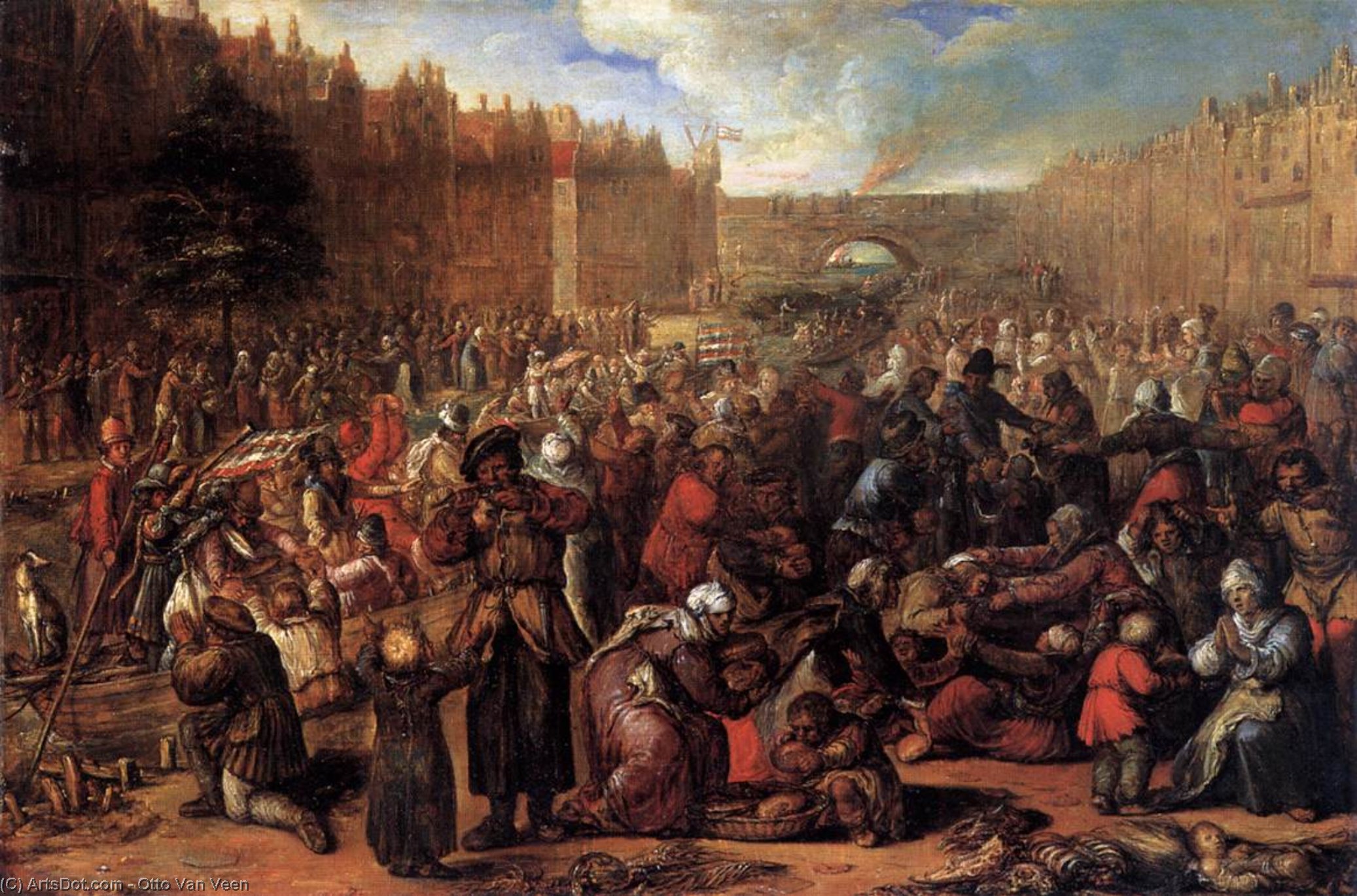
Distribution of Herring and White Bread during the Siege of Leiden
 Acrylic On Canvas
- WallArt
- Late Mannerism
 1574
1574 40.0 x 60.0 cm
 Rijksmuseum
 Read More
Hand Made Oil Reproduction
Hand-painted oil on canvas in your size and frame, made to order by our artists. ( Switch to Print Switch to Image)




P118B $10

P118H $10

P118W $10

P438Z $10

P508JH $12

P508YH $12

P805H $10

P805Z $10

P919BZ $10

P919G $10

P919XJ $10

P959ZH $10

P968JZ $12

W106C $8

W218G $10

W218JH $8

W218Y $10

W307PJ $10

W316G $10

W316PJ $8

W316Y $10

W398PJ $8

W4111J $10

W500HY $15

W500JH $15

W692G $12

W849H $8

W940BG $15

W953PJ $8




Pick from our preset sizes that match the artwork's original proportions.

You may enter your own dimensions to fit a specific frame or space. If your selected size does not match the original image's proportions, we will either crop the artwork or extend the painting with additional hand-painted elements. A digital mockup will be sent for your approval before production begins.
Please note that the on-screen preview does not reflect the actual cropping or extension. Only the mockup will accurately show the final composition.
While custom sizes are available, we recommend selecting a dimension from the predefined list to preserve the original proportions.
After order, OriginalUniqueArt.com team will email client for instructions and provide a mockup preview
Worldwide Delivery () in 3/4 weeks instead of standard 5 weeks. (5 August). No compromise on quality.

Free Worldwide Express Shipping

High-Quality Linen Canvas

Full Shipping Insurance

Customs Tax Refund Guarantee

True Color Matching Guarantee

60-Day Return Policy (Defects Only)

100% Money-Back Guarantee

Bulk Discount Offer
 Glass option is only available in size under 110 CM

Distribution of Herring and White Bread during the Siege of Leiden
Reproduction Medium
Reproduction Size
-


Total Price
$ 300
Artwork Description
A Frozen Moment of Resilience: Otto van Veen’s “Distribution of Herring and White Bread”
Otto van Veen's "Distribution of Herring and White Bread during the Siege of Leiden," painted in 1574, isn’t merely a historical depiction; it’s a poignant tableau of human endurance amidst chaos. The scene unfolds within the besieged city of Leiden, a microcosm of the turbulent religious conflicts gripping the Netherlands at the time. Van Veen masterfully captures a pivotal moment – the arrival of relief supplies, specifically herring and white bread, offered by the rebel army to the starving populace trapped within the city walls. This painting transcends its historical subject matter, becoming an enduring symbol of community spirit, shared hardship, and the tenacious will to survive.
The composition is remarkably dynamic, a carefully orchestrated arrangement of figures and elements that draws the viewer directly into the heart of the scene. The foreground is dominated by a throng of people – men, women, and children – their faces etched with hunger and exhaustion. They are depicted in various postures: some kneeling in supplication, others reaching eagerly for the offered sustenance, while still others stand, supporting those less able to bear the weight of their ordeal. A few individuals, identifiable as soldiers, distribute the food, their gestures conveying a sense of urgency and compassion. The horses, strategically placed throughout the composition, add to the scene’s energy and movement, further emphasizing the immediacy of the event.
The Mannerist Palette: Style and Technique
Van Veen's style firmly resides within the Mannerism period, a distinctly European artistic movement that flourished in the late 16th century. Unlike the idealized forms of the High Renaissance, Mannerism favored elongated figures, dramatic poses, and an emphasis on emotional intensity over realistic representation. In “Distribution of Herring and White Bread,” this is evident in the subtly distorted proportions of some figures, particularly those reaching for the bread – a deliberate choice that amplifies their desperation. The artist employs a rich, layered technique, utilizing impasto—thickly applied paint—to create texture and depth, especially noticeable in the folds of clothing and the rough surfaces of the loaves themselves. The color palette is muted yet vibrant, dominated by earthy tones—ochres, browns, and grays—contrasted with the pale yellows and whites of the bread and the silvery sheen of the fish.
Van Veen’s use of light is particularly noteworthy. He employs a dramatic chiaroscuro effect – strong contrasts between light and shadow – to heighten the sense of drama and focus attention on key figures within the scene. The light source, seemingly originating from an unseen window or doorway, casts long shadows across the street, creating a theatrical atmosphere that underscores the precariousness of the situation.
Historical Context: Leiden Under Siege
To fully appreciate “Distribution of Herring and White Bread,” it’s crucial to understand the historical context in which it was created. The siege of Leiden (1574) was a defining moment in the Eighty Years' War, a protracted conflict between the Dutch Republic and Spain for independence. Leiden, a strategically important city located on the Rhine River, had been besieged by Spanish forces under the command of the Duke of Parma. The prolonged blockade resulted in severe food shortages and widespread suffering among the civilian population. The painting captures this desperate situation with remarkable accuracy, offering a visceral glimpse into the hardships endured by the people of Leiden during that tumultuous period.
The event depicted is documented as having occurred on October 3rd, 1574, when the rebel army finally broke through the siege lines and brought much-needed supplies to the starving citizens. The painting serves as a powerful reminder of this pivotal moment in Dutch history – a testament to the resilience of the people of Leiden and their determination to resist oppression.
Symbolism and Emotional Resonance
Beyond its historical accuracy, “Distribution of Herring and White Bread” is laden with symbolism. The bread and fish represent sustenance—not just physical nourishment but also hope and salvation. The act of distribution symbolizes generosity, compassion, and the bonds of community. The faces of the people in the painting – etched with hunger, weariness, and yet a flicker of gratitude – evoke a profound sense of empathy within the viewer. Van Veen’s masterful portrayal transforms a simple scene of relief efforts into a timeless meditation on human suffering, resilience, and the enduring power of shared humanity. The work continues to resonate today as an iconic image of hope amidst adversity.
Artist Biography
A Life Bridging Renaissance and Baroque: The World of Otto van Veen
Otto van Veen, a name resonating with the echoes of late 16th and early 17th-century artistry, occupies a fascinating position in art history. Born around 1556 in Leiden, Netherlands, into a family of prominence—his father served as burgomaster—Van Veen’s life was one of shifting allegiances and artistic evolution. The religious tensions gripping the Low Countries during his youth profoundly shaped his trajectory. The relocation of his family to Antwerp in 1572, driven by their Catholic faith amidst a rising tide of Protestantism, marked not just a geographical shift but also a turning point in his intellectual and artistic formation. This move brought him into contact with influential figures like Dominicus Lampsonius and Jean Ramée, laying the groundwork for a career steeped in humanist ideals and classical learning. His subsequent journey to Rome around 1574 or 1575 proved pivotal; immersing himself in the heart of the Italian Renaissance, he absorbed the stylistic nuances that would define his mature work—the elegance, the refined compositions, and the emphasis on idealized forms characteristic of Mannerism. The precise extent of his Roman tutelage remains debated, with some scholars suggesting a period under Federico Zuccari, but its impact is undeniable.Patronage, Pedagogy, and the Shaping of a Master
Upon returning from Italy, Van Veen swiftly established himself as a sought-after artist. His talent secured him a position as court painter to Alexander Farnese, Duke of Parma, governor of the Southern Netherlands, in Brussels. This patronage provided not only financial stability but also access to a sophisticated artistic milieu and opportunities for large-scale commissions. He became a master within Antwerp’s Guild of St. Luke in 1593, solidifying his professional standing. However, Van Veen's legacy extends far beyond his own paintings; it is inextricably linked to the career of one of art history’s most celebrated masters: Peter Paul Rubens. From approximately 1594 or 1595 until 1598, Van Veen served as Rubens’ teacher, instilling in the young artist a rigorous classical education and a deep appreciation for humanist principles. This mentorship was crucial in shaping Rubens' intellectual framework and artistic sensibilities, laying the foundation for his future triumphs. Van Veen didn’t merely impart technical skills; he cultivated a worldview that emphasized the integration of art, literature, and philosophy—a hallmark of Rubens’ own prolific output. During this period, Van Veen also undertook numerous religious commissions, adorning churches with altarpieces and chapels, demonstrating his versatility and growing reputation as a skilled and reliable artist.Mannerist Sensibility and the Language of Emblems
Van Veen’s artistic style is firmly rooted in Mannerism, an aesthetic characterized by elongated figures, graceful poses, sophisticated compositions, and a refined palette. His paintings often exude an air of elegance and intellectual contemplation. He was known as a *pictor doctus* – a learned painter – and this designation reflects his commitment to incorporating humanist themes into his work. Beyond painting, Van Veen made significant contributions to the burgeoning field of emblem books—a popular genre that combined images with text to convey moral and philosophical messages. His *Quinti Horatii Flacci Emblemata* (1607), *Amorum Emblemata* (1608), and *Amoris Divini Emblemata* (1615) are prime examples of this form, showcasing his skill as both an artist and a scholar. The *Amorum Emblemata*, in particular, achieved widespread influence, serving as a model for subsequent emblem books and inspiring artists across various disciplines. Its depictions of putti enacting scenes from classical literature and mythology, accompanied by witty mottos, captured the spirit of Renaissance humanism and its fascination with love—both earthly and divine.Later Years and Enduring Influence
Even as artistic tastes began to shift towards the dynamism of the Baroque, Van Veen continued to thrive. He maintained connections with the Archdukes Albert and Isabella, though without holding a formal court appointment. A significant undertaking during this period was a series of twelve paintings depicting battles between Romans and Batavians, commissioned by the Dutch States General based on earlier engravings he had produced. This project demonstrates his ability to adapt to changing political landscapes and cater to diverse artistic demands. Throughout his career, Van Veen remained actively involved in Antwerp’s artistic community, serving as dean of both the Guild of St. Luke (1602) and the Romanists (1606). He came from a family with considerable artistic talent; his brother Gijsbert was an accomplished engraver, his daughter Gertruid also pursued painting, and several nephews worked as pastel artists. Otto van Veen died in Brussels in 1629, leaving behind a legacy that extended far beyond his own oeuvre. Arnold Houbraken, the renowned Dutch art historian, recognized him as the most impressive artist and scholar of his time, even featuring his portrait on the title page of his influential *De Groote Schouburgh der Nederlantsche Konstschilders en Schildersessen*. His enduring significance lies not only in his own artistic achievements but also in his pivotal role as a teacher and mentor—most notably to Peter Paul Rubens—and his contribution to the intellectual and artistic currents of his era. He stands as a compelling figure, bridging the gap between the Renaissance and Baroque periods, embodying the ideals of the humanist artist, and leaving an indelible mark on the history of Flemish painting.
Otto van Veen
1556 - 1629 , Netherlands
Quick Facts
- Artistic Movement Or Style: Mannerism
- Artists Or Movements Influenced By This Artist: ['Peter Paul Rubens']
- Artists Who Influenced This Artist: ['Federico Zuccari']
- Date Of Birth: 1556
- Date Of Death: 1629
- Full Name: Otto van Veen
- Nationality: Flemish
- Notable Artworks:
- Batavians Defeating Romans
- Peace Negotiations
- Brinno Raised upon Shield
- Amorum Emblemata
- Place Of Birth: Leiden, Netherlands
Related Articles
Van Gogh's Masterpieces: Explore 25 Iconic Paintings & Art for Your Home
Journey through Vincent van Gogh's 25 most iconic paintings! Explore 'Starry Night', 'Sunflowers,' and more—discover the stories, techniques & emotions behind these Post-Impressionist masterpieces. Find museum-quality art reproductions for your home at OriginalUniqueArt.com.

Rembrandt's Masterpieces: Explore 25 Iconic Paintings & Prints | OriginalUniqueArt
Journey through Rembrandt van Rijn's 25 most iconic paintings & etchings. Explore Dutch Golden Age masterpieces, dramatic chiaroscuro, and timeless portraits. Find museum-quality art reproductions to elevate your home decor on OriginalUniqueArt.com.

Early Netherlandish Masters: 10 Paintings That Revolutionized Art & Decor
Journey into the world of Early Netherlandish painting! Explore 10 masterpieces by Jan van Eyck, Rogier van der Weyden & more. Discover stunning detail, symbolism & Renaissance art for your home decor. Find museum-quality reproductions on OriginalUniqueArt.com

Dutch Baroque Masters: 10 Paintings That Shaped an Era | OriginalUniqueArt
Journey through the Golden Age with our guide to the Top 10 Dutch Baroque masterpieces! Explore iconic paintings by Rembrandt, Vermeer & Frans Hals. Find museum-quality art reproductions and elevate your home decor at OriginalUniqueArt.com.
Adriaen van Ostade: A Master of Dutch Genre Painting & Social Commentary
Explore the life & work of Adriaen van Ostade, a leading Dutch Golden Age painter. Discover his realistic genre scenes, social commentary, and lasting influence on art history. Learn more at OriginalUniqueArt.



