Preview
 Send
Send Share
Share
 Details

 Download
 Similars
 X-Ray
X-Ray Diaporama
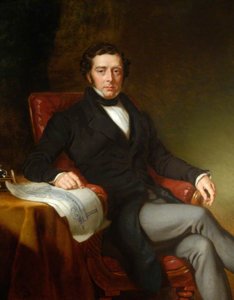
George Stephenson (1781–1848)
 Neoclassicism
 1847
1847 153.0 x 111.0 cm
 Institution of Mechanical Engineers
 Read More
Hand Made Oil Reproduction
Hand-painted oil on canvas in your size and frame, made to order by our artists. ( Buy Print Buy Image)




































Pick from our preset sizes that match the artwork's original proportions.

You may enter your own dimensions to fit a specific frame or space. If your selected size does not match the original image's proportions, we will either crop the artwork or extend the painting with additional hand-painted elements. A digital mockup will be sent for your approval before production begins.
Please note that the on-screen preview does not reflect the actual cropping or extension. Only the mockup will accurately show the final composition.
While custom sizes are available, we recommend selecting a dimension from the predefined list to preserve the original proportions.
After order, OriginalUniqueArt.com team will email client for instructions and provide a mockup preview
Worldwide Delivery () in 3/4 weeks instead of standard 5 weeks. (15 August). No compromise on quality.

Free Worldwide Express Shipping

High-Quality Linen Canvas

Full Shipping Insurance

Customs Tax Refund Guarantee

True Color Matching Guarantee

60-Day Return Policy (Defects Only)

100% Money-Back Guarantee

Bulk Discount Offer
 Glass option is only available in size under 110 CM

George Stephenson (1781–1848)
Reproduction Medium
Reproduction Size
-


Total Price
$ 300
Artist Biography
A Life Woven in Sound and Shadow: The Art of John Lindsay Lucas
John Lindsay Lucas, a name perhaps less familiar to the general public than some of his contemporaries, remains a quietly profound figure within the landscape of 20th-century British portraiture. Born in London on July 4th, 1807, into a family steeped in artistic and journalistic lineage – his father a writer and journalist, tracing back through naval service – Lucas’s early life was one of exposure to both the formal world of art and the vibrant currents of Victorian society. His apprenticeship under Samuel William Reynolds, a master of mezzotint engraving, provided him with a crucial technical foundation, while the influence of his mother, a woman of refined sensibilities, undoubtedly shaped his artistic eye. This grounding in craft combined with an innate sensitivity to human character would become the hallmark of his distinctive style. Lucas’s career unfolded during a period of immense social and political change – the rise of industrialization, the expansion of the British Empire, and the burgeoning movement for reform. He wasn't merely documenting the faces of the elite; he was capturing the spirit of an era, imbuing his portraits with a subtle awareness of the anxieties and aspirations that defined Victorian England. His early work, exemplified by his portrait of Mary Russell Mitford, showcased a nascent talent – a keen ability to render delicate features and capture fleeting expressions. However, it was his association with Henry Milton, a prominent patron and collector, that truly propelled him into the heart of London’s artistic circles. This connection opened doors to commissions from some of the most influential figures of the day: Queen Adelaide, Albert, Prince Consort (a subject he painted no less than four times), Princess Louise, and the formidable Duke of Wellington, who sat for him a remarkable eight times – a testament to Lucas's skill in conveying both dignity and vulnerability. His work graced the galleries of Sir Robert Peel’s contemporary portraits, solidifying his position as one of the era’s most sought-after portraitists.Technique and Style: A Master of Subtle Realism
Lucas's artistic approach was characterized by a remarkable restraint and an almost unnerving ability to capture the essence of his subjects without resorting to overt sentimentality or theatricality. He eschewed dramatic lighting and elaborate backgrounds, instead favoring a muted palette and a focus on capturing the subtle nuances of expression. His portraits are not merely likenesses; they are psychological studies, revealing glimpses into the inner lives of those who sat before him. He was particularly adept at portraying the weariness and quiet dignity of older subjects, imbuing them with a sense of profound experience. This is evident in his numerous depictions of the Duke of Wellington, where he doesn’t simply record the military hero's physical presence but also conveys the weight of years and battles fought. His technical skill was further demonstrated through his mezzotint engravings – intricate works that showcased his mastery of tonal shading and detail. The Nicholas Conyngham Tindal portrait, rendered in mezzotint, stands as a particularly compelling example of this artistry.Beyond the Salon: Lucas’s Influence and Legacy
While Lucas enjoyed considerable success within the established art world – exhibiting at the Royal Academy, the British Institution, and the Suffolk Street Gallery – his influence extended beyond the confines of the salon. His portraits were frequently reproduced in engravings, ensuring that his work reached a wider audience. Furthermore, he contributed to the burgeoning field of portrait photography, recognizing its potential as a means of disseminating images and documenting individuals. The meticulous detail and psychological insight evident in his portraits foreshadowed many of the techniques employed by later generations of artists. His legacy is not one of flamboyant innovation but rather of quiet mastery – a testament to the enduring power of observation, restraint, and a deep understanding of human nature.A Later Life and Unfinished Works
Lucas’s career spanned over six decades, culminating in his death at St John's Wood on April 30th, 1874. At the time of his passing, his estate was dispersed through auction, revealing a substantial body of work – 96 portraits at the Royal Academy, 13 at the British Institution, and eight at the Suffolk Street Gallery. Beyond portraiture, Lucas also dabbled in engraving, producing several prints after Sir Thomas Lawrence, including one of Queen Victoria’s Portuguese consort. His later years saw him exploring new avenues, including his involvement with experimental music and performance art, as evidenced by his collaboration with Dominique Gonzalez Foerster on the Performa 09 event. The work of John Lindsay Lucas offers a fascinating glimpse into Victorian England – a world of social upheaval, artistic innovation, and enduring human drama. His portraits remain powerful testaments to his skill, sensitivity, and profound understanding of the human condition.
john lindsay lucas
1807 - 1874
Quick Facts
- Artistic Movement Or Style: Portrait painting
- Artists Or Movements Influenced By This Artist: ['National Portrait Gallery']
- Artists Who Influenced This Artist: ['Samuel William Reynolds']
- Date Of Birth: July 4, 1807
- Date Of Death: April 30, 1874
- Full Name: John Lindsay Lucas
- Nationality: English
- Notable Artworks:
- Queen Adelaide
- Albert, Prince Consort
- Princess Royal
- Duke of Wellington
- Place Of Birth: London, England
Related Articles

Georges Braque's Masterpieces: 25 Paintings That Defined Cubism & Modern Art | OriginalUniqueArt
Explore 25 iconic Georges Braque paintings that revolutionized Cubism & modern art. Discover the stories behind his masterpieces, from Fauvism to Analytical Cubism. Find museum-quality reproductions & elevate your home decor with OriginalUniqueArt.com.

Georges Seurat's Masterpieces: 25 Paintings That Defined Pointillism | OriginalUniqueArt
Explore 25 iconic Georges Seurat paintings & discover the brilliance of Pointillism. From 'La Grande Jatte' to his harbor scenes, delve into art history with OriginalUniqueArt.com. Find museum-quality reproductions for your home decor. Explore the full collection online!

John Singer Sargent's 25 Masterpieces: Portraits & Beyond | OriginalUniqueArt
Explore 25 iconic John Singer Sargent paintings – from dazzling portraits to Impressionist landscapes. Discover the stories behind Madame X, El Jaleo & more! Find museum-quality art reproductions and elevate your home decor with OriginalUniqueArt.com.

John Constable's Masterpieces: Explore 25 Iconic Landscapes for Your Home
Journey through John Constable's 25 most celebrated landscapes. Explore Romanticism, Dedham Vale & his masterful use of light in iconic paintings like 'Hay Wain'. Find museum-quality art reproductions and elevate your home decor on OriginalUniqueArt.com.
John George Brown: Capturing American Life & Sentiment in 19th-Century Genre Painting
Explore the captivating genre paintings of John George Brown, celebrated for his realistic depictions of 19th-century American life. Discover his legacy & find museum-quality reproductions at OriginalUniqueArt.