Oil Edition
 Everything about Philosopher







































 For artworks or reproductions larger than 105 cm (approximately 41 inches) on any side, the frame will be shipped as a kit, disassembled. This method ensures safe delivery and prevents damage during transport.


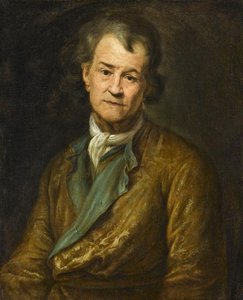
The Portrait Bust of a Philosopher
Pierre Puget’s Philosopher presents a marble bust focused on the psychological depth of its subject. The sculpture captures a figure from the chest up, emphasizing a countenance designed to convey wisdom and intense contemplation. Through the careful rendering of facial features, the work moves beyond mere likeness to suggest a state of profound intellectualism.
The subject's expression is defined by a furrowed brow and a slightly downturned mouth. These specific details imbue the figure with a sense of thoughtfulness, bordering on melancholy. This emotional weight provides a human dimension to the classical form, suggesting a mind preoccupied with complex truths.
Composition and Visual Elements
The composition is centered and direct, presenting the bust from the chest up against a dark, near-black background. This high-contrast setting isolates the subject, ensuring the viewer's attention remains fixed upon the form. The face acts as the primary focal point, drawing the eye through a deliberate arrangement of light and shadow.
Lighting is directed from above and slightly to the left, producing a chiaroscuro effect. This technique defines the three-dimensional volume of the marble, casting deep shadows that emphasize the contours of the neck, shoulders, and the folds of the beard. The interplay of light and dark creates a sense of recession and physical depth within the frame.
The subject's expression is characterized by a furrowed brow and a slightly downturned mouth. These features, combined with the organic, curved lines of the facial structure, suggest a state of intense contemplation or melancholy. The tension in the brow provides a psychological weight to the physical presence of the sculpture.
Technique and Material Properties
The sculpture is executed in marble, utilizing subtractive methods to reveal the form from the stone. The process involves the deliberate carving away of material from a solid block to define the anatomical features and the character's contemplative expression.
The artist employs varied surface treatments to create tactile contrast. The smoothness of the marble is used to represent the skin of the face, while more deliberate, rougher textures are applied to the hair and beard. This manipulation of the stone's surface creates a sense of volume and depth through the interplay of light and shadow across the different finishes.
Artistic Style and Influences
The sculpture adheres to a classical tradition, emphasizing realism and idealized representation. It captures the subject through a lens of profound introspection, utilizing a furrowed brow and a slightly downturned mouth to suggest a state of contemplation or melancholy. This focus on the internal life of the subject aligns with a broader sculptural movement that seeks to balance physical accuracy with the expression of human thought.
Puget’s approach to form is characterized by an emphasis on emotion, pathos, and drama. The work reflects the influence of Michelangelo’s powerful, muscular figures, particularly in the way the anatomy and facial features convey a sense of weight and gravity. This intensity is further shaped by the dynamic compositions associated with Bernini, which prioritize movement and theatricality even within the stillness of stone.
The interplay of light and shadow, or chiaroscuro, defines the contours of the face and the deep folds of the beard. This technique heightens the three-dimensional presence of the marble, transforming the static bust into a study of volume and depth. The result is a work that prioritizes the expressive power of the human form over mere decorative imitation.
Related Works by Pierre Puget
Puget’s sculptural output includes several significant commissions for the French court and major collections. His work on the figure of Hercules, currently known as the Hercule gaulois in the Louvre, demonstrates his ability to handle large-scale marble forms. This interest in mythological subjects is further seen in the group Perseus and Andromeda, which was completed in 1684. These works reflect the dramatic intensity and expressive realism characteristic of his approach to the human form.
The artist also engaged with relief sculpture and high-stakes mythological narratives. He produced the bas-relief Alexander and Diogenes, created between about 1671 and 1693. Additionally, his repertoire includes the sculpture Milo of Croton, a work produced between about 1671 and 1684. These pieces illustrate the breadth of his technical skill in both free-standing and relief formats.
Questions & Answers
Is this Philosopher painted by hand or printed?
Painted by hand: a trained painter copies Philosopher in oil on linen canvas.
What size should I choose for Philosopher?
Sizes run from 37.4 x 26.7 cm ($219) to 249.0 x 178.0 cm ($1840); the table on this page lists the main steps and their prices.
How long does delivery take?
Delivery takes 4 to 5 weeks, with free worldwide express shipping; an urgent production option is offered on this page. You can return it within 100 days for a full refund, with no condition.
Where is the original Philosopher?
The original is in the collection of the Bavarian State Painting Collections, Munich.
What medium did Pierre Puget use for Philosopher?
Marble.
More about this painting
 Send
 Share
 Details
 Fact sheet


 Download
 Similars
 Diaporama
 Q&A

 Stats