Drunkards (Mikuláš Galanda)
Mikuláš Galanda (1895–1938) made Drunkards. It is kept at Gallery of M. A. Bazovsky in Trencin, Slovak Republic.

 Preview

 Hand Made Oil Painting
 Send
 Share
 Fact sheet


 Download
 Similars
 X-Ray
 Diaporama
 Q&A

 Stats
Drunkards, in brief
- Title
- Drunkards
- Artist
- Mikuláš Galanda (1895–1938)
- Artist born in
- Turčianske Teplice, Slovakia
- Where to see it
- Gallery of M. A. Bazovsky, Trencin, Slovak Republic
Which museum holds Drunkards?
Gallery of M. A. Bazovsky
Trencin, Slovak Republic
A Window into Slovak Soul: Exploring the Gallery of M. A. Bazovsky Nestled in the historic heart of Trenčín, Slovakia, the Gallery of M.


High-resolution images of Drunkards

Mikuláš Galanda, Drunkards, Gallery of M. A. Bazovsky. Public domain.
Questions on Drunkards, answered
Where is "Drunkards" by Mikuláš Galanda on display today?
The original "Drunkards" by Mikuláš Galanda is held at the Gallery of M. A. Bazovsky, Trencin, Slovak Republic. A reproduction allows the work to be displayed at home.
Is "Drunkards" by Mikuláš Galanda in the public domain?
The copyright answer for "Drunkards" by Mikuláš Galanda: the work is in the public domain - its copyright has expired. This determines whether reproductions of the image may be freely made.
Who created "Drunkards"?
The artist behind "Drunkards" is Mikuláš Galanda. The work is catalogued under Mikuláš Galanda's name.
What explains the copyright situation of "Drunkards" by Mikuláš Galanda?
"Drunkards" by Mikuláš Galanda is in the public domain - its copyright has expired. Copyright duration runs from the artist's death, which occurred in 1938.
Is "Drunkards" by Mikuláš Galanda kept in the artist's home country?
No - the artwork is kept abroad. "Drunkards" is held in Slovak Republic, while Mikuláš Galanda was born in Slovakia.
About the artist, Mikuláš Galanda
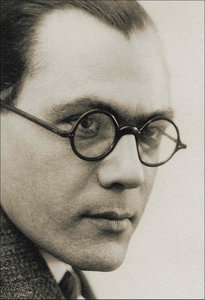
1895–1938, Slovakia
Mikuláš Galanda
The Architect of Slovak Modernism In the vibrant tapestry of Central European art history, few figures loom as large or as transformative as Mikuláš Galanda. Born in 1895 in the quiet surroundings of Malá Ves near Turčianske Teplice, Slovakia, Galanda emerged not merely as a painter, but as a visionary architect of a new visual language for his nation. His journey was one of profound intellectual and aesthetic evolution, moving from the classical foundations of his early training toward a sophisticated, avant-garde synthesis that would define Slovak modernism. To look upon his work is to witness the birth of a modern identity, captured through bold lines and a rhythmic approach to form.
 Girl's Head1917
 After the Bath1922
 Lovers1920
 Woman with Bellflowers1928
