Preview
 Send
Send Share
Share
 Details

 Download
 Similars
 X-Ray
X-Ray Diaporama
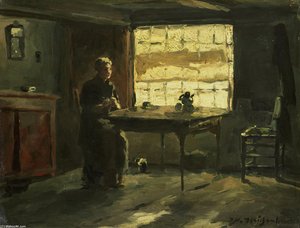
The Bleach
 Read More
Hand Made Oil Reproduction
Hand-painted oil on canvas in your size and frame, made to order by our artists. ( Buy Print Buy Image)




































Pick from our preset sizes that match the artwork's original proportions.

You may enter your own dimensions to fit a specific frame or space. If your selected size does not match the original image's proportions, we will either crop the artwork or extend the painting with additional hand-painted elements. A digital mockup will be sent for your approval before production begins.
Please note that the on-screen preview does not reflect the actual cropping or extension. Only the mockup will accurately show the final composition.
While custom sizes are available, we recommend selecting a dimension from the predefined list to preserve the original proportions.
After order, OriginalUniqueArt.com team will email client for instructions and provide a mockup preview
Worldwide Delivery () in 3/4 weeks instead of standard 5 weeks. (12 August). No compromise on quality.

Free Worldwide Express Shipping

High-Quality Linen Canvas

Full Shipping Insurance

Customs Tax Refund Guarantee

True Color Matching Guarantee

60-Day Return Policy (Defects Only)

100% Money-Back Guarantee

Bulk Discount Offer
 Glass option is only available in size under 110 CM

The Bleach
Reproduction Medium
Reproduction Size
-


Total Price
$ 300
Artist Biography
Early Life and Training
Jan Hendrik Weissenbruch, born June 19, 1824, in The Hague, Netherlands, descended from a family steeped in artistic tradition. His father, Johannes Weissenbruch, was a chef and restaurateur who possessed a passion for painting—a hobby that instilled in young Jan Hendrik an early appreciation for visual art. Among his father’s collection were notable works by Andreas Schelfhout and Bartholomäus van Hove, artists whose atmospheric landscapes profoundly influenced Weissenbruch's formative years. This exposure to celebrated painters shaped his artistic sensibilities from the outset. Johannes Low, a respected drawing instructor, recognized Jan Hendrik’s talent and provided him with invaluable training in 1843. Simultaneously, he enrolled in evening classes taught by Bartholomäus van Hove at the Hague Academy of Art, furthering his artistic education within a vibrant artistic milieu.Artistic Style and Influences
Weissenbruch’s initial artistic style mirrored the Romantic School's aesthetic—particularly Schelfhout’s meticulous attention to detail. His landscapes captured the grandeur of Dutch skies with remarkable precision, reflecting Schelfhout’s admiration for Jacob van Ruisdael, whom he encountered at a young age during a visit to the Mauritshuis in The Hague. This encounter solidified Weissenbruch's fascination with seventeenth-century landscape painting and its expressive qualities. As his artistic vision matured, Weissenbruch gradually embraced looser brushstrokes and broader color palettes—techniques that imbued his paintings with an ethereal atmosphere reminiscent of Ruisdael’s monumental canvases. He skillfully blended Romantic idealism with Impressionistic observation, creating a distinctive style that resonated deeply within the Hague School movement.Notable Works
Weissenbruch's oeuvre encompasses a diverse range of landscapes and genre scenes—primarily watercolors—that exemplify his mastery of capturing the beauty of the Dutch countryside. Among his most celebrated paintings are “Road Near The Canal,” depicting a tranquil waterway bordered by lush vegetation; “Landscape With Mill Near Schiedam,” showcasing a picturesque windmill amidst rolling hills; and “Forest View Near Barbizon,” an homage to Impressionist techniques applied to French landscapes. These works demonstrate Weissenbruch’s ability to convey mood and atmosphere with remarkable subtlety—a hallmark of his artistic approach. His meticulous observation of light and color, combined with expressive brushwork, cemented his reputation as one of the Hague School's foremost practitioners.Legacy
Jan Hendrik Weissenbruch stands as a pivotal figure in Dutch art history—a cornerstone of the Hague School, which flourished between 1860 and 1900. His watercolors are characterized by their delicate brushstrokes and profound sensitivity to natural light—qualities that continue to inspire artists today. He was recognized as one of the most important painters of his time, earning acclaim both domestically and internationally. Weissenbruch’s influence extended beyond his own artistic output; he mentored prominent artists such as Anton Mauve and Victor Bauffe, shaping the trajectory of Dutch landscape painting for decades to come. His legacy resides not only in his stunning visual creations but also in his contribution to fostering a distinctive artistic tradition—one that prioritizes observation, emotion, and the evocative portrayal of nature’s grandeur. Weissenbruch's paintings can be found in museums across Europe, including the Rijksmuseum Amsterdam and the Mauritshuis, ensuring that his artistic vision endures for generations.
johan hendrik weissenbruch
1824 - 1903 , Netherlands
Quick Facts
- Artistic Movement Or Style: Hague School
- Artists Or Movements Influenced By This Artist: ['Anton Mauve']
- Artists Who Influenced This Artist:
- Andreas Schelfhout
- Jacob van Ruisdael
- Date Of Birth: June 19, 1824
- Full Name: Jan Hendrik Weissenbruch
- Nationality: Dutch
- Notable Artworks:
- Road near the canal
- Landscape with mill near schiedam
- Forest view near barbizon
- Place Of Birth: The Hague, Netherlands