


1


Updated October 2026 · ranked by our popularity score (searches, visits and orders for each work) · 120 works by Laura Knight in our catalogue
In short
Untitled (160) is the Laura Knight painting that draws the most eyes. After it, the eye goes to Ascot finery and Physical Training at Witley Camp (1910). Among the 120 works of Laura Knight in our catalog, these 100 are the most famous, each a unique original presented with its year, its museum and the reason it endures.


is a watercolor by the artist Laura Knight. Created between 1912 and 1913, the work captures a specific moment on the rocky granite coast of Cornwall. The scene was later presented to the public when it was exhibited at the Liverpool Autumn Exhibition in 1916.

 Untitled (783)
12
 Spring in St John's Wood, London
13
 The ballet shoe
14
 Untitled (623)
15
 Untitled (658)
16
 Idylls of the King
17
 In for Repairs
18
 Untitled (731)
19
 Circus matinee
20
 Untitled (373)
21
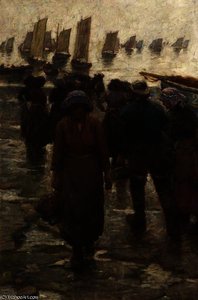 The fishing fleet
22
 In the Coulisses
23
 Fine feathers
24
 Elsie on 'Hassan'
25
 Dressing the Children
26
 Sketch of Dancers
27
 The little beggar
28
 A musical clown
29
 Untitled (930)
30
 Untitled (376)
31
 Untitled (176)
32
 Young gypsies
33
 The elder sister
34
 Autumn sunlight, sennen cove, cornwall
35
 A balloon site, coventry
36
 Take-Off - Interior of a Bomber Aircraft
37
 The Flower1911
38
 George Bernard Shaw (1856–1950)1932 · Hereford Museum and Art Gallery
39
 Boys (Newlyn, Cornwell)2000
40
 Untitled (552)
41
 Untitled (122)
42
 Chelsea embankment
43
 The Coil of Hair
44
 Untitled (561)
45
 Untitled (897)
46
 Portrait Sketch of a Young Girl
47
 Idylls of the King (Enid and Geraint)
48
 dylls of the King (Balin and Balan, ii)
49
 Richmond park
50
 Untitled (924)
51
 Unfinished portrait vijayalakshmi pandit
52
 Corporal J. D. M. Pearson, GC, Women's Auxiliary Air Force
53
 Idylls of the King (Balin and Balan, i)
54
 Untitled (721)
55
 Storm, malvern
56
 Les sylphides
57
 Untitled (987)
58
 Untitled (388)
59
 Ready to Show
60
 Corporal j. m. robins, women's auxiliary air force
61
 Untitled (661)
62
 Untitled (639)
63
 Epsom downs
64
 The nuremberg trial
65
 The gyppos
66
 The cornish coast
67
 Untitled (919)
68
 Motherhood
69
 A misty sunrise
70
 Untitled (573)
71
 Tree, Idylls of the King (right panel)
72
 A Dressing Room at Drury Lane
73
 Untitled (619)
74
 George bernard shaw
75
 Untitled (914)
76
 Tree, Idylls of the King (left panel)
77
 Tell your fortune, lady
78
 Untitled (778)
79
 The cruel sea
80
 Untitled (520)
81
 Hop picking
82
 Dressing room
83
 Untitled (700)
84
 The rehearsal
85
 Untitled (120)
86
 Miss Margaret Jane Smythe, OBE
87
 Susie and the Wash Basin
88
 Untitled (641)
89
 The last act
90
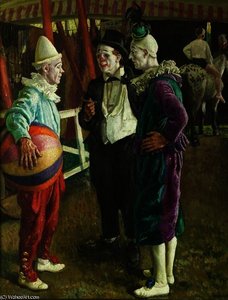 The three clowns
91
 Romany belles
92
 A dark pool
93
 The mirror
94
 Picking Flowers
95
 A theatre dressing room
96
 Joan rhodes
97
 Untitled (691)
98
 Untitled (198)
99
 The trick act
100
 Untitled (716)
The four subjects that come back most often in these originals, each with its finest example.
The 3 museums that hold the most of the paintings on this page.
| Museum | City | Works by Laura Knight | Paintings from this list |
|---|---|---|---|
 Canadian War Museum |
Ottawa | 1 | Physical Training at Witley Camp |
 National Museums Liverpool |
Liverpool | 1 | Children Swimming |
 Hereford Museum and Art Gallery |
1 | George Bernard Shaw (1856–1950) |
A long career of 23 years, 1910 to 1932: Laura Knight's most famous originals, shown year by year.
Pick a year to see its originals.

is a watercolor by the artist Laura Knight. Created between 1912 and 1913, the work captures a specific moment on the rocky granite coast of Cornwall. The scene was later presented to the public when it was exhibited at the Liverpool Autumn Exhibition in 1916.

Untitled (160). Ascot finery and Physical Training at Witley Camp (1910) come next.
Untitled (160), Ascot finery, Physical Training at Witley Camp, Gypsies at Ascot, Untitled (328), Gypsies, Caravan and Pony, Gypsies on Epsom Downs, The Green Sea, Lamorna, Children Swimming and Ethel bartlett. The ranking above gives each one's year and museum.
Our catalog holds 120 works by Laura Knight, dated from 1910 to 1932.
Mostly in Canadian War Museum (Ottawa), National Museums Liverpool (Liverpool) and Hereford Museum and Art Gallery. The museum table above lists them all.
On this page, the earliest is Physical Training at Witley Camp (1910) and the latest George Bernard Shaw (1856–1950) (1932).
Women (5), Dramatic lighting (4) and Clothing (4), across the 100 works on this page.
Contemporary realism and Impressionism, judging by the originals on this page.
