High Renaissance · 1520
The Transfiguration (detail) (Ραφαήλ, 1520)
Ο/Η Ραφαήλ (1483–1520) δημιούργησε το The Transfiguration (detail). Χρονολογείται στο 1520. Ανήκει στο κίνημα High Renaissance. Είναι φτιαγμένο σε Oil On Panel.
- 1520
- Oil On Panel

 Προεπισκόπηση σε πραγματική κλίμακα

 Ελαιογραφικό Χειροποίητο Έργο
 Αποστολή
 Κοινοποίηση
 Πληροφοριακό φύλλο


 Λήψη
 Παρόμοια αντικείμενα συλλογής
 Ακτινογραφία
 Παρουσίαση
 Ερωτήσεις & Απαντήσεις

 Στατιστικά
The Transfiguration (detail), εν συντομία
- Τίτλος
- The Transfiguration (detail)
- Καλλιτέχνης
- Ραφαήλ (1483–1520)
- Γεννημένος/η το
- Ουρμπίνο, Ιταλία
- Ημερομηνία
- 1520
- Μέσο
- Oil On Panel
- Κίνηση
- High Renaissance
- Εποχή
- Renaissance
- Θέμα
- biblical narrative, religious symbolism, divine light, renaissance art, christ figure, mount tabor
Τι απεικονίζει το The Transfiguration (detail);
A Divine Revelation Captured in Light and Color
The Raphael (Raffaello Sanzio Da Urbino)’s *The Transfiguration*, completed in 1520, stands as an unparalleled achievement of High Renaissance artistry—a testament to Raphael’s mastery of perspective, color theory, and humanist ideals. Currently residing within the Pinacoteca Vaticana, this monumental painting transcends mere representation; it embodies a profound spiritual narrative rooted in Christian theology. Commissioned by Cardinal Giulio de' Medici (later Pope Clement VII), *The Transfiguration* exemplifies the artistic fervor that characterized Rome during its papal ascendancy.- Subject Matter: The artwork depicts the biblical episode recounted in Matthew, Mark, and Luke—Jesus’ ascension to Mount Tabor alongside Moses and Elijah. This dramatic scene portrays Christ transforming before his disciples' eyes into a radiant figure bathed in heavenly light, symbolizing divine glory and spiritual transcendence.
- Style & Technique: Raphael skillfully employs pyramidal composition—a hallmark of Renaissance art—to create stability and grandeur. The meticulous attention to detail is evident throughout the painting, from the folds of Christ’s robe to the expressions on the faces of Moses and Elijah, demonstrating Raphael's dedication to anatomical accuracy and realistic portrayal. Fresco technique was utilized, ensuring durability and preserving the vibrancy of color for centuries.
Historical Context: The Renaissance Spirit Embodied
Painted at the apex of the Italian Renaissance—a period marked by intellectual curiosity, artistic innovation, and humanist revival—*The Transfiguration* reflects the broader cultural landscape of its time. Raphael’s work aligns seamlessly with the prevailing fascination for classical ideals and biblical narratives, demonstrating a desire to elevate human experience through contemplation of divine beauty. The painting's placement within the cathedral of S. Giusto in Narbonne underscores its significance as a devotional artwork intended to inspire awe and reverence.
Symbolism: Light, Revelation, and Heavenly Grace
The pervasive luminescence dominating *The Transfiguration* serves as a central symbol—representing divine illumination and spiritual enlightenment. Moses and Elijah, figures revered for their prophetic roles in Jewish tradition, stand alongside Christ, symbolizing law and prophecy respectively – representing the Old Testament and New Testament faiths united. The birds perched atop Mount Tabor are interpreted as emblems of freedom and divine grace, furthering the painting’s overarching message of redemption and spiritual ascension.
Emotional Impact: A Moment Frozen in Time
*The Transfiguration* continues to captivate viewers with its breathtaking beauty and profound emotional resonance. Raphael's masterful manipulation of color—particularly the golden hues illuminating Christ—evokes feelings of serenity, majesty, and spiritual contemplation. The painting’s enduring appeal lies in its ability to convey a timeless narrative of faith, hope, and divine revelation—a masterpiece that secures Raphael’s place among the greatest artists of all time.
Discover More About This Iconic Artwork
For a deeper understanding of *The Transfiguration* and its artistic legacy, explore resources such as Wikipedia (
Εικόνες υψηλής ανάλυσης του The Transfiguration (detail)

Δημόσιος τομέας: ο καλλιτέχνης απεβίωσε το 1520.
Άλλες διαστάσεις, καρέττες και αναφορά →Ραφαήλ, The Transfiguration (detail) (1520). Δημόσιο περιουσιακό δικαίωμα
Ερωτήσεις για το The Transfiguration (detail), απαντημένες
Σε ποια χρονιά δημιουργήθηκε το "The Transfiguration (detail)" του Ραφαήλ;
Το έργο "The Transfiguration (detail)" του Ραφαήλ δημιουργήθηκε το έτος 1520.
Με τι τεχνική έχει δημιουργηθεί το "The Transfiguration (detail)";
Ο/Η Ραφαήλ χρησιμοποίησε την τεχνική του/της Oil On Panel για το έργο "The Transfiguration (detail)". Η τεχνική αυτή ορίζει τη υλική φύση του πρωτότυπου έργου.
Περί τι αφορά το "The Transfiguration (detail)";
Το έργο "The Transfiguration (detail)" του Ραφαήλ απεικονίζει: biblical narrative, religious symbolism, divine light, renaissance art, christ figure, mount tabor, holy trinity.
Το έργο "The Transfiguration (detail)" του Ραφαήλ ανήκει στο δημόσιο περιουσιακό αγαθό;
Το έργο "The Transfiguration (detail)" του Ραφαήλ ανήκει στο δημόσιο κτήμα - τα δικαιώματα αυτορության έχουν λήξει. Η κατάσταση αυτή διέπει τον τρόπο με τον οποίο μπορεί να αναπαραχθεί η εικόνα του έργου.
Ποιος είναι ο καλλιτέχνης πίσω από το "The Transfiguration (detail)";
Το έργο "The Transfiguration (detail)" αποδίδεται στον/στην Ραφαήλ.
Σε ποιο καλλιτεχνικό ρεύμα ανήκει το "The Transfiguration (detail)";
Το καλλιτεχνικό ρεύμα που συνδέεται με το "The Transfiguration (detail)" του Ραφαήλ είναι το High Renaissance. Αυτή η ταξινόμηση τοποθετεί το έργο ανάμεσα σε σχετικούς καλλιτέχνες και έργα τέχνης.
Ποια εποχή της καριέρας του/της Ραφαήλ αντιπροσωπεύει το έργο "The Transfiguration (detail)";
Το έργο "The Transfiguration (detail)" ανήκει στην περίοδο Mature Period της καριέρας του Ραφαήλ. Αυτή η ταξινόμηση συνδέει το έργο με την εξέλιξη του καλλιτέχνη.
Πόσο είχε ο/η Ραφαήλ όταν δημιουργήθηκε το "The Transfiguration (detail)";
Ο/Η Ραφαήλ δημιούργησε το έργο "The Transfiguration (detail)" στην ηλικία των 37 ετών. Ο/Η καλλιτέχνης γεννήθηκε το 1483 και το έργο χρονολογείται στο 1520.
Ποια είναι η αιτία της κατάστασης των πνευματικών δικαιωμάτων για το έργο "The Transfiguration (detail)" του Ραφαήλ;
Το έργο "The Transfiguration (detail)" του Ραφαήλ ανήκει στο δημόσιο κτήμα - τα δικαιώματα αυτορության έχουν λήξει. Οι όροι πνευματικών δικαιωμάτων υπολογίζονται από το έτος θανάτου του καλλιτέχνη, και ο/η Ραφαήλ απεβίωσε το 1520.
Σχετικά με τον καλλιτέχνη, Ραφαήλ

1483–1520, Ιταλία
Ραφαήλ
Η Αναγέννηση της Ουρμπίνο: Τα Πρώτα Χρόνια και η Διαμόρφωση του Ραφαήλ Ο Ραφαέλο Σάντσιο ντα Ουρμπίνο, γνωστός σε όλο τον κόσμο ως Ραφαήλ, αναδείχθηκε από ένα εξαιρετικά γόνιμο πολιτιστικό τοπίο. Γεννημένος το 1483 μέσα στα τείχη της Ουρμπίνο, μιας μικρής αλλά διανοητικά ζωντανής πόλης-κράτους στην κεντρική Ιταλία, τα πρώτα του χρόνια ήταν βυθισμένα σε μια ατμόσφαιρα που εκτιμούσε τόσο την καλλιτεχνική δεξιοτεχνία όσο και τον ανθρωπιστικό λόγο. Ο πατέρας του, Τζιόβαννι Σάντι, δεν ήταν απλώς ζωγράφος στην υπηρεσία του Δούκα Φεδερίκο ντα Μόντεφελτρο—ήταν ένας άνθρωπος βαθιά εμπλεγμένος στις ρευματοποιήσεις της Αναγέννησης, ποιητής που κατέγραψε τη ζωή του Δούκα και αναζήτησε ενεργά καινοτόμες καλλιτεχνικές ιδέες από όλη την Ιταλία και πέρα. Αυτή η εμβύθιση σε ένα αυλικό περιβάλλον, που εκτιμούσε την κομψότητα και τον πνευματικό διάλογο, διαμόρφωσε βαθιά τις αισθήσεις του νεαρού Ραφαήλ.
Εργασίες του Ραφαήλ
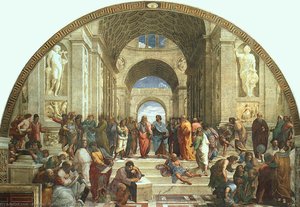 Η Ακαδημία των Αθηναίων1511
 Η Σιτιστή Μαγδαληνή1513
 Η Μεταμορφώση του Χριστού1520
 Ο Αμύητος του Χρυσού1504
Μελέτες γύρω από το The Transfiguration (detail)
 Who Made The Transfiguration? The Story of Raphael's Final MasterpieceDiscover the artist behind The Transfiguration and the dramatic shift in style that defines this High Renaissance masterpiece
 Masterpieces of Perfection: The Top 25 Greatest Artworks by RaphaelJourney through the sublime beauty of the High Renaissance with our curated list of Raphael's top 25 masterpieces. From iconic Madonnas to …
 16th century Italian paintersMasterpieces by Titian, Michelangelo, and Raphael define the Italian Renaissance. Explore the full collection online at OriginalUniqueArt.c…