Ώριμη Αναγέννηση
Disputa (Ραφαήλ)
Disputa is a work by Ραφαήλ (1483–1520). It belongs to the Ώριμη Αναγέννηση movement. It is made in Φρέσκο.
- Φρέσκο

 Ελαιογραφικό Χειροποίητο Έργο
 Αποστολή
 Κοινοποίηση
 Οδηγός


 Λήψη
 Παρόμοια αντικείμενα συλλογής
 Παρουσίαση
 Ερωτήσεις & Απαντήσεις

 Στατιστικά
Disputa: the essentials
- Title
- Disputa
- Artist
- Ραφαήλ (1483–1520)
- Artist born in
- Ουρμπίνο, Ιταλία
- Medium
- Φρέσκο
- Movement
- Ώριμη Αναγέννηση
- Period
- Αναγέννηση
Looking at Disputa
A Divine Dialogue: Unveiling Raphael’s *Disputa*
Raphael's *Disputa*, painted between 1509 and 1510, is a cornerstone of High Renaissance art, residing within the breathtaking Stanze di Raffaello in the Apostolic Palace at Vatican City. This monumental fresco isn’t merely a painting; it’s a theological statement rendered with unparalleled grace and intellectual depth, inviting viewers into a visual discourse on faith, reason, and divine truth.Subject & Composition: Heaven Meets Earth
The *Disputa* presents a complex yet harmonious composition divided into two distinct realms. The upper portion depicts a celestial gathering of theologians, saints, prophets, and martyrs arranged in a semi-circular formation around Christ and the Virgin Mary. They engage in animated discussion, their gestures conveying reverence and intellectual fervor. Below, on an architectural platform resembling a classical temple apse, earthly theologians – recognizable figures like Saint Augustine, Saint Thomas Aquinas, and Saint Gregory – continue the debate concerning the Holy Sacrament. This deliberate juxtaposition visually represents the convergence of heavenly wisdom and human inquiry. The composition is masterfully structured with a pyramidal form culminating in Christ, drawing the eye upwards towards the divine source.Style & Technique: The High Renaissance Ideal
*Disputa* exemplifies the hallmarks of the High Renaissance: balance, clarity, and idealized beauty. Raphael’s mastery of perspective creates a convincing sense of depth, while his use of *sfumato* – subtle gradations of light and shadow – lends an ethereal quality to the figures. Executed as a fresco, the painting demonstrates Raphael's technical brilliance in applying pigments to wet plaster, resulting in vibrant colors that have endured for centuries. The figures are not static; they possess dynamic poses and expressive faces, conveying a sense of lively intellectual exchange.Historical Context & Symbolism
Commissioned by Pope Julius II as part of the decoration of his private library (the *Stanza della Segnatura*), *Disputa* reflects the humanist spirit of the Renaissance – a renewed interest in classical learning and philosophical inquiry alongside religious faith. The room itself was intended to represent different branches of human knowledge: theology, law, poetry, and philosophy. The painting’s symbolism is rich and layered. The Holy Spirit, represented as a dove emanating light, signifies divine inspiration. The inclusion of prominent theologians underscores the importance of reason and scholarship in understanding religious doctrine. The architectural setting evokes the grandeur of ancient Rome, linking Christian theology to classical tradition.Emotional Impact & Lasting Legacy
*Disputa* transcends its theological subject matter to evoke a profound sense of awe, reverence, and intellectual curiosity. The painting’s harmonious composition and idealized figures inspire contemplation on the nature of truth, faith, and knowledge. It is not merely a depiction of a debate but an invitation to participate in it – to engage with the eternal questions that have occupied humanity for centuries. Raphael's *Disputa* remains a testament to his artistic genius and continues to captivate viewers with its beauty, intellectual depth, and enduring spiritual power.- Explore high-quality reproductions of *The Disputation of the Holy Sacrament* to bring Renaissance grandeur into your space.
- Discover more about Raphael’s life and artistic contributions within the context of the High Renaissance movement.
Disputa in high resolution

Ραφαήλ, Disputa. Public domain.
Questions about Disputa
Ποιος χώρος ταιριάζει με τα χρώματα του "Disputa" του Ραφαήλ;
Λαμβάνοντας υπόψη τα χρώματα της παλέτας του, το "Disputa" προτείνεται για ένα Σαλονιές, με βάση το Γήινοι τόνοι.
Ποια διάθεση εκφράζει το "Disputa" του Ραφαήλ εντός του Ώριμη Αναγέννηση;
Το "Disputa" αποπνέει ένα Πνευματικότητα συναισθηματικό ύφος μέσα στο πλαίσιο του руху Ώριμη Αναγέννηση.
Ποια εθνική καταγωγή συνδέεται με το Ώριμη Αναγέννηση του "Disputa";
Ποια απόχρωση κυριαρχεί στο "Disputa";
Ποια χρήση και ποιος χώρος προτείνονται για το "Disputa" του Ραφαήλ;
Το έργο "Disputa" προτείνεται για Διαக்ρυσμα, ενώ ο ιδανικός χώρος για την τοποθέτησή του είναι το/η Σαλονιές.
Για ποιον χώρο προτείνεται το "Disputa" του Ραφαήλ;
Μια αναπαραγωγή του "Disputa" ταιριάζει απόλυτα σε ένα Σαλονιές.
Για ποιον προτείνεται το έργο "Disputa" του Ραφαήλ ως δώρο;
Ποια εποχή της καριέρας του/της Ραφαήλ αντιπροσωπεύει το έργο "Disputa";
Τι ατμόσφαιρα θα προσέφερε σε ένα δωμάτιο μια αναπαραγωγή του "Disputa" του Ραφαήλ;
Με τη Αιθέριος ατμόσφαιρά του, το "Disputa" προτείνεται για ένα Σαλονιές.
About the artist, Ραφαήλ

1483–1520, Ιταλία
Ραφαήλ
Η Αναγέννηση της Ουρμπίνο: Τα Πρώτα Χρόνια και η Διαμόρφωση του Ραφαήλ Ο Ραφαέλο Σάντσιο ντα Ουρμπίνο, γνωστός σε όλο τον κόσμο ως Ραφαήλ, αναδείχθηκε από ένα εξαιρετικά γόνιμο πολιτιστικό τοπίο. Γεννημένος το 1483 μέσα στα τείχη της Ουρμπίνο, μιας μικρής αλλά διανοητικά ζωντανής πόλης-κράτους στην κεντρική Ιταλία, τα πρώτα του χρόνια ήταν βυθισμένα σε μια ατμόσφαιρα που εκτιμούσε τόσο την καλλιτεχνική δεξιοτεχνία όσο και τον ανθρωπιστικό λόγο. Ο πατέρας του, Τζιόβαννι Σάντι, δεν ήταν απλώς ζωγράφος στην υπηρεσία του Δούκα Φεδερίκο ντα Μόντεφελτρο—ήταν ένας άνθρωπος βαθιά εμπλεγμένος στις ρευματοποιήσεις της Αναγέννησης, ποιητής που κατέγραψε τη ζωή του Δούκα και αναζήτησε ενεργά καινοτόμες καλλιτεχνικές ιδέες από όλη την Ιταλία και πέρα. Αυτή η εμβύθιση σε ένα αυλικό περιβάλλον, που εκτιμούσε την κομψότητα και τον πνευματικό διάλογο, διαμόρφωσε βαθιά τις αισθήσεις του νεαρού Ραφαήλ.
Also by Ραφαήλ
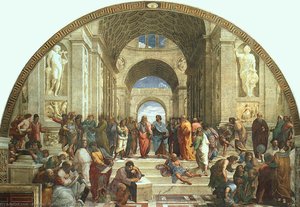 Η Ακαδημία της Αθήνας1511
 Η Σιτιστή Μαγδαληνή1513
 Η Μεταμορφώση του Χριστού1520
 Ο Αμύητος του Χρυσού1504

Essays around Disputa
 Giotto di Bondone: Revolutionizing Late Medieval Painting through Narrative InnovationExplore the revolutionary art of Giotto di Bondone! Discover his groundbreaking techniques, iconic frescoes like those in the Arena Chapel,…
 Masterpieces of Light: The Top 25 Artworks by Duccio di BuoninsegnaJourney through the divine elegance of Duccio di Buoninsegna. Explore 25 iconic Sienese masterpieces, from the Maestà to the Rucellai Madon…
 Ραφαήλ: Τα 25 Κορυφαία Έργα Τέχνης για Διακόσμηση με Στυλ | OriginalUniqueArt.grΑνακαλύψτε τα 25 κορυφαία έργα τέχνης του Ραφαήλ! Εξερευνήστε την Αναγέννηση, τις τεχνικές και την ιστορία των πιο διάσημων πινάκων. Βρείτε…