Early Renaissance · 1425
Trinity (Μαζάτσο, 1425)
Ο/Η Μαζάτσο (1401–1428) δημιούργησε το Trinity. Χρονολογείται στο 1425. Ανήκει στο κίνημα Early Renaissance. Είναι φτιαγμένο σε Fresco. Αποθηκεύεται στο Santa Maria Novella στο Φλόρεντσα, Ιταλία. Οι διαστάσεις είναι 640 × 317 cm.
- 1425
- Fresco
- 640 × 317 cm
- Santa Maria Novella, Φλόρεντσα

 Ελαιογραφικό Χειροποίητο Έργο
 Αποστολή
 Κοινοποίηση
 Πληροφοριακό φύλλο


 Λήψη
 Παρόμοια αντικείμενα συλλογής
 Παρουσίαση
 Ερωτήσεις & Απαντήσεις

 Στατιστικά
Trinity, εν συντομία
- Τίτλος
- Trinity
- Καλλιτέχνης
- Μαζάτσο (1401–1428)
- Γεννημένος/η το
- Σαν Τζοβάνι Βαλντάρνο, Ιταλία
- Ημερομηνία
- 1425
- Μέσο
- Fresco
- Διαστάσεις
- 640 × 317 cm
- Πού εκτίθεται
- Santa Maria Novella, Φλόρεντσα, Ιταλία
- Κίνηση
- Early Renaissance
- Εποχή
- Renaissance
- Θέμα
- perspective, religion, humanism, classicalelements, florence, biblicalscene
Τι απεικονίζει το Trinity;
A Portal to the Divine: The Dawn of Renaissance Realism
To step before Masaccio’s Holy Trinity is to witness the exact moment when the flattened, symbolic world of the Middle Ages dissolved into the profound, breathing reality of the Renaissance. Painted between 1425 and 1427 within the hallowed walls of Santa Maria Novella in Florence, this fresco does not merely depict a religious scene; it carves a hole in the very wall of the chapel, inviting the viewer to step into a sacred, three-dimensional space. At its heart lies a revolutionary commitment to humanism—the belief that the divine can be understood through the lens of human experience and physical truth. Through his masterful command of light and form, Masaccio transformed a static icon into a living drama of salvation.
The composition is anchored by the central figure of Jesus Christ, depicted with a startling naturalism that was unprecedented for his era. He stands as the axis of the universe, flanked by the Virgin Mary and Saint John the Evangelist. Unlike the ethereal, weightless figures of the preceding Gothic period, Masaccio’s subjects possess a palpable sense of mass and gravity. Their robes fall with heavy, realistic folds, and their faces carry an emotional depth that speaks to the viewer across centuries. This is not art meant for distant adoration alone; it is art designed to resonate with the human soul, making the theological mysteries of the Trinity feel intimately present within our own physical realm.
The Architecture of Illusion: Mastery of Perspective
Perhaps the most enduring legacy of this masterpiece is Masaccio’s pioneering use of linear perspective. By employing a single vanishing point, he created an architectural illusion so convincing that contemporary viewers felt they were looking into a real, deep chapel rather than at a painted surface. The coffered barrel vault above the figures recedes with mathematical precision, guiding the eye upward and inward. This technical triumph was not merely a display of skill; it served a profound symbolic purpose. By placing the holy figures within a believable, structured environment, Masaccio bridged the gap between the earthly and the divine, suggesting that the sacred exists within the very geometry of our world.
This sense of depth is further enhanced by his sophisticated use of chiaroscuro. The subtle interplay of light and shadow—the way light seems to strike the figures from a consistent source—gives them a sculptural quality. This technique breathes life into the flesh, defining the musculature of Christ and the gentle contours of Mary’s face. For the modern collector or interior designer, this mastery of volume offers a sense of structural elegance and intellectual depth, making it a piece that commands attention through its quiet, commanding presence.
A Timeless Legacy for the Discerning Collector
Beyond the technical brilliance, the Holy Trinity remains an emotional powerhouse. It captures the tension between human mortality and eternal hope. At the base of the composition, the inclusion of the donors—the mortal figures who commissioned the work—serves as a poignant reminder of our own place in the grand tapestry of history. They stand at the threshold, looking up toward the divine, mirroring the journey of every viewer who encounters this fresco.
For those seeking to adorn a space with art that inspires contemplation and awe, a high-quality reproduction of this Masaccio masterpiece offers more than mere decoration. It brings into a home or gallery a piece of the very foundation of Western art. Whether placed in a study filled with books or as a focal point in a grand living space, the Holy Trinity provides an atmosphere of profound stability, historical richness, and enduring beauty. It is an invitation to pause, to look deeper, and to rediscover the breathtaking realism that first ignited the Renaissance.
Σε ποιο μουσείο βρίσκεται το Trinity;
Santa Maria Novella
Φλόρεντσα, Ιταλία
The Building and its Architecture The basilica is considered the most important Romano-Gothic church in Tuscany. Its structure reflects a long period of development, with the lower section of the Romano-Gothic facade having been started in 1350 and finally completed in 1920. The facade itself presents a distinctive appearance through geometric patterns of white and green marble.


Εικόνες υψηλής ανάλυσης του Trinity

Δημόσιος τομέας: ο καλλιτέχνης απεβίωσε το 1428.
Άλλες διαστάσεις, καρέττες και αναφορά →Μαζάτσο, Trinity (1425), Santa Maria Novella. Δημόσιο περιουσιακό δικαίωμα
Ερωτήσεις για το Trinity, απαντημένες
Σε ποιο μουσείο βρίσκεται το πρωτότυπο έργο "Trinity";
Το πρωτότυπο έργο "Trinity" εκτίθεται στο Santa Maria Novella, Φλόρεντσα, Ιταλία.
Σε ποια χρονιά δημιουργήθηκε το "Trinity" του Μαζάτσο;
Με ποια τεχνική δημιουργήθηκε το "Trinity" του Μαζάτσο;
Ποια είναι οι διαστάσεις του πρωτότυπου "Trinity";
Το έργο "Trinity" έχει διαστάσεις 640 x 317 cm στην αρχική του μορφή. Οι αρχικές διαστάσεις αποτελούν μια χρήσιμη αναφορά κατά την επιλογή μεγέθους για μια αναπαραγωγή.
Περί τι αφορά το "Trinity";
Μπορεί η εικόνα του έργου "Trinity" του Μαζάτσο να αναπαραχθεί ελεύθερα;
Σε ποιο καλλιτεχνικό ρεύμα ανήκει το "Trinity" του Μαζάτσο;
Σχετικά με τον καλλιτέχνη, Μαζάτσο

1401–1428, Ιταλία
Μαζάτσο
Μασάτσιο (1401-1428): Ο Πρωτοπόρος της Αναγέννησης στην Ζωγραφική Ο Μασάτσιο ήταν ένας πρωταγωνιστής της πρώιμης ιταλικής αναγέννησης που άφησε ανεξίτηλο σημάδι στην ιστορία της τέχνης με την επαναστατική του προσέγγιση στην οπτική τέχνη και τον χαρκοσκούρο (την χρήση έντομων αντιθέσεων φωτός και σκιάς). Γεννήθηκε στις 21 Δεκεμβρίου 1401 στο Σάν Τζοβάννι Βαλνάρντο της Τοσκάνης και πέθανε τραγικά στα νεαρά του χρόνια το 1428. Παρά τη μικρή του καριέρα, ο Μασάτσιο επηρέασε βαθιά τις επόμενες γενιές καλλιτεχνών καθιερώνοντας ένα νέο πρότυπο για τον φυσικότητα και την επιρροή στην πορεία της δυτικής τέχνης. Προσωπική Ζωή και Εκπαίδευση Η καταγωγή του ήταν από τον Γιόχαν Ντι Σιμόνε Κασσάϊ, έναν αξιωματούχο και τη Γιακόπα Ντι Μάρτινοτσο που ήταν γονείς του.
Εργασίες του Μαζάτσο
 Η Αγία Τριάδα1428
 Το Φόρο των Δινημάτων1425
 Η Εκδίωση από τον Κήπο του Εδέμ1426
 Εικόνα από τα Χρήματα της Επιστολής του Πέτρου (Λεπτομέρειες)
Μελέτες γύρω από το Trinity
 Understanding Gothic and Renaissance Art: Key Differences and FeaturesMaster the differences between Gothic and Renaissance art through expert analysis of technique and style. Discover the evolution of art tod…
 25 Masterpieces by Duccio di Buoninsegna: The Dawn of Sienese ArtJourney through the Sienese School with our curated guide to Duccio di Buoninsegna’s top 25 masterpieces. From the Maesta to iconic Madonna…
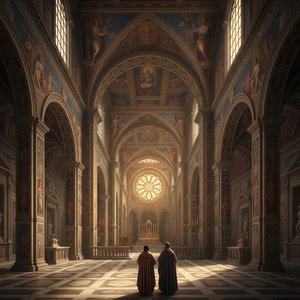 Mastering Depth: The Architectural Power of Linear Perspective in Renaissance MasterpiecesExplore the profound impact of linear perspective on Renaissance art. Discover how masters like Brunelleschi and Uccello used mathematical …