In echtem Maßstab anzeigen
 Versenden als Grußkarte
 Teilen
 Details anzeigen
 Leitfaden öffnen

 Herunterladen
 Ähnliche Objekte
 Röntgenaufnahme
 Diashow
 Besucherstatistiken
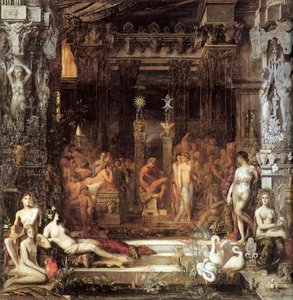
Sappho auf den Felsen


 Mehr anzeigen
Giclée / Kunstdruck
Giclée- oder Leinwanddruck in Museumsqualität mit schneller Produktion und flexiblen Veredelungsoptionen. ( Handgemalte Reproduktion kaufen Zum digitalen Bild wechseln)




P118B €10

P118H €10

P118W €10

P438Z €10

P508JH €12

P508YH €12

P805H €10

P805Z €10

P919BZ €10

P919G €10

P919XJ €10

P959ZH €10

P968JZ €12

W106C €8

W218G €10

W218JH €8

W218Y €10

W307PJ €10

W316G €10

W316PJ €8

W316Y €10

W398PJ €8

W4111J €10

W500HY €15

W500JH €15

W692G €12

W849H €8

W940BG €15

W953PJ €8




Wählen Sie aus unseren vordefinierten Formaten, die den ursprünglichen Proportionen des Kunstwerks entsprechen.

Geben Sie die Breite und die Höhe an, die Sie benötigen, damit der Druck perfekt in Ihren Rahmen oder an Ihre Wand passt. Ein Druck kann nur beschnitten werden und niemals größer als das Originalbild gemacht werden; daher verliert ein Format mit einer anderen Proportion einen Teil des Bildes. Wir senden Ihnen ein digitales Mockup zur Freigabe, bevor wir den Druck ausführen. Das auf dieser Seite gezeigte Bild zeigt nicht den tatsächlichen Beschnitt – dies ist nur im Mockup ersichtlich.
Weltweiter Versand () innerhalb von 2 Wochen statt der üblichen 4/5 Wochen. (23 Oktober)

Kostenloser weltweiter Expressversand

Hochwertige Leinenleinwand

Vollständiger Versicherungsschutz beim Versand

Zollgebühren-Rückerstattungsgarantie

Garantie für exakte Farbtreue

100-tägiges Rückgaberecht (nur bei Mängeln)

100% Geld-zurück-Garantie

Angebot für Mengenrabatt
 Die Glasoption ist nur für Größen unter 110 cm verfügbar.

Sappho auf den Felsen
Giclée / Kunstdruck
Format der Reproduktion
-


Gesamtpreis
€ 70
A Vision of Mythic Grace: Gustave Moreau’s “Sappho on the Rocks”
Moreau's "Sappho on the Rocks," painted in 1872, isn’t merely a depiction of a woman contemplating the sea; it’s an immersion into the heart of Symbolist aesthetics—a deliberate rejection of observable reality in favor of exploring inner landscapes and spiritual truths. Created during a period marked by intellectual ferment and artistic experimentation, this watercolor embodies the core tenets of Symbolism, prioritizing emotion and suggestion over precise representation. The artist sought to evoke not what he *saw*, but what he *felt*, channeling influences from Nietzsche’s philosophy and Wagnerian opera into his visual vocabulary.The Subject Matter: Mythological Resonance
At its surface, the painting portrays Sappho, the legendary Greek poetess celebrated for her lyrical verses on female love—a figure steeped in myth and revered across cultures. Moreau doesn't present Sappho as a conventional heroine; instead, she is depicted poised on jagged rocks overlooking turbulent waters, surrounded by an avian chorus that punctuates the scene with vibrant color and movement. This deliberate choice of subject matter isn’t accidental. Sappho represents feminine beauty, passion, and artistic inspiration—themes central to Symbolist concerns. The poetess embodies a yearning for transcendence, mirroring the artist's own desire to escape the limitations of materialism and embrace spiritual contemplation.Technique and Style: Watercolor Alchemy
Moreau’s masterful use of watercolor is crucial to conveying the painting’s ethereal quality. He employs layering techniques—applying washes of color upon washes—to achieve a luminous effect that captures the shifting moods of the ocean and sky. The artist meticulously renders textures, from the rough surface of the rocks to the delicate plumage of the birds, demonstrating an unwavering commitment to observation combined with imaginative embellishment. Unlike Impressionists who aimed for fleeting impressions of light, Moreau painstakingly builds up his image, creating a dense visual tapestry that invites prolonged contemplation. Notice how he utilizes color—particularly reds and blues—to heighten emotional intensity and establish a harmonious balance between natural elements and symbolic hues.Historical Context: Nietzsche’s Influence
“Sappho on the Rocks” emerged from a milieu profoundly shaped by philosophical currents championed by Friedrich Nietzsche. Nietzsche's concept of “eternal recurrence”—the belief that life repeats itself infinitely—fueled Symbolist artists’ fascination with cyclical patterns and archetypal imagery. Moreau, like many of his contemporaries, wrestled with questions of morality, faith, and the human condition. He sought to express these anxieties through symbolic representations, rejecting didactic narratives in favor of evocative visual metaphors. The painting reflects Nietzsche's critique of Western rationality and his affirmation of instinctual impulses—a stance that aligns seamlessly with Symbolist artistic principles.Emotional Impact: A Symphony of Feeling
Ultimately, “Sappho on the Rocks” succeeds in transporting viewers to a realm beyond mere visual perception. Moreau’s deliberate ambiguity—the lack of explicit narrative—allows for multiple interpretations and encourages contemplation about themes of beauty, solitude, and spiritual longing. The painting evokes a sense of melancholy grandeur, capturing the sublime power of nature alongside the vulnerability of human emotion. It's a testament to Moreau’s ability to transform observation into feeling, cementing his place as one of Symbolism’s most enduring figures—a painter who dared to explore the depths of the unconscious and illuminate the hidden poetry of existence.Fragen & Antworten
Welche Reproduktionsgröße wird für "Sappho auf den Felsen" von Gustave Moreau empfohlen?
Für "Sappho auf den Felsen" von Gustave Moreau wird eine Reproduktion im Format Großformatig empfohlen. Die Größe kann angepasst werden, wobei die Proportionen erhalten bleiben.
Inwiefern lässt sich der Stil von "Sappho auf den Felsen" mit der Epoche seines Schöpfers in Verbindung bringen?
In "Sappho auf den Felsen" von Gustave Moreau trifft die Symbolist Painting-Strömung auf die Ära der – 19. Jahrhundert.
Welche Stellung nimmt „Sappho auf den Felsen“ unter den wiederkehrenden Motiven von Gustave Moreau ein?
Unter den dokumentierten Themen von Gustave Moreau – medieval symbolism influence, mythological narrative depth, religious imagery resonance, artist’s vision expression, symbolist aesthetic style – legt „Sappho auf den Felsen“ einen ganz eigenen Fokus auf mythology, ocean scene, female figure, birds flight, symbolism art, romantic painting, french painter, watercolor technique.
Biografie des Künstlers
**frühes Leben und Ausbildung**
Gustav Moreau, ein französischer Künstler, wurde am 6. April 1826 in Paris geboren. Er erhielt eine traditionelle akademische Ausbildung in der Malerei an der École des Beaux-Arts und zeigte von frühester Kindheit eine Begabung für Zeichnen.**Die Symbolismusbewegung**
Moreaus Werk, das durch allegorische und mythologische Themen geprägt ist, machte ihn zu einem führenden Symbolistenmaler, insbesondere in den 1890er Jahren. Seine Kunst (und der Symbolismus im Allgemeinen) verlor an Beliebtheit, wurde aber seit den 1960er Jahren neu bewertet und Moreau gilt heute als einer der wichtigsten Symbolistenmaler.**Bekannte Werke und Ausstellungen**
* Salomé im Gefängnis (Gemälde von 'Gustav Moreau') ist ein bemerkenswertes Beispiel für seine Arbeit und zeigt seine Meisterschaft im Symbolismus. * Das Selbstporträt (Gemälde von 'Gustav Moreau') ist eine weitere kraftvolle Darstellung des Künstlers selbst.**Musée Gustave Moreau**
Das Nationalmuseum Gustave Moreau (Musée Gustave Moreau Paris, Frankreich) in Paris ist dem Werk Moreaus gewidmet und beherbergt über 1.200 Gemälde, Aquarelle und Zeichnungen. Das Museum ist ein Zeugnis seines künstlerischen Erbes.**Vermächtnis und Einfluss**
Moreaus Einfluss auf die Symbolismusbewegung ist unbestreitbar. Er lehrte an der École des Beaux-Arts und beeinflusste namhafte Künstler wie Henri Matisse und Georges Rouault. Seine zurückgezogene Art hat seinen Einfluss auf die Kunstwelt nicht gemindert.- Entdecken Sie mehr über das Leben und Werk von Gustav Moreau auf OriginalUniqueArt.com
- Erkunden Sie das Nationalmuseum Gustave Moreau und seine beeindruckende Sammlung von Kunstwerken auf Musée Gustave Moreau Paris, Frankreich
- Erfahren Sie mehr über die Symbolismusbewegung und ihre Bedeutung für die Kunstgeschichte auf die Symbolismus-Kunstbewegung

Gustave Moreau
1826 - 1898 , Frankreich
Eckdaten zum Künstler
- Beeinflusste Künstler:
- Henri Matisse
- Georges Rouault
- Bemerkenswerte Werke:
- Salomé im Gefängnis
- Selbstporträt
- Jupiter und Semele
- Orpheus
- Die Erscheinung
- Geburtsdatum: 6. April 1826
- Geburtsort: Paris, Frankreich
- Künstlerische Einflüsse:
- Eugène Delacroix
- Michelangelo
- Leonardo da Vinci
- Künstlerischer Stil: Symbolismus
- Nationalität: Französisch
- Sterbedatum: 1898
- Vollständiger Name: Gustave Moreau
Verwandte Artikel

Ephemeral Visions: Exploring the Artistic Legacy & Nuances of Watercolor Painting
Explore the captivating world of watercolor painting! Discover its rich history, essential techniques, influential artists & collecting tips from art experts. A comprehensive guide for enthusiasts.

Die 10 legendärsten Aquarellwerke der Kunstgeschichte – Meisterwerke für Ihr Zuhause
Entdecken Sie die 10 legendärsten Aquarellwerke der Kunstgeschichte! Von Turner bis Monet – erleben Sie die Geschichten, Techniken & Farben dieser Meisterwerke. Finden Sie hochwertige Kunstdrucke auf OriginalUniqueArt.com und gestalten Sie Ihr Zuhause mit zeitloser Eleganz.

Gustav Klimt: Die 25 Meisterwerke des Wiener Jugendstils | OriginalUniqueArt
Entdecken Sie die 25 ikonischsten Gemälde von Gustav Klimt! Tauchen Sie ein in die Welt der Wiener Secession, des Jugendstils und der goldenen Phase. Hochwertige Reproduktionen & Inspiration für Ihr Zuhause auf OriginalUniqueArt.com.

Ephemeral Visions: Exploring the Artistic Legacy & Contemporary Practice of Watercolor Painting
Explore the captivating world of watercolor painting! Discover its rich history, essential techniques, influential artists & collecting tips. A comprehensive guide for art enthusiasts from OriginalUniqueArt.

Flüchtige Visionen: Die Geschichte und emotionale Resonanz der Aquarellmalerei
Entdecken Sie die faszinierende Welt der Aquarellmalerei! Von historischen Ursprüngen bis zu modernen Techniken – wir bieten Expertenwissen, Inspiration und Tipps für Anfänger & Fortgeschrittene.