Textgröße

() ·

Ein Gemälde, von Hand für Sie geschaffen

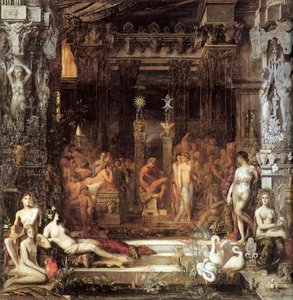
Sappho auf den Felsen

Handgefertigte Ölreproduktion

Handgemaltes Ölgemälde auf Leinwand in Ihrer Wunschgröße und mit Rahmen, auf Bestellung von unseren Künstlern angefertigt. ( Zum Druck wechseln Zum digitalen Bild wechseln)

Beschreibung des Sammlerstücks

Entdecken Sie Gustave Moreaus beeindruckendes Aquarell "Sappho auf den Felsen". Eine traumhafte Symbolistendarstellung mit einer Frau und zahlreichen Vögeln am Meer – Kunst zum Staunen!

Künstlerbiografie

Erkunden Sie die fesselnde Symbolismus-Kunst von Gustave Moreau (1826-1898). Entdecken Sie seine allegorischen Gemälde, mythologischen Szenen und seinen Einfluss auf Matisse & Rouault. Besuchen Sie das Musée Gustave Moreau in Paris, um dieses herausragende Figuren Erbe zu erleben.

ab ·

Kapitel 1

Welche Größe soll es haben?

Wischen Sie, um die Größe zu ändern; das Bild auf der linken Seite zeigt den Rahmen in seiner tatsächlichen Breite. Die Proportionen des Originals bleiben erhalten.

Standardformat
individuell anpassbar
CM
INCH

Wählen Sie aus unseren vordefinierten Formaten, die den ursprünglichen Proportionen des Kunstwerks entsprechen.

Breite
Höhe

Geben Sie die Breite und die Höhe an, die Sie für Ihren Rahmen oder Ihre Wand benötigen. Da dieses Werk handgemalt ist, kann der Künstler bei einer anderen Form etwas mehr um das Bild herum malen oder etwas abschneiden – Sie entscheiden. Wir senden Ihnen ein digitales Mockup zur Freigabe, bevor mit dem Malen begonnen wird. Das auf dieser Seite gezeigte Bild stellt nicht das tatsächliche Ergebnis dar – dies tut nur das Mockup.

Kapitel 2

Wie soll es geliefert werden?

Wählen Sie die Kanten der Leinwand aus

Wählen Sie Ihren Rahmen

Corner sample of the WhiteWrap canvas edge finish, stretched on Massivholz bars
Weißer Rand €1
Corner sample of the BlurSideWrap canvas edge finish, stretched on Massivholz bars
verlaufende Kanten €1
Corner sample of the ExtendedWrap canvas edge finish, stretched on Massivholz bars
Umrandung €1
Corner sample of the P118B picture frame: formgepresstes Polystyrol, 5 cm wide and 3 cm thick
P118B €10
Corner sample of the P118H picture frame: formgepresstes Polystyrol, 5 cm wide and 3 cm thick
P118H €10
Corner sample of the P118W picture frame: formgepresstes Polystyrol, 5 cm wide and 3 cm thick
P118W €10
Corner sample of the P438Z picture frame: formgepresstes Polystyrol, 5.5 cm wide and 3.5 cm thick
P438Z €10
Corner sample of the P508JH picture frame: formgepresstes Polystyrol, 7 cm wide and 3.5 cm thick
P508JH €12
Corner sample of the P508YH picture frame: formgepresstes Polystyrol, 7 cm wide and 3.5 cm thick
P508YH €12
Corner sample of the P805H picture frame: formgepresstes Polystyrol, 5 cm wide and 3.5 cm thick
P805H €10
Corner sample of the P805Z picture frame: formgepresstes Polystyrol, 5 cm wide and 3.5 cm thick
P805Z €10
Corner sample of the P919BZ picture frame: formgepresstes Polystyrol, 7 cm wide and 3.5 cm thick
P919BZ €10
Corner sample of the P919G picture frame: formgepresstes Polystyrol, 7 cm wide and 3.5 cm thick
P919G €10
Corner sample of the P919XJ picture frame: formgepresstes Polystyrol, 7 cm wide and 3.5 cm thick
P919XJ €10
Corner sample of the P959ZH picture frame: formgepresstes Polystyrol, 5 cm wide and 3 cm thick
P959ZH €10
Corner sample of the P968JZ picture frame: formgepresstes Polystyrol, 6 cm wide and 4 cm thick
P968JZ €12
Corner sample of the W106C picture frame: Massivholz, 5 cm wide and 3 cm thick
W106C €8
Corner sample of the W218G picture frame: Massivholz, 5 cm wide and 3 cm thick
W218G €10
Corner sample of the W218JH picture frame: Massivholz, 5 cm wide and 3 cm thick
W218JH €8
Corner sample of the W218Y picture frame: Massivholz, 5 cm wide and 3 cm thick
W218Y €10
Corner sample of the W307PJ picture frame: Massivholz, 6 cm wide and 3 cm thick
W307PJ €10
Corner sample of the W316G picture frame: Massivholz, 6 cm wide and 3 cm thick
W316G €10
Corner sample of the W316PJ picture frame: Massivholz, 6 cm wide and 3 cm thick
W316PJ €8
Corner sample of the W316Y picture frame: Massivholz, 6 cm wide and 3 cm thick
W316Y €10
Corner sample of the W398PJ picture frame: Massivholz, 5 cm wide and 3 cm thick
W398PJ €8
Corner sample of the W4111J picture frame: Massivholz, 6.5 cm wide and 3.5 cm thick
W4111J €10
Corner sample of the W500HY picture frame: Massivholz, 7 cm wide and 5 cm thick
W500HY €15
Corner sample of the W500JH picture frame: Massivholz, 7 cm wide and 5 cm thick
W500JH €15
Corner sample of the W692G picture frame: Massivholz, 8 cm wide and 4 cm thick
W692G €12
Corner sample of the W849H picture frame: Massivholz, 5 cm wide and 3 cm thick
W849H €8
Corner sample of the W940BG picture frame: Massivholz, 7.5 cm wide and 4.5 cm thick
W940BG €15
Corner sample of the W953PJ picture frame: Massivholz, 6 cm wide and 3.5 cm thick
W953PJ €8
Corner sample of the H24-GOLD picture frame: geschnitztes Holz mit Gesso, 10 cm wide and 6 cm thick
H24-GOLD €30
Corner sample of the H24-SILVER picture frame: geschnitztes Holz mit Gesso, 10 cm wide and 6 cm thick
H24-SILVER €30
Corner sample of the H36-GOLD picture frame: geschnitztes Holz mit Gesso, 15 cm wide and 6.5 cm thick
H36-GOLD €45
Corner sample of the H36-SILVER picture frame: geschnitztes Holz mit Gesso, 15 cm wide and 6.5 cm thick
H36-SILVER €45

Profil: . Gesamtgröße mit Rahmen: .

Kapitel 3

Wer malt es, und sollte etwas geändert werden?

Beispiele für Anpassungsmöglichkeiten: Gesicht durch Kundenfoto ersetzen; Haustier hinzufügen (z. B. Katze durch Hund ersetzen); Versteckte Botschaft im Hintergrund einfügen; Hintergrundlandschaft oder Elemente ändern.
Nach der Bestellung wird das Team von OriginalUniqueArt.com den Kunden per E-Mail kontaktieren, um Anweisungen einzuholen und eine Vorschau des Entwurfs bereitzustellen

Weltweiter Versand () in nur 3 bis 4 Wochen statt der üblichen 5 Wochen. (8 November). Keine Kompromisse bei der Qualität.

Kapitel 4

Der letzte Schliff

Ein Namensschild, wie im Museum?

Details der gravierten Bronzetafel

This elegant plaque features the artist's name and the title of the artwork, finely engraved for a timeless presentation.

It is made from bronze with a refined, elegant finish. The text is precisely laser-engraved for a sharp and permanent result. Measuring 9x2 cm, the plaque is compact yet easy to read. It's built to be durable and scratch-resistant, offering a professional, museum-quality look. Mounting is simple thanks to the included adhesive backing.

Details zur Acrylglas-Plakette (transparent)

The plaque includes essential engraved details such as the artist's name, the title of the artwork, the date it was created, the type of media used-like oil on canvas or watercolor-a brief description of the piece, and a QR code that links to the complete artwork information.

It is crafted from clear acrylic, offering a sleek, modern appearance. The text is UV-engraved in black to ensure strong visual contrast. With a size of 10x15 cm, it ensures optimal readability. It comes equipped with two metal hooks for secure wall mounting. The plaque is designed to be weather-resistant, making it suitable for various environments, and it includes interactive features that work seamlessly with smartphone scanning.

Details zur schwarzen Acryltafel

This elegant plaque includes engraved information such as the artist's name, the title of the artwork, the date it was created, the type of media used (like oil on canvas or watercolor), a short description of the artwork, and a QR code for quick access to more information.

The plaque itself is made from refined black acrylic with a premium finish. The text is laser-engraved in white for high contrast and readability. Its size is 10x15 cm, designed to be easy to read. It comes with two metal hooks for professional mounting. The design is sleek and fits any interior style. It is also weather-resistant and durable, with built-in digital integration for mobile compatibility.

Ein Schutzlack?

Bis wann benötigen Sie es?

Kapitel 5

Ihr Gemälde, wie von Ihnen bestellt

Sappho auf den Felsen

Art der Reproduktion

Format der Reproduktion

-

Erstklassige Meisterkünstler

Mehr Detailtiefe, Raffinesse und zusätzliche Produktionszeit

-

Rahmen für Reproduktionen

-

-

Bei Kunstwerken oder Reproduktionen, die an einer Seite größer als 105 cm (ca. 41 Zoll) sind, wird der Rahmen zerlegt als Bausatz geliefert. Diese Methode gewährleistet eine sichere Zustellung und verhindert Schäden während des Transports.

Professionelle Montage erforderlich – dies ist kein DIY-Produkt.
Der Bausatz muss von einem erfahrenen professionellen Rahmenmacher zusammengebaut und die Leinwand gespannt werden. Hierfür werden Holzleim (nicht im Lieferumfang enthalten), eine Leinwandspannzange sowie Klemmen benötigt, um die Keilleisten während des Trocknungsvorgangs rechtwinklig zu halten. Eine unsachgemäße Montage oder eine ungleichmäßige Spannung der Leinwand kann das Kunstwerk dauerhaft beschädigen und ist nicht durch unsere Garantie abgedeckt.

  • Alle Vollholzkomponenten sind enthalten, präzise auf Maß zugeschnitten.

  • Der Zusammenbau erfolgt mit den mitgelieferten Schrauben sowie Holzkleber für die Eckverbindungen, der nicht im Lieferumfang enthalten ist und vom Rahmenbauer selbst beschafft werden muss.

  • Professionelles Werkzeug ist erforderlich und nicht im Lieferumfang enthalten: eine Keilrahmenzange (Spannwerkzeug) sowie Klammern, um die Leisten während der Trocknungszeit des Klebers rechtwinklig zu fixieren.

Wichtiger Hinweis:
Für die Eckverbindungen wird Holzleim benötigt, die Leisten müssen mit Zwingen fixiert werden, bis der Leim vollständig getrocknet ist, und das Spannen der Leinwand auf dem fertigen Rahmen erfordert eine Keilrahmen-Zange. Keines dieser Utensilien ist im Set enthalten. Bitte stellen Sie sicher, dass ein erfahrener Rahmenmacher zur Verfügung steht, bevor Sie diese Größe bestellen.

Beschriftung

-

-

Schutzlackierung

Glanzlack (verstärkt die Farben, schützt vor Licht und Feuchtigkeit)

-

Mein Kunstwerk personalisieren

Beispiele für Anpassungsmöglichkeiten: Gesicht durch Kundenfoto ersetzen; Haustier hinzufügen (z. B. Katze durch Hund ersetzen); Versteckte Nachricht im Hintergrund einfügen; Hintergrundlandschaft oder -elemente ändern.

-

Eilt sehr

Weltweiter Versand () in nur 3 bis 4 Wochen statt der üblichen 5 Wochen. (8 November). Keine Kompromisse bei der Qualität.

-

Expressversand

Weltweiter Versand () innerhalb von 5 Wochen. (15 November).

Inklusive Versand

Endpreis

€ 268

Gesamtpreis € 268

Die Glasoption ist nur für Größen unter 110 cm verfügbar.

In jeder Bestellung enthalten

  • Kostenloser weltweiter Expressversand
  • Hochwertige Leinenleinwand
  • Umfassender Versicherungsschutz beim Versand
  • Zollgebühren-Rückerstattungsgarantie
  • Garantie für exakte Farbtreue
  • 100 Tage Rückgaberecht (nur bei Mängeln)
  • 100% Geld-zurück-Garantie
  • Mengenrabatt verfügbar

A Vision of Mythic Grace: Gustave Moreau’s “Sappho on the Rocks”

Moreau's "Sappho on the Rocks," painted in 1872, isn’t merely a depiction of a woman contemplating the sea; it’s an immersion into the heart of Symbolist aesthetics—a deliberate rejection of observable reality in favor of exploring inner landscapes and spiritual truths. Created during a period marked by intellectual ferment and artistic experimentation, this watercolor embodies the core tenets of Symbolism, prioritizing emotion and suggestion over precise representation. The artist sought to evoke not what he *saw*, but what he *felt*, channeling influences from Nietzsche’s philosophy and Wagnerian opera into his visual vocabulary.

The Subject Matter: Mythological Resonance

At its surface, the painting portrays Sappho, the legendary Greek poetess celebrated for her lyrical verses on female love—a figure steeped in myth and revered across cultures. Moreau doesn't present Sappho as a conventional heroine; instead, she is depicted poised on jagged rocks overlooking turbulent waters, surrounded by an avian chorus that punctuates the scene with vibrant color and movement. This deliberate choice of subject matter isn’t accidental. Sappho represents feminine beauty, passion, and artistic inspiration—themes central to Symbolist concerns. The poetess embodies a yearning for transcendence, mirroring the artist's own desire to escape the limitations of materialism and embrace spiritual contemplation.

Technique and Style: Watercolor Alchemy

Moreau’s masterful use of watercolor is crucial to conveying the painting’s ethereal quality. He employs layering techniques—applying washes of color upon washes—to achieve a luminous effect that captures the shifting moods of the ocean and sky. The artist meticulously renders textures, from the rough surface of the rocks to the delicate plumage of the birds, demonstrating an unwavering commitment to observation combined with imaginative embellishment. Unlike Impressionists who aimed for fleeting impressions of light, Moreau painstakingly builds up his image, creating a dense visual tapestry that invites prolonged contemplation. Notice how he utilizes color—particularly reds and blues—to heighten emotional intensity and establish a harmonious balance between natural elements and symbolic hues.

Historical Context: Nietzsche’s Influence

“Sappho on the Rocks” emerged from a milieu profoundly shaped by philosophical currents championed by Friedrich Nietzsche. Nietzsche's concept of “eternal recurrence”—the belief that life repeats itself infinitely—fueled Symbolist artists’ fascination with cyclical patterns and archetypal imagery. Moreau, like many of his contemporaries, wrestled with questions of morality, faith, and the human condition. He sought to express these anxieties through symbolic representations, rejecting didactic narratives in favor of evocative visual metaphors. The painting reflects Nietzsche's critique of Western rationality and his affirmation of instinctual impulses—a stance that aligns seamlessly with Symbolist artistic principles.

Emotional Impact: A Symphony of Feeling

Ultimately, “Sappho on the Rocks” succeeds in transporting viewers to a realm beyond mere visual perception. Moreau’s deliberate ambiguity—the lack of explicit narrative—allows for multiple interpretations and encourages contemplation about themes of beauty, solitude, and spiritual longing. The painting evokes a sense of melancholy grandeur, capturing the sublime power of nature alongside the vulnerability of human emotion. It's a testament to Moreau’s ability to transform observation into feeling, cementing his place as one of Symbolism’s most enduring figures—a painter who dared to explore the depths of the unconscious and illuminate the hidden poetry of existence.

Fragen & Antworten

Weist "Sappho auf den Felsen" starke Hell-Dunkel-Kontraste auf?

Der Hell-Dunkel-Kontrast von „Sappho auf den Felsen“ wird mit Aussagekraft angegeben. Der Kontrast beschreibt, wie stark sich helle und dunkle Bereiche voneinander unterscheiden.

Ist "Sappho auf den Felsen" von Gustave Moreau gemeinfrei?

"Sappho auf den Felsen" von Gustave Moreau ist gemeinfrei – das Urheberrecht ist abgelaufen. Dieser Status bestimmt, wie das Bild des Werkes vervielfältigt werden darf.

Wie spiegeln sich Stilrichtung und Epoche in "Sappho auf den Felsen" von Gustave Moreau wider?

"Sappho auf den Felsen" gehört der Strömung des Symbolist Painting an, und sein Schöpfer war in der Ära der – 19. Jahrhundert tätig.

Mehr über dieses Gemälde

Vorschau anzeigen In AR ansehen Zum Druck wechseln Zum digitalen Bild wechseln Versenden
Details anzeigen Leitfaden Zu Favoriten hinzufügen Herunterladen Ähnliche Objekte Röntgenaufnahme Diashow Fragen & Antworten Statistiken

In Zahlen

  • 1872das Jahr der Entstehung
  • 29Rahmen zur Auswahl
  • Standardformate, in ihren eigenen Proportionen
  • 5Wochen für die Bemalung und Lieferung
Gustave Moreau

Gustave Moreau

1826 - 1898, Frankreich

Kurzinfos zu Gustave Moreau

  • Beeinflusste Künstler:
    • Henri Matisse
    • Georges Rouault
  • Bemerkenswerte Werke:
    • Salomé im Gefängnis
    • Selbstporträt
    • Jupiter und Semele
    • Orpheus
    • Die Erscheinung
  • Geburtsdatum: 6. April 1826
  • Geburtsort: Paris, Frankreich
  • Künstlerische Einflüsse:
    • Eugène Delacroix
    • Michelangelo
    • Leonardo da Vinci
  • Künstlerischer Stil: Symbolismus
  • Nationalität: Französisch
  • Sterbedatum: 1898
  • Vollständiger Name: Gustave Moreau

Künstlerbiografie

**frühes Leben und Ausbildung**

Gustav Moreau, ein französischer Künstler, wurde am 6. April 1826 in Paris geboren. Er erhielt eine traditionelle akademische Ausbildung in der Malerei an der École des Beaux-Arts und zeigte von frühester Kindheit eine Begabung für Zeichnen.

**Die Symbolismusbewegung**

Moreaus Werk, das durch allegorische und mythologische Themen geprägt ist, machte ihn zu einem führenden Symbolistenmaler, insbesondere in den 1890er Jahren. Seine Kunst (und der Symbolismus im Allgemeinen) verlor an Beliebtheit, wurde aber seit den 1960er Jahren neu bewertet und Moreau gilt heute als einer der wichtigsten Symbolistenmaler.

**Bekannte Werke und Ausstellungen**

* Salomé im Gefängnis (Gemälde von 'Gustav Moreau') ist ein bemerkenswertes Beispiel für seine Arbeit und zeigt seine Meisterschaft im Symbolismus. * Das Selbstporträt (Gemälde von 'Gustav Moreau') ist eine weitere kraftvolle Darstellung des Künstlers selbst.

**Musée Gustave Moreau**

Das Nationalmuseum Gustave Moreau (Musée Gustave Moreau Paris, Frankreich) in Paris ist dem Werk Moreaus gewidmet und beherbergt über 1.200 Gemälde, Aquarelle und Zeichnungen. Das Museum ist ein Zeugnis seines künstlerischen Erbes.

**Vermächtnis und Einfluss**

Moreaus Einfluss auf die Symbolismusbewegung ist unbestreitbar. Er lehrte an der École des Beaux-Arts und beeinflusste namhafte Künstler wie Henri Matisse und Georges Rouault. Seine zurückgezogene Art hat seinen Einfluss auf die Kunstwelt nicht gemindert. **Zusammenfassend lässt sich sagen, dass Moreaus Vermächtnis als eine zentrale Figur der Symbolismusbewegung bis heute anhält und seine Werke weiterhin Künstler inspirieren und beeinflussen.**

Eckdaten

  • Location: Musée national Gustave Moreau
  • Artist: Gustave Moreau
  • Subject or theme: Mythologie; Liebe
  • Year: 1872
  • Medium: Wasserfarbe

Kunst-Quiz

Jede Frage hat nur eine richtige Antwort.

Frage 1:
¿Quién pintó "Sappho en las Rocas"?
Frage 2:
¿En qué movimiento artístico pertenece esta obra?
Frage 3:
¿Cuál es el elemento predominante en el paisaje representado?
Frage 4:
¿Qué simboliza la figura femenina principal?
Frage 5:
¿Cómo se caracteriza el estilo artístico utilizado en esta pintura?