Bauhaus · 1957
SALES COUNTER (Franz Ehrlich, 1957)
Franz Ehrlich (1907–1984) schuf SALES COUNTER. Es stammt aus dem Jahr 1957. Es gehört zur Bauhaus-Strömung. Es ist aus Drawing gefertigt. Es befindet sich im Bauhaus Dessau Foundation in Dessau-Roßlau, Deutschland. Die Maße sind 51 × 66 cm.
- 1957
- Drawing
- 51 × 66 cm
- Bauhaus Dessau Foundation, Dessau-Roßlau

 Vorschau anzeigen

 Handgemaltes Ölgemälde
 Versenden
 Teilen
 Datenblatt


 Herunterladen
 Ähnliche Objekte
 Röntgenaufnahme
 Diashow
 Fragen & Antworten

 Statistiken
SALES COUNTER im Überblick
- Titel
- SALES COUNTER
- Künstler
- Franz Ehrlich (1907–1984)
- Geburtsjahr des Künstlers
- Leipzig, Deutschland
- Datum
- 1957
- Medium
- Drawing
- Maße
- 51 × 66 cm
- Ausstellungsort
- Bauhaus Dessau Foundation, Dessau-Roßlau, Deutschland
- Bewegung
- Bauhaus
- Epoche
- Modern
- Motiv
- retro sales counter, mid century design, geometric art print, 1950s office scene, bauhaus style artwork, vintage graphic art
Was stellt SALES COUNTER dar?
A Glimpse into Mid-Century Commerce
In the delicate lines of "SALES COUNTER," created in 1957 by the visionary German artist Franz Ehrlich, we are transported to a moment frozen in time. This captivating drawing serves as more than just a depiction of a commercial space; it is a window into the social fabric of the mid-2'0s. The composition captures a meticulously arranged sales counter, divided into distinct sections that guide the viewer's eye through a landscape of 1950s utility and design. Within this scene, the presence of chairs scattered near the counter and a central dining table suggests a space where commerce and community intersect. The inclusion of two figures—one standing poised on the left and another positioned toward the right—adds a layer of human narrative, transforming a structural study into a living, breathing vignette of daily life.
The artwork breathes with the unmistakable influence of the Bauhaus, an institution that shaped Ehrlich’s very soul. One can sense the architectural precision in the way the counter is rendered, reflecting his training in Dessau. The style is characterized by a clean, graphic clarity that emphasizes form and function, yet it avoids the coldness often associated with industrial design. Instead, there is a rhythmic quality to the placement of objects—the mounted television, the arrangement of seating, and the spatial relationship between the people and the furniture—that creates a sense of balanced harmony. For the collector or interior designer, this piece offers a sophisticated interplay of geometry and atmosphere, making it an ideal focal point for spaces that celebrate modernism and structural elegance.
Beyond its aesthetic appeal, "SALES COUNTER" carries a profound historical weight. Having survived the turbulence of the Nazi regime and the complexities of his political affiliations, Ehrlich’s work often reflects a resilient spirit of reconstruction and order. This drawing, produced in 1957, embodies a period of post-war stabilization, where the design of everyday objects became a way to rebuild a sense of normalcy and progress. The emotional impact of the piece lies in this quiet tension between the rigid lines of architecture and the soft, transient presence of human interaction. It invites the viewer to contemplate the beauty found in the mundane and the enduring strength of organized design.
For those seeking to adorn a contemporary interior with a sense of history and intellectual depth, a high-quality reproduction of this masterpiece offers an unparalleled opportunity. Whether placed in a minimalist gallery setting or a warm, classic study, "SALES COUNTER" brings with it the prestige of the Bauhaus legacy and the evocative charm of a bygone era. It is a piece that does not merely decorate a wall; it starts a conversation about the intersection of art, life, and the enduring power of the graphic line.
In welchem Museum befindet sich SALES COUNTER?
Bauhaus Dessau Foundation
Dessau-Roßlau, Deutschland
Die Bauhaus Dessau Foundation: Ein Vermächtnis der Innovation Im Herzen von Dessau-Roßlau, eingebettet in die beeindruckende Silhouette des historischen Bauhaus-Gebäudes, befindet sich ein Ort, an dem die Prinzipien der modernen Kunst und Architektur lebendig werden – die Bauhaus Dessau Foundation. Mehr als nur ein Museum ist es eine lebendige Schnittstelle zwischen Vergangenheit und Gegenwart, ein Ort der Forschung, Bildung und Inspiration. Die Stiftung, gegründet im Jahr 1994, hat sich der Bewahrung und Vermittlung des einzigartigen Erbes der Bauhaus-Schule verschrieben – einer Institution, die die Welt des Designs und der Architektur für immer veränderte.


Hochauflösende Bilder von SALES COUNTER

Protected by copyright: these files are for personal reference, not a licence to republish.
Franz Ehrlich, SALES COUNTER (1957), Bauhaus Dessau Foundation.
Fragen zu SALES COUNTER, beantwortet
In welchem Museum befindet sich das Original von „SALES COUNTER“?
Das Originalwerk „SALES COUNTER“ können Sie im Bauhaus Dessau Foundation, Dessau-Roßlau, Deutschland bewundern.
In welchem Jahr wurde "SALES COUNTER" von Franz Ehrlich geschaffen?
"SALES COUNTER" von Franz Ehrlich entstand im Jahr 1957.
Welche Technik wurde für "SALES COUNTER" von Franz Ehrlich verwendet?
Das Medium von "SALES COUNTER" von Franz Ehrlich ist Drawing. Die Reproduktionen zielen darauf ab, die Optik dieser Technik wiederzugeben.
Welche Maße hat das Originalwerk "SALES COUNTER" von Franz Ehrlich?
Das Originalwerk "SALES COUNTER" hat die Maße 51 x 66 cm. Die Originalmaße dienen als hilfreiche Orientierungshilfe bei der Wahl der Reproduktionsgröße.
Was stellt "SALES COUNTER" dar?
Die Themen in "SALES COUNTER" von Franz Ehrlich umfassen retro sales counter, mid century design, geometric art print, 1950s office scene, bauhaus style artwork, vintage graphic art, modern wall decor und fassen gemeinsam den Gegenstand des Kunstwerks zusammen.
Ist die Abbildung von "SALES COUNTER" von Franz Ehrlich gemeinfrei?
"SALES COUNTER" von Franz Ehrlich ist noch urheberrechtlich geschützt. Dieser Status bestimmt, wie das Bild des Werkes vervielfältigt werden darf.
Welchem Künstler wird "SALES COUNTER" zugeschrieben?
Der Künstler hinter „SALES COUNTER“ ist Franz Ehrlich. Das Werk ist unter dem Namen von Franz Ehrlich katalogisiert.
Welcher künstlerischen Strömung ist "SALES COUNTER" von Franz Ehrlich zuzuordnen?
"SALES COUNTER" von Franz Ehrlich lässt sich der Strömung des Bauhaus zuordnen. Diese Stilrichtung bildet den künstlerischen Kontext des Werkes.
In welche Phase von Franz Ehrlichs Schaffen lässt sich "SALES COUNTER" einordnen?
„SALES COUNTER“ entstammt der Modern von Franz Ehrlich. Diese Einordnung setzt das Werk in Bezug zur künstlerischen Entwicklung des Künstlers.
Über den Künstler, Franz Ehrlich
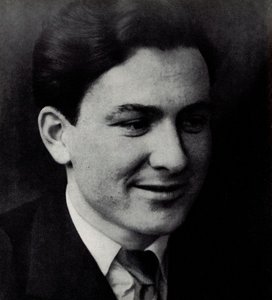
1907–1984, Deutschland
Franz Ehrlich
Early Life and Education Franz Ehrlich, a name synonymous with both architectural innovation and profound political engagement, was born in Reuth, Germany, in 1907. From his earliest years, a deep-seated passion for the arts ignited within him—a desire to translate vision into tangible form. This innate inclination led him to enroll at the prestigious Bauhaus school in Dessau, beginning in 1927. The Bauhaus represented more than just an educational institution; it was a crucible of artistic experimentation, a breeding ground for avant-garde movements that sought to redefine aesthetics and functionality.
Ebenfalls von Franz Ehrlich
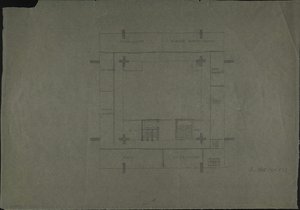 3. OG (Gestaltung für eine Auslandsvorstellung der DDR. Grundriss)
 LBH BAU- UND HOLZBEWERKUNGS MASCHINENHALLE 5 (Leipziger Messe, Grundriss eines Ausstellungsstandes)1949
 4 Armlehnstuhl. Ein Tischbank.
 Bookshop Hauptstraße / Transversal Abschnitt (FDGB Buchhandlung Gutenberg)1949
Essays zu SALES COUNTER
 Meisterwerke in München: Die Top 25 Kunstwerke der Bayerischen StaatssammlungenEntdecken Sie die Top 25 Meisterwerke der Bayerischen Staatssammlungen. Von Rembrandt bis Klimt: Jetzt online auf OriginalUniqueArt.com erk…
 25 Meisterwerke von Ernst Ludwig Kirchner: Die Seele des deutschen ExpressionismusErleben Sie 25 Meisterwerke von Ernst Ludwig Kirchner und den deutschen Expressionismus. Entdecken Sie alle Klassiker auf OriginalUniqueArt…
 Franz Ehrlich: Bridging Expressionism, Bauhaus & the Shadows of HistoryExplore the life of Franz Ehrlich, a pivotal Bauhaus architect whose career spanned Expressionism, resistance during Nazi Germany, and GDR …