Portrét Lowes Cato Dickinson

Obrazy autora Lowes Cato Dickinson: 62 nejznámějších díel podle pohledu galerie

Aktualizováno listopad 2026 · seřazeno podle našeho skóre popularity (vyhledávání, návštěvy a objednávky u každého díla) · 76 děl umělce Lowes Cato Dickinson v našem katalogu

Stručně řečeno

Z pohledu galerie je nejslavnějším dílem Lowes Cato Dickinson obrazem Sir Henry James Sumner Maine (1822–1888) (1890), jehož originál je vystaven v Pembroke College v obci Cambridge. George Peabody (1795-1869) (1868) a James Clerk Maxwell, Fellow, Physicist (1891) doplňují trio, které každé oko okamžitě pozná. Z 76 děl umělce Lowes Cato Dickinson v našem katalogu představuje galerie níže 62 nejznámějších děl, z nichž každé je originálem s uvedením roku vzniku, muzea a toho, co jej činí jedinečným.

1819 – 1908, Kilburn Victorian portraiture Nejvíce děl: National Portrait Gallery

Top 10 obrazů umělce Lowes Cato Dickinson v naší galerii

1
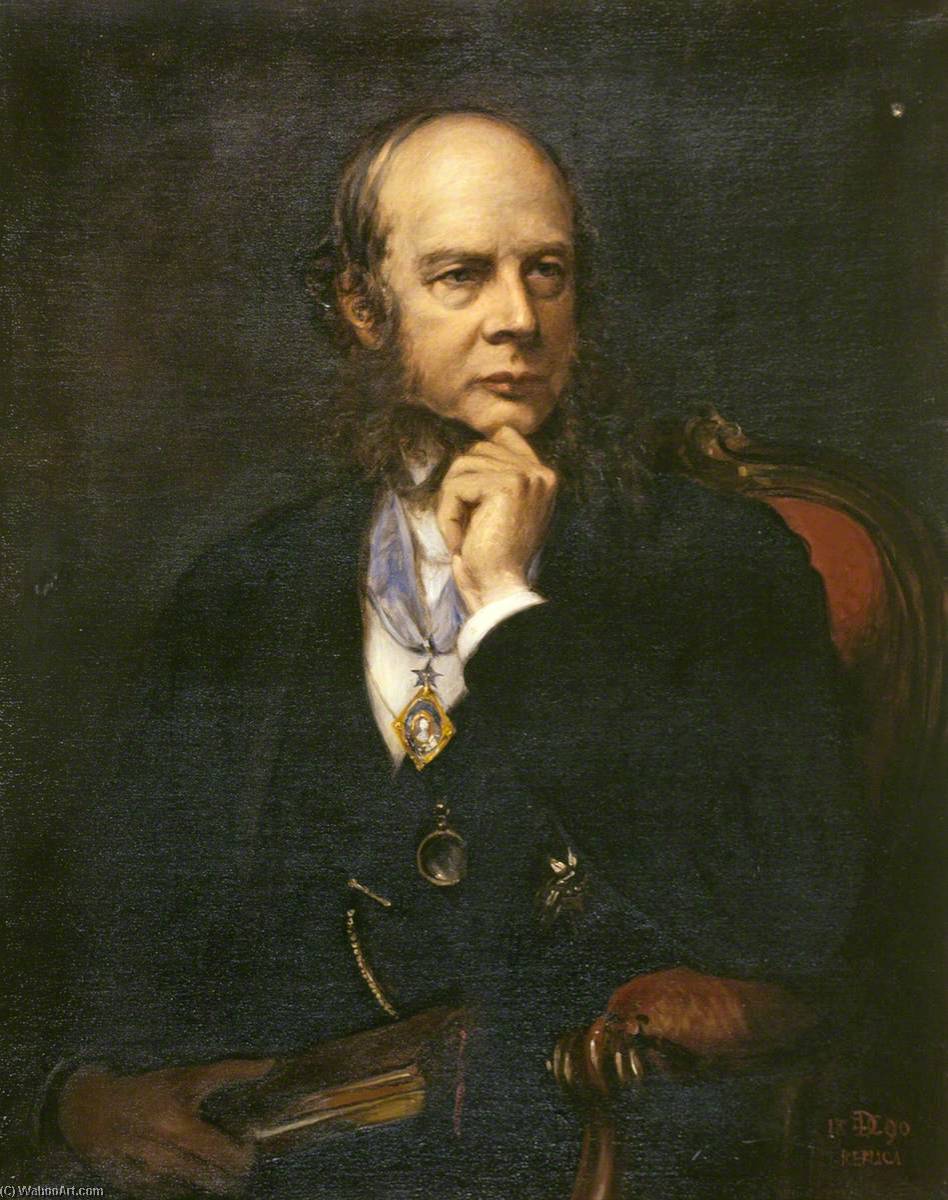
Sir Henry James Sumner Maine (1822–1888) (1890) od Lowes Cato Dickinson

Sir Henry James Sumner Maine (1822–1888)

1890 · Olej na plátně · Pembroke College, Cambridge

Sir Henry James Sumner Maine (1822–1888) – Výrazná osobnost v pozdní viktoriánské estetice Lowes Cato Dickinsonův obraz Sir Henryho Jamese Sumnera Mainea, vytvořený roku 1890, představuje fascinující ukázku viktoriánského umění a intelektuální osobnosti jednoho z nejvýznamnějších právníků své doby. Tento dílo, uložené v Pembroke Collegi Cambridge, je více než jen reprodukce osoby; je to komplexní estetická analýza, která odráží filozofické zájmy svého času. Dickinson zachytil Mainea v klasické pozici sedícího…

2
George Peabody (1795-1869) (1868) od Lowes Cato Dickinson

George Peabody (1795-1869)

1868 · Oil On Canvas · Harvard Art Museums, Cambridge

A single light source strikes the face of George Peabody, carving his features from a deep, velvet shadow. He sits in a three-quarter pose, a man composed of heavy fabrics and quiet authority. The light catches the crisp white of his collar and the subtle texture of his skin, revealing the map of a life lived through intellect and influence. His left hand holds a small piece of paper, a…

3
James Clerk Maxwell, Fellow, Physicist (1891) od Lowes Cato Dickinson

James Clerk Maxwell, Fellow, Physicist

1891 · Oil On Canvas · University of Cambridge Museums, Cambridge

Lowes Cato Dickinson’s 1891 oil on canvas, “James Clerk Maxwell, Fellow, Physicist,” transcends the conventional portrait to become a profound meditation on scientific inquiry and Victorian intellectualism. Housed within the hallowed halls of the University of Cambridge, this painting isn't merely a likeness; it’s an embodiment of Maxwell’s formidable mind and his pivotal role in shaping our understanding of the universe. Dickinson masterfully captures not just the outward appearance of…

4
Sir George Gabriel Stokes (1819–1903) (1874) od Lowes Cato Dickinson

Sir George Gabriel Stokes (1819–1903)

1874 · Oil On Canvas · Pembroke College, Cambridge

In the quiet, dignified realm of Victorian portraiture, few works capture the essence of scientific devotion as profoundly as Lowes Cato Dickinson’s 1874 masterpiece, Sir George Gabriel Stokes. This oil on canvas is far more than a mere likeness of a prominent physicist; it is a window into an era defined by the relentless pursuit of truth through observation and reason. As the viewer encounters this portrait, they are immediately…

5
Goldsworthy Lowes Dickinson (1869) od Lowes Cato Dickinson

Goldsworthy Lowes Dickinson

1869 · Oil On Canvas · National Portrait Gallery, Londýn

This oil on canvas painting is a portrait of Goldsworthy Lowes Dickinson, executed by the artist Lowes Cato Dickinson. The work was created in 1869. The subject of the portrait is the son of Lowes Cato Dickinson and Margaret Ellen Williams.

6
John Russell, 1st Earl Russell (1861) od Lowes Cato Dickinson

John Russell, 1st Earl Russell

1861 · Oil On Canvas · National Portrait Gallery, Londýn

Lowes Cato Dickinson rendered this portrait of John Russell, 1st Earl Russell, between 1855 and 1867. The sitter was a prominent statesman who served as Prime Minister and was a prolific writer. His influence extended into the institutional management of British art through his role as an ex-officio Trustee of the National Portrait Gallery.

7
James Anthony Froude (1890) od Lowes Cato Dickinson

James Anthony Froude

1890 · Oil On Canvas · Oriel College, Oxford

Lowes Cato Dickinson’s 1890 portrait of James Anthony Froude is more than a simple likeness; it's a carefully constructed tableau of Victorian intellect and understated melancholy. The painting, housed within the hallowed halls of the University of Oxford, immediately draws the viewer in with its formal composition and rich palette – a testament to Dickinson’s mastery of oil paint and his ability to capture both physical presence and inner character.

8
William Thomson (1824–1907), Baron Kelvin, Mathematician and Physicist (1869) od Lowes Cato Dickinson

William Thomson (1824–1907), Baron Kelvin, Mathematician and Physicist

1869 · Oil On Canvas · Peterhouse, Cambridge

In the quiet, dignified realm of Victorian portraiture, few works capture the intersection of scientific rigor and soulful contemplation as profoundly as Lowes Cato Dickinson’s 1869 masterpiece, William Thomson (1824–1907), Baron Kelvin. This oil on canvas is far more than a mere biographical record; it is an evocative window into an era defined by the relentless pursuit of truth and the burgeoning light of the scientific revolution. As the viewer…

9
Reverend Frederick William Hope, MA, DCL, FRS, LS (1861) od Lowes Cato Dickinson

Reverend Frederick William Hope, MA, DCL, FRS, LS

1861 · Oil On Canvas

Lowes Cato Dickinson presents Reverend Frederick William Hope, MA, DCL, FRS, LS in this 1861 oil portrait. The subject sits with the quiet gravity of a man defined by the study of the natural world. As an English clergyman, naturalist, collector, and entomologist, Hope carries the weight of his many titles in the steady set of his features. He is a man of science and spirit, captured in a moment…

10
Thomas Hare (1867) od Lowes Cato Dickinson

Thomas Hare

1867 · Oil On Canvas · National Portrait Gallery, Londýn

This portrait of Thomas Hare is a significant work by the English painter Lowes Cato Dickinson. Executed in 1867, the painting captures a man who was deeply involved in the legal and political shifts of the Victorian era. Hare was a British lawyer and a dedicated supporter of electoral reform, a man whose ideas regarding proportional representation would eventually influence democratic systems across several nations.

Obrazy autora Lowes Cato Dickinson, seřazeny od 11 do 62

11The Reverend Septimus C. H. Hansard (1823–1895) (1890) od Lowes Cato DickinsonThe Reverend Septimus C. H. Hansard (1823–1895)1890 12Henry Richards Guard, Fellow, Junior Bursar and Registrary of the University of Cambridge (1897) od Lowes Cato DickinsonHenry Richards Guard, Fellow, Junior Bursar and Registrary of the University of Cambridge1897 · University of Cambridge Museums 13Oscar Browning (1837–1923), President (1859) and Treasurer (1881–1902) of the Cambridge Union Society, Fellow of King's College, Teacher and Historian (1904) od Lowes Cato DickinsonOscar Browning (1837–1923), President (1859) and Treasurer (1881–1902) of the Cambridge Union Society, Fellow of King's College, Teacher and Historian1904 · Cambridge Union Society 14General the Right Honourable Robert Cornellis (1810–1890), Baron the Lord Napier of Magdala, GCB, GCSI, Governor of Gibraltar (1876–1883) (1889) od Lowes Cato DickinsonGeneral the Right Honourable Robert Cornellis (1810–1890), Baron the Lord Napier of Magdala, GCB, GCSI, Governor of Gibraltar (1876–1883)1889 · Government Art Collection 15John Bright (1811–1889) (1873) od Lowes Cato DickinsonJohn Bright (1811–1889)1873 · Touchstones Rochdale 16The Right Honourable Lord Justice Sir Robert Romer (1840–1918), PC, KC, GCB (1897) od Lowes Cato DickinsonThe Right Honourable Lord Justice Sir Robert Romer (1840–1918), PC, KC, GCB1897 · Trinity Hall 17Thomas Ethelbert Page (1850–1936), Classical Scholar and Schoolmaster (1883) od Lowes Cato DickinsonThomas Ethelbert Page (1850–1936), Classical Scholar and Schoolmaster1883 · St John’s College (Cambridge) 18Arthur Penrhyn Stanley (1850) od Lowes Cato DickinsonArthur Penrhyn Stanley1850 · National Portrait Gallery 19Rear Admiral Sir Henry John Codrington (1808–1877) (1863) od Lowes Cato DickinsonRear Admiral Sir Henry John Codrington (1808–1877)1863 · National Maritime Museum 20Richard Cobden (1870) od Lowes Cato DickinsonRichard Cobden1870 · National Portrait Gallery 21Richard Lister Venables (1809–1894), MA (1871) od Lowes Cato DickinsonRichard Lister Venables (1809–1894), MA1871 22John Russell, 1st Earl Russell (1867) od Lowes Cato DickinsonJohn Russell, 1st Earl Russell1867 23John Russell, 1st Earl Russell (1867) od Lowes Cato DickinsonJohn Russell, 1st Earl Russell1867 24Edmund Law Lushington (1876) od Lowes Cato DickinsonEdmund Law Lushington1876 · Maidstone Museum - Bentlif Art Gallery 25Gladstone's Cabinet of 1868 (1874) od Lowes Cato DickinsonGladstone's Cabinet of 18681874 · National Portrait Gallery 26Arthur Cayley (1821–1895), Fellow and Mathematician, Sadlerian Professor (1863–1895) (1874) od Lowes Cato DickinsonArthur Cayley (1821–1895), Fellow and Mathematician, Sadlerian Professor (1863–1895)1874 27George Edward Wythes (1839–1875) (1883) od Lowes Cato DickinsonGeorge Edward Wythes (1839–1875)1883 · Ickworth 28Yearling Sale at Doncaster, South Yorkshire (1885) od Lowes Cato DickinsonYearling Sale at Doncaster, South Yorkshire1885 · Doncaster Museum And Art Gallery 29Sir Charles Lyell, 1st Bt (replica of an original of c.1870 by the artist) (1883) od Lowes Cato DickinsonSir Charles Lyell, 1st Bt (replica of an original of c.1870 by the artist)1883 30Thomas Spencer Baynes (1823–1887) (1888) od Lowes Cato DickinsonThomas Spencer Baynes (1823–1887)1888 31The Lawn at Goodwood (1886) od Lowes Cato DickinsonThe Lawn at Goodwood1886 32John Richardson Selwyn, DD, Bishop, Master (1898) od Lowes Cato DickinsonJohn Richardson Selwyn, DD, Bishop, Master1898 · University of Cambridge Museums 33The Lawn at Goodwood (1886) od Lowes Cato DickinsonThe Lawn at Goodwood1886 34Joseph Prior, Fellow and Tutor (1898) od Lowes Cato DickinsonJoseph Prior, Fellow and Tutor1898 · University of Cambridge Museums 35James Clerk Maxwell (1831–1879), Fellow, Physicist (1891) od Lowes Cato DickinsonJames Clerk Maxwell (1831–1879), Fellow, Physicist1891 36The Constable of the Tower (General the Right Honourable Robert Cornellis, 1810–1890, Baron the Lord Napier of Magdala, GCB, GCSI, Governor of Gibraltar, 1876–1883) (1890) od Lowes Cato DickinsonThe Constable of the Tower (General the Right Honourable Robert Cornellis, 1810–1890, Baron the Lord Napier of Magdala, GCB, GCSI, Governor of Gibraltar, 1876–1883)1890 37Joseph Prior (1834–1918), Fellow and Tutor (1898) od Lowes Cato DickinsonJoseph Prior (1834–1918), Fellow and Tutor1898 38Charles Kingsley (1862) od Lowes Cato DickinsonCharles Kingsley1862 · National Portrait Gallery 39Charles Barry Junior (1823–1900), PRIBA (1880) od Lowes Cato DickinsonCharles Barry Junior (1823–1900), PRIBA1880 · Royal Institute of British Architects 40Field Marshal Lord Roberts (1832–1914), VC, KP, GCB, GCSI, GCIE, c.1900 (1901) od Lowes Cato DickinsonField Marshal Lord Roberts (1832–1914), VC, KP, GCB, GCSI, GCIE, c.19001901 41John Campbell White, Baron Overtoun od Lowes Cato DickinsonJohn Campbell White, Baron Overtoun 42Mrs Alice Westlake (1842–1923) od Lowes Cato DickinsonMrs Alice Westlake (1842–1923) 43Henry Wilkinson Cookson, Master (1847–1876) (1876) od Lowes Cato DickinsonHenry Wilkinson Cookson, Master (1847–1876)1876 · Peterhouse 44Výborně, tady je překlad názvu díla do češtiny:

**The Right Honourable Hugh McCalmont Cairns (1819–1885) , 1st Earl Cairns, PC, QC, DCL** – Vznešený Hugh McCalmont Cairns (1819–1885), 1. vévodství Cairns, PC, QC, DCL (1876) od Lowes Cato DickinsonVýborně, tady je překlad názvu díla do češtiny: **The Right Honourable Hugh McCalmont Cairns (1819–1885) , 1st Earl Cairns, PC, QC, DCL** – Vznešený Hugh McCalmont Cairns (1819–1885), 1. vévodství Cairns, PC, QC, DCL1876 · National Trust 45John Bright (1873) od Lowes Cato DickinsonJohn Bright1873 · Touchstones Rochdale Arts And Heritage Centre 46Clara Pater (1860) od Lowes Cato DickinsonClara Pater1860 · Somerville College 47Sir Henry James Sumner Maine (1822–1888), KCSI, LLD, FRS, Master (1877–1888) (1888) od Lowes Cato DickinsonSir Henry James Sumner Maine (1822–1888), KCSI, LLD, FRS, Master (1877–1888)1888 · Trinity Hall 48Mrs Brown Grieve (1863) od Lowes Cato DickinsonMrs Brown Grieve1863 49Henry Wilkinson Cookson (1875) od Lowes Cato DickinsonHenry Wilkinson Cookson1875 · Abbot Hall Art Gallery 50James Anthony Froude (1890) od Lowes Cato DickinsonJames Anthony Froude1890 51Henry Sidgwick, Fellow, Philosopher and Knightsbridge Professor (1902) od Lowes Cato DickinsonHenry Sidgwick, Fellow, Philosopher and Knightsbridge Professor1902 · University of Cambridge Museums 52The Reverend Joseph Waite (1824–1908), DD (1874) od Lowes Cato DickinsonThe Reverend Joseph Waite (1824–1908), DD1874 · Durham University 53John Walsh, 1st Baron Ormathwaite (1865) od Lowes Cato DickinsonJohn Walsh, 1st Baron Ormathwaite1865 · Llyfrgell Genedlaethol Cymru 54George Leeman od Lowes Cato DickinsonGeorge Leeman 55John Westlake, Esq., QC od Lowes Cato DickinsonJohn Westlake, Esq., QC 56Sir Richard Green Price (1803–1887) od Lowes Cato DickinsonSir Richard Green Price (1803–1887) 57George Noel Freeling od Lowes Cato DickinsonGeorge Noel Freeling 58George Noel Freeling (1829–1892) od Lowes Cato DickinsonGeorge Noel Freeling (1829–1892)Merton College 59Thomas Gejetan Ragland (1815–1858), Fellow (1841–1858), Missionary od Lowes Cato DickinsonThomas Gejetan Ragland (1815–1858), Fellow (1841–1858), Missionary 60Reverend Frederick Denison Maurice (1805–1872), Professor of Moral Philosophy (1866), Christian Socialist od Lowes Cato DickinsonReverend Frederick Denison Maurice (1805–1872), Professor of Moral Philosophy (1866), Christian Socialist 61The Reverend Henry Latham (1821–1902), Master (1888–1902) od Lowes Cato DickinsonThe Reverend Henry Latham (1821–1902), Master (1888–1902)Trinity Hall 62George Sclater Booth, Lord Basing od Lowes Cato DickinsonGeorge Sclater Booth, Lord BasingHampshire Cultural Trust

Motivy, které zaujaly Lowes Cato Dickinson

Čtyři témata, která se v těchto originálech nejčastěji objevují, z nichž každé má svůj nejlepší příklad.

Muzea, v nichž jsou vystavena originálna umělce Lowes Cato Dickinson

8 muzea, v nichž je umístěno nejvíce obrazů z této stránky.

Muzeum Město Díla autora Lowes Cato Dickinson Obrazy z tohoto seznamu
National Portrait Gallery, LondýnNational Portrait Gallery Londýn 7 Goldsworthy Lowes Dickinson, John Russell, 1st Earl Russell, Thomas Hare
University of Cambridge Museums, CambridgeUniversity of Cambridge Museums Cambridge 5 James Clerk Maxwell, Fellow, Physicist, Henry Richards Guard, Fellow, Junior Bursar and Registrary of the University of Cambridge, John Richardson Selwyn, DD, Bishop, Master
Trinity Hall, CambridgeTrinity Hall Cambridge 3 The Right Honourable Lord Justice Sir Robert Romer (1840–1918), PC, KC, GCB, Sir Henry James Sumner Maine (1822–1888), KCSI, LLD, FRS, Master (1877–1888), The Reverend Henry Latham (1821–1902), Master (1888–1902)
Pembroke College, CambridgePembroke College Cambridge 2 Sir Henry James Sumner Maine (1822–1888), Sir George Gabriel Stokes (1819–1903)
Peterhouse, CambridgePeterhouse Cambridge 2 William Thomson (1824–1907), Baron Kelvin, Mathematician and Physicist, Henry Wilkinson Cookson, Master (1847–1876)
Harvard Art Museums, CambridgeHarvard Art Museums Cambridge 1 George Peabody (1795-1869)
Oriel College, OxfordOriel College Oxford 1 James Anthony Froude
Cambridge Union Society, CambridgeCambridge Union Society Cambridge 1 Oscar Browning (1837–1923), President (1859) and Treasurer (1881–1902) of the Cambridge Union Society, Fellow of King's College, Teacher and Historian

Lowes Cato Dickinson, jeden ikonický obraz na každé desetiletí

Díla podle dekád

Vyberte si dekádu a prohlédněte si originál, který ji definuje.

Obrazy umělce Lowes Cato Dickinson: odpovědi galerie

Který obraz autora Lowes Cato Dickinson je nejslavnější ze všech?Odhalit odpověď

Sir Henry James Sumner Maine (1822–1888) (1890), Pembroke College, Cambridge. Následují George Peabody (1795-1869) (1868) a James Clerk Maxwell, Fellow, Physicist (1891).

Kolik let bylo Lowes Cato Dickinson, když dokončil/a Sir Henry James Sumner Maine (1822–1888)?Odhalit odpověď

71 let: dílo Sir Henry James Sumner Maine (1822–1888) pochází z roku 1890 a Lowes Cato Dickinson se narodil/a v roce 1819.

Kterých 10 nejlepších obrazů má Lowes Cato Dickinson?Odhalit odpověď

Sir Henry James Sumner Maine (1822–1888), George Peabody (1795-1869), James Clerk Maxwell, Fellow, Physicist, Sir George Gabriel Stokes (1819–1903), Goldsworthy Lowes Dickinson, John Russell, 1st Earl Russell, James Anthony Froude, William Thomson (1824–1907), Baron Kelvin, Mathematician and Physicist, Reverend Frederick William Hope, MA, DCL, FRS, LS a Thomas Hare. Hodnocení výše uvádí rok a muzeum pro každé z nich.

Kolik děl vytvořil/a Lowes Cato Dickinson?Odhalit odpověď

Náš katalog obsahuje 76 děl umělce Lowes Cato Dickinson z let 1850 až 1904.

Kde jsou vystavena nejznámější originály umělce Lowes Cato Dickinson?Odhalit odpověď

Většinou v National Portrait Gallery (Londýn), University of Cambridge Museums (Cambridge) a Trinity Hall (Cambridge). V tabulce muzeí výše jsou vypsány všechny.

Kdy Lowes Cato Dickinson vytvořil své nejslavnější obrazy?Odhalit odpověď

V období 1860s: 13 z celkem 62 děl na této stránce vzniklo právě tehdy, z toho George Peabody (1795-1869) z nich.

Která jsou nejstarší a nejnovější slavná díla umělce Lowes Cato Dickinson?Odhalit odpověď

Na této stránce je nejstarší dílo z Arthur Penrhyn Stanley (1850) a nejnovější z Oscar Browning (1837–1923), President (1859) and Treasurer (1881–1902) of the Cambridge Union Society, Fellow of King's College, Teacher and Historian (1904).

Kterým tématům se Lowes Cato Dickinson věnoval(a) nejčastěji?Odhalit odpověď

Portrait (11), Man (8) a British art (7) napříč 62 díly na této stránce.

V jaké technice tvořil(a) Lowes Cato Dickinson nejčastěji?Odhalit odpověď

Oil On Canvas, u 24 z 62 děl na této stránce.

S jakým směrem je spojen(a) Lowes Cato Dickinson?Odhalit odpověď

Victorian portraiture, podle originálů na této stránce.

Jaká originální díla Lowes Cato Dickinson má v obsluze National Portrait Gallery?Odhalit odpověď

Goldsworthy Lowes Dickinson, John Russell, 1st Earl Russell a Thomas Hare: muzeum National Portrait Gallery, Londýn má v obsluze 7 děl z této stránky.

Lowes Cato Dickinson: umělec

A Life Etched in Portraits: The Lowes Cato Dickinson

Lowes Cato Dickinson, born in Kilburn, London, in 1819, was a figure deeply embedded within the artistic and social currents of Victorian England. Coming from a family intimately connected to the art world—his father, Joseph Dickinson, being a respected lithographer and publisher on Bond Street—Dickinson’s path seemed preordained. Yet, his journey wasn't merely one of inheritance but of active engagement with the evolving aesthetic sensibilities and progressive social movements of his time. One of eleven siblings, he received his early education at Topsham School and Dr Lord's School in Tooting, grounding him in a solid foundation before fully immersing himself within the family business following his father’s death in 1849. He then joined forces with his brothers, Gilbert Bell Dickinson and William Robert Dickinson, to continue the legacy of Dickinson Brothers on Bond Street, a firm that quickly became synonymous with quality art publishing and photography. This early exposure wasn't simply about commerce; it was an apprenticeship in visual culture, shaping his eye for detail and composition—qualities that would define his later work as a portraitist.

The Pre-Raphaelite Circle and the Call of Social Reform

Dickinson’s artistic development took a significant turn with a three-year sojourn in Italy around 1850. This period proved formative, exposing him to the masterpieces of the Renaissance and influencing his evolving style. He absorbed the stylistic principles championed by Dante Gabriel Rossetti and John Ruskin—a fervent devotion to nature alongside an insistence on emotional intensity—principles that would become central to his artistic vision. Upon his return to England, he found himself drawn into the orbit of the Pre-Raphaelite Brotherhood, though not formally affiliated with it. Nevertheless, Dickinson cultivated correspondence with key members of this influential group, solidifying his position within its intellectual landscape. This engagement extended beyond mere aesthetic admiration; it encompassed a profound sympathy for humanity and a conviction that art could serve as a catalyst for social betterment. He actively participated in the establishment of the Working Men's College alongside figures like Maurice and Kingsley—a testament to his unwavering belief in the transformative potential of education and his desire to uplift marginalized communities. The college’s walls bear witness to Dickinson’s artistic legacy, adorned with portraits commissioned by him that capture the essence of its founders.

A Portraitist of Victorian Society

Dickinson honed his craft as a portrait painter during this period, developing a distinctive technique characterized by meticulous attention to facial expression and subtle shading—a method he often employed in collaboration with fellow artists like Frederic Denison Maurice. He skillfully recreated likenesses from photographs or descriptions, ensuring that memory endured beyond physical presence. His subjects spanned the spectrum of Victorian society: monarchs, statesmen, scientists, writers, and philanthropists—each portrait imbued with Dickinson’s profound understanding of human psychology and his ability to convey character through visual representation. Among his most celebrated commissions were portraits of Queen Victoria herself, Lord Kelvin, Sir Henry Norman, and numerous members of Parliament—works that remain invaluable documents of Victorian culture and intellectual life. His meticulous rendering of faces—a hallmark of his style—demonstrates a remarkable sensitivity to nuance and emotion.

Notable Works and Legacy

Dickinson’s oeuvre comprises over fifty portraits, many of which hang prominently in institutions such as the National Portrait Gallery in London and Cambridge University—a testament to his enduring influence on British art history. His magnum opus is arguably the portrait of General Gordon at Khartoum, a monumental canvas that captures the heroic spirit of Victorian exploration and resilience. The meticulous detail with which he rendered Gordon’s visage exemplifies Dickinson's mastery of technique and his ability to convey profound psychological depth. Furthermore, Dickinson’s contribution extends beyond individual artworks; he established the Lowes Dickinson Award—a prestigious prize recognizing excellence in student art—affirming his commitment to fostering artistic talent and promoting creative endeavors. His papers, meticulously archived at Princeton, Oxford, and Cambridge Universities, continue to inspire scholars studying Victorian art, social history, and the intersection of faith and reform. Lowes Cato Dickinson’s life embodies a harmonious blend of artistic brilliance and humanist compassion—a legacy that resonates powerfully through his enduring images and his unwavering dedication to advancing knowledge and fostering social progress.