34 Famous Gothic Художници Who Shaped the Movement
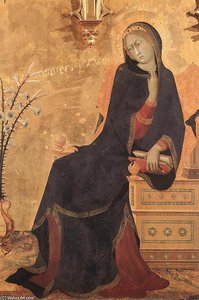
Дучо ди Буонинсеня (1255–1319) is the most famous Gothic артист, whose singular vision gave us Полиптих № 28 и Conjectural reconstrruction of the Maestà (back). Next stand Симоне Мартини, Джентиле Да Фабриано, Пизанело и Стефан Лохнер. These 34 артисти, from Майстор Матео (born 1161) to Jan Baegert (born 1465), came from 8 countries.
OSelected by OriginalUniqueArt.com
Our selection. Artists whose works our catalogue attaches to Gothic, in the order of our fame ranking. Artists born after 1955 with no Wikidata identifier stay out until verified. The Wikipedia figure counts our 32 languages with an article on the artist.
ИталианецBorn in СиенаСиенска школа, Треченто готикаWikipedia in 31/32 languages
Maestà, 1308-1311. Еволюцията на майсторския почерк на Дучио Ди Буонисегна е отчетливо видима в създадената през 1285 г. Rucellai Madonna (1285). Христос, прощаващ се с апостолите (1308).
ИталианецBorn in СиенаМеждународна готикаWikipedia in 28/32 languages
By 1315, Simone Martini was already making his mark on the civic life of Siena. Around 1324, he was commissioned to paint the Blessed Agostino Novello Altarpiece. By bringing the Sienese style across the mountains, he helped Sienese painting penetrate French territory, allowing his specific aesthetic to take root in new lands.
Where to see In Siena, the Palazzo Pubblico holds the Maestà fresco, a work that has occupied its space since 1315.
ItalianBorn in ФлоренцияGothic, Early RenaissanceWikipedia in 20/32 languages
Taddeo Gaddi, Agnolo's father—Giotto’s most devoted pupil—transmitted this groundbreaking vision to his son, instilling a conviction that art should strive for emotional resonance and narrative clarity. This influence is palpable in Gaddi’s earliest works – notably the triptych now residing in Parma’s Galleria Nazionale—where monumental figures convey profound emotion through expressive gestures and carefully crafted drapery. Agnolo’s formative years were steeped in the shadow of Giotto di Bondone, whose revolutionary frescoes at Assisi and Padua had irrevocably altered artistic conventions.
ИталианскиBorn in ФлоренцияРанен РенесансWikipedia in 17/32 languages
Loggia del Bigallo, Флоренция: Разгледайте изкуството от XIV век и исторически артефакти от Compagnia del Bigallo, включително творби на Arnoldi и Daddi. Уникална флорентинска перла! Бернардо Дади - Музей Getty: Разгледайте колекцията на Музея J. Paul Getty в Центъра на Getty и Вилата на Getty. Бернардо Дади - Wikipedia: Научете повече за неговия живот, творби и влияния във Wikipedia.
НидерландскиBorn in Lower RhineГотически РенесансWikipedia in 14/32 languages
Johannes Francke, known as Frater Francke, stands as a pivotal figure in the burgeoning artistic landscape of 15th-century Germany – specifically within the vibrant Gothic tradition of Hamburg.
ItalianBorn in FlorenceGothicWikipedia in 7/32 languages
Jacopo's dedication extended beyond commissions; he actively participated in shaping Florence’s cultural landscape through his involvement with the cathedral workshop and his role as consul of the Arte dei Medici e Speziali (1384, 1387, 1392). His commitment to procuring marble for the cathedral underscored his understanding of artistic grandeur and civic responsibility. The dispersed predella depicting scenes from Saint Peter’s life – a collaborative effort with Niccolò di Pietro Gerini – remains a poignant reminder of Jacopo's artistic legacy and the enduring power of Florentine Gothic art.
CatalanBorn in ВалсLate Gothic, Flemish influenceWikipedia in 10/32 languages
His workshop became a cornerstone of Catalan production, with works like the Saint Augustine Altarpiece involving collaborations with skilled artists such as Pau Vergós to meet the immense demands of religious guilds and monasteries.
GermanBorn in Weil der StadtLate Gothic ArtWikipedia in 10/32 languages
Where International Gothic often favored elegant elongation, stylized drapery, and symbolic ornamentation, Moser embraced a more naturalistic approach. The landscape backgrounds, though still somewhat conventional, demonstrate an increasing attention to spatial depth and atmospheric perspective – qualities that foreshadow the developments of Early Netherlandish painting. However, scholars generally agree that he was exposed to both the late Gothic traditions prevalent in Southern Germany and the emerging artistic trends emanating from Flanders.
GermanBorn in MindenInternational GothicWikipedia in 13/32 languages
It is believed that Bertram was influenced by both French and Netherlandish artistic trends prevalent during his time. The influence of courtly art from France can be observed in the refined elegance of his figures and decorative elements, while the meticulous detail and realism characteristic of Early Netherlandish painting are evident in his depictions of architectural settings and objects.
Pere Serra, also known as Jaume Serra, stands as a compelling figure in the transition from the International Gothic style to the burgeoning Renaissance aesthetic within Catalonia. While biographical details remain scarce – a common fate for artists working before widespread documentation – Serra’s surviving works speak volumes about his skill, refinement, and the patronage that supported his endeavors. The city was a vibrant hub for trade and artistic exchange, exposed to influences from Italy, France, and Flanders.
CatalanBorn in GironaInternational GothicWikipedia in 8/32 languages
By successfully introducing and refining the International Gothic style in the Principality, he provided a bridge between the medieval past and the approaching Renaissance.
ItalianBorn in VeniceInternational GothicWikipedia in 10/32 languages
While the broader Renaissance would eventually move toward the anatomical realism and linear perspective of masters like Bellini, Giambono’s dedication to the International Gothic aesthetic provided the essential foundation of splendor upon which later Venetian art was built.
The Master’s style is a compelling synthesis of Northern European Gothic and Early Renaissance influences. The influence of Netherlandish masters is readily apparent in his draftsmanship and compositional structure.
Born in WeselLate GothicWikipedia in 3/32 languages
He received his formal training under his father, Derick Baegert, a painter who provided the essential technical groundwork for Jan's later career. By 1492, Jan Baegert was recognized as a master in Kalkar, a significant milestone that confirmed his ability to manage large-scale commissions independently.
Where to see Tracing the physical remains of Jan Baegert’s output requires looking toward the Westphalian and Lower Rhine regions.
While definitively named only recently thanks to meticulous research by Maria Falcone, this artist—now recognized as Sano di Pietro —left behind a remarkable cycle of eight panels depicting scenes from the life of Saint Anthony Abbot, works that continue to captivate viewers with their haunting beauty and psychological depth. Despite his anonymity for centuries, the Master of the Osservanza's work has exerted a significant influence on subsequent generations of Italian painters.
AustrianInternational GothicWikipedia in 5/32 languages
The Master’s style is a complex synthesis of influences. However, he also incorporated elements of the International Gothic style, characterized by elongated figures, delicate hands, and an expressive use of color.
OАсистент на студиотоНа линия · отговаря в рамките на минута
Здравейте! Мога да ви помогна с избора на произведение на изкуството, проследяването на поръчка или отговори на въпроси относно гаранцията. С какво мога да ви бъда полезен?