American modernism · 1951
T View (ستيوارت ديفيس, 1951)
أبدع ستيوارت ديفيس (1892–1964) في T View. يعود تاريخها إلى 1951. تنتمي إلى حركة American modernism. صُنعت من Gouache. أبعادها 54 × 36 cm
- 1951
- Gouache
- 54 × 36 cm

 معاينة الحجم الواقعي

 لوحة زيتية مرسومة يدوياً
 مشاركة
 مشاركة
 بطاقة المعلومات


 تحميل الملف
 قطع مشابهة
 الأشعة السينية
 عرض شرائح
 الأسئلة والأجوبة

 الإحصائيات
T View باختصار
- العنوان
- T View
- الفنان
- ستيوارت ديفيس (1892–1964)
- تاريخ ميلاد الفنان
- فيلادلفيا, الولايات المتحدة
- التاريخ
- 1951
- الوسيط الفني
- Gouache
- الأبعاد
- 54 × 36 cm
- الحركة
- American modernism
- الحقبة الزمنية
- Modern
- الموضوع
- red, geometric shapes, vertical lines, blue, green, yellow
ماذا يصور T View؟
Identification of T View by Stuart Davis
The canvas known as T View pulses with a restless, geometric energy. Painted in 1951, this work captures a moment of intense abstraction that feels as though it is still unfolding before the eyes. The composition breaks the world into a series of fragmented, overlapping planes, suggesting the rhythmic, fractured pulse of an urban landscape. It is a vision of a city stripped of its literal skin, leaving behind only the essential, jagged bones of its architecture and the movement of its streets.
The artist behind this vision is Stuart Davis, a man whose creative roots reach back to Philadelphia, United States. Born in 1892, Davis brings a specific, modern sensibility to the work, one that seems to translate the syncopated rhythms of jazz into a visual language. In T View, the eye does not rest on a single subject but instead dances across a landscape of sharp angles and bold, intersecting shapes. The structure of the piece relies on a tension between order and chaos, where vertical lines attempt to anchor a scene that is constantly in motion.
Every shape in this 1951 creation works to redefine how we perceive space. Rather than following the rules of traditional perspective, the work presents multiple viewpoints at once, a hallmark of the modernist spirit. The colors and forms do not merely sit on the surface; they collide and overlap, creating a sense of depth through sheer visual force. It is a piece that demands an active gaze, inviting the viewer to find their own rhythm within its complex, geometric dance.
Composition and Visual Elements
The canvas erupts in a rhythmic, Cubist arrangement that reimagines the pulse of an urban landscape. Fragments of a cityscape collide and dance, stripped of literal detail but brimming with the energy of a metropolis. A bold, red background dominates the space, providing a high-contrast stage for a frantic interplay of shapes. Two thin red lines slice vertically from the top to the bottom, establishing a rigid structural axis that anchors the surrounding chaos. This linear stability struggles against the movement of the forms, creating a tension that keeps the eye constantly in motion.
Geometric shapes—rectangles, squares, triangles, and circles—are scattered across the plane in an unconventional, non-representational dance. These forms do not sit still; they overlap and intersect, building a sense of depth through color intensity and layered positioning. While the background remains a steady red, the foreground shapes introduce a palette of green, blue, yellow, white, and black. This collision of colors and angles creates a feeling of energetic disorientation, as if the viewer is catching a fleeting, fractured glimpse of a city in motion.
Technique and Material Application
The surface of this work presents a remarkably smooth texture, where the hand of the artist feels controlled and precise. Color arrives in distinct, flat planes that overlap and intersect, creating a sense of depth without the need for traditional shading. Each shape maintains its own clear boundary, contributing to a rhythmic, geometric structure that feels both deliberate and energetic. There is no heavy impasto here; instead, the medium sits evenly across the support, allowing the intensity of the hues to drive the visual experience.
One wonders what specific medium allows for such opaque, saturated color. The way the pigment settles suggests the use of gouache, tempera, or perhaps another similar opaque medium. These materials are applied to a surface of paper or canvas, measuring 54 x 36 cm, providing a compact stage for this complex arrangement of forms. The application of paint or ink remains disciplined, favoring a clean, graphic quality that emphasizes the interplay of light and color through flat application rather than through dramatic shifts in lighting.
Related Works by the Artist
The artist's creative evolution reveals a constant dialogue between the urban environment and abstract form. In his earlier years, the focus shifts toward the natural world, as seen in Rocks, Gloucester from 1915. This period of exploration eventually gives way to a more structured, modern sensibility. By 1928, the work Odol (Modernism) emerges, blending recognizable commercial imagery with the fragmented geometry that defines his mature style. These pieces suggest a mind constantly rearranging the visual language of the city.
Rhythm and movement continue to pulse through his later compositions. The energetic, improvisational quality found in The Mellow Pad reflects a deep connection to the syncopated spirit of jazz. This musicality finds a different expression in T-Scape (T-View), which shares a structural kinship with the current piece. Even as the years progress toward 1956, as seen in Tropes de Teens, the artist maintains a sharp, graphic clarity. Whether exploring the quietude of Still Life-Flowers or the complex layers of his urban abstractions, the work remains a continuous investigation of shape and color.
صور عالية الدقة لـ T View
محمية بموجب حقوق الطبع والنشر: هذه الملفات مخصصة للاستخدام الشخصي فقط، ولا تُعد ترخيصاً لإعادة النشر.
ستيوارت ديفيس, T View (1951).
ستيوارت ديفيس (1892–1964), T View, 1951, gouache. الصورة: OriginalUniqueArt.com.
أسئلة وإجابات حول T View
في أي عام أُبدعت "T View" للفنان ستيوارت ديفيس؟
أُبدع العمل الفني "T View" للفنان ستيوارت ديفيس في عام 1951.
ما هي التقنية المستخدمة في تنفيذ "T View" للفنان ستيوارت ديفيس؟
تعتمد التقنية المستخدمة في "T View" للفنان ستيوارت ديفيس على Gouache، وتهدف النسخ المطبوعة إلى محاكاة مظهر هذه التقنية.
ما هي أبعاد العمل الأصلي "T View"؟
تبلغ أبعاد العمل الأصلي "T View" للفنان ستيوارت ديفيس 54 x 36 cm.
ما هي الموضوعات التي يتناولها "T View" للفنان ستيوارت ديفيس؟
تُصور "T View" للفنان ستيوارت ديفيس: red, geometric shapes, vertical lines, blue, green, yellow, black, white.
هل يمكن إعادة إنتاج صورة "T View" للفنان ستيوارت ديفيس بحرية؟
تندرج لوحة "T View" للفنان ستيوارت ديفيس ضمن نطاق لا تزال محمية بموجب حقوق الطبع والنشر، وتحدد هذه الحالة الشروط التي يمكن بموجبها إعادة إنتاج صورة العمل الفني.
من هو الفنان الذي أبدع "T View"؟
تم إبداع "T View" بواسطة ستيوارت ديفيس. وتصف المعلومات الواردة في هذه الصفحة العمل الأصلي لـ ستيوارت ديفيس.
إلى أي حركة فنية ينتمي العمل "T View" للفنان ستيوارت ديفيس؟
تنتمي "T View" للفنان ستيوارت ديفيس إلى حركة American modernism، التي تمنح العمل سياقه الأسلوبي.
إلى أي مرحلة من مراحل تطور ستيوارت ديفيس ينتمي العمل "T View"؟
تُمثل "T View" الحقبة الإبداعية لـ ستيوارت ديفيس خلال فترة Mature Period.
كم كان عمر ستيوارت ديفيس عند إبداع "T View"؟
عندما أُبدع العمل "T View" في عام 1951، كان عمر الفنان ستيوارت ديفيس - المولود في 1892 - هو 59 عاماً.
عن الفنان، ستيوارت ديفيس
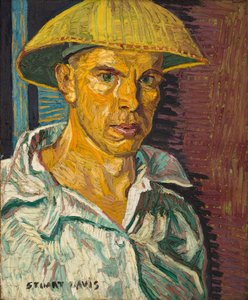
1892–1964, الولايات المتحدة
ستيوارت ديفيس
ستيوارت ديفيس: رائد الحداثة الأمريكية ولد ستيوارت ديفيس في السابع من ديسمبر عام 1892 في مدينة فيلادلفيا، ونشأ في بيئة فنية غنية. كان والده، إدوارد وايت ديفيس، محررًا فنيًا لصحيفة Philadelphia Press، بينما كانت والدته، هيلين ستيوارت ديفيس، نحاتة. هذا الخلفية العائلية بلا شك عززت اهتمامه المبكر بالفنون البصرية. تلقى ديفيس تدريبه الرسمي في مدرسة روبرت هنري للفنون في مدينة نيويورك من عام 1909 إلى عام 1912 تحت إشراف روبرت هنري.
أعمال أخرى لـ ستيوارت ديفيس
 أودول
 Lucky Strike1924
 Sixth Avenue El1931
 Arboretum by Flashbulb
مقالات حول T View
 Beyond the Surface: Exploring the Emotional Depth of Cubist ExpressionismDiscover the profound emotional resonance within Cubist Expressionism. Explore how fragmented forms and geometric abstraction convey deep h…
 Dreams on Canvas: Understanding Automatist and Veristic SurrealismIn 1924, André Breton launched a movement in Paris to liberate the mind. One path used spontaneous gestures, while the other used photograp…
 Electric Chaos: Capturing the Kinetic Pulse of Urban Crowd Scenes in Pop Art and Street StyleExplore the electric pulse of urban pop art and street style through expert analysis. Dive into the chaos of the city's vibrant movement no…