Switch to Print
 Read More







































 For artworks or reproductions larger than 105 cm (approximately 41 inches) on any side, the frame will be shipped as a kit, disassembled. This method ensures safe delivery and prevents damage during transport.


Introduction to Nihonga Art Movement and Iwasa Matabei
The Nihonga art movement emerged during the Meiji period (1868-1912) as a response to the rise of Western-style painting known as Yōga. The term "Nihonga" literally translates to "pictures of Japan," emphasizing its connection to traditional Japanese art forms. Iwasa Matabei, an artist from this movement, is renowned for his unique style and contribution to Nihonga.The Poet Mibu no Tadamine: A Masterpiece by Iwasa Matabei
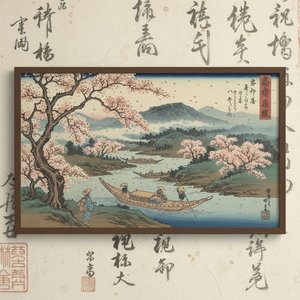
The Poet Mibu no Tadamine, from a Set of Album Leaves Illustrating the Thirty-six Poetic Immortals is an exquisite example of Nihonga. This painting showcases Iwasa Matabei's mastery of mineral pigments and organic materials on silk or paper. The subject matter, Mibu no Tadamine, is one of the Thirty-six Poetic Immortals, a group of esteemed poets from Japan's classical past.The Significance of Poetry in Japanese Art
For the Japanese elite, poetry was the quintessential literary experience. Idealized and deeply admired, poets were often commemorated in portraiture. In the early eleventh century, Fujiwara Kintō (966–1041) selected thirty-six 'immortal' poets from the past, and their images became a popular theme in the yamato-e painting tradition. Iwasa Matabei's work is a testament to this enduring appreciation for poetry in Japanese art.The Art of Nihonga: A Lasting Legacy
Nihonga has influenced artists around the world, and its legacy continues to inspire contemporary artists today. At OriginalUniqueArt.com, we offer high-quality reproductions of Nihonga paintings, allowing art enthusiasts to appreciate and enjoy these masterpieces in their homes or offices.Conclusion
Iwasa Matabei's The Poet Mibu no Tadamine, from a Set of Album Leaves Illustrating the Thirty-six Poetic Immortals is a remarkable piece that highlights the beauty and significance of Nihonga. As we continue to appreciate and study this art form, its influence on contemporary artists and global audiences remains an essential aspect of its lasting legacy. Explore our collection of Nihonga paintings at OriginalUniqueArt.com and experience the richness of Japanese art history in your own space.Questions & Answers
Where in the home does a reproduction of "The Poet Mibu no Tadamine, from a set of album leaves illustrating The Thirty-six Poetic Immortals" fit well?
The recommended space for "The Poet Mibu no Tadamine, from a set of album leaves illustrating The Thirty-six Poetic Immortals" by Iwasa Matabē is an office. The suggestion can of course be adapted to your interior.
Where does "The Poet Mibu no Tadamine, from a set of album leaves illustrating The Thirty-six Poetic Immortals" stand among Iwasa Matabē's recurring subjects?
Among Iwasa Matabē's recorded themes - tosa and kano styles, japanese poetry tradition, tokugawa period art, thirty-six poetic immortals series, commemorative temple commission - "The Poet Mibu no Tadamine, from a set of album leaves illustrating The Thirty-six Poetic Immortals" brings its own focus on nihonga, japanese poetry, portrait, poetic immortal, yamato-e, classical japan, mineral pigments.
What emotion does "The Poet Mibu no Tadamine, from a set of album leaves illustrating The Thirty-six Poetic Immortals" by Iwasa Matabē convey?
"The Poet Mibu no Tadamine, from a set of album leaves illustrating The Thirty-six Poetic Immortals" by Iwasa Matabē conveys a reflective emotional tone.
More about this painting
 Preview

 Send
 Share
 Details
 Guide


 Download
 Similars
 X-Ray
 Diaporama
 Q&A
 Stats