Naive Art · 1962
The Tablets of Law (Marc Chagall, 1962)
Marc Chagall (1887–1985) made The Tablets of Law. It dates from 1962. It belongs to the Naive Art movement. It is made in acrylic on canvas. It measures 33 × 25 cm.
- 1962
- Acrylic On Canvas
- 33 × 25 cm

 Preview

 Hand Made Oil Painting
 Send
 Share
 Fact sheet


 Download
 Similars
 X-Ray
 Diaporama
 Q&A

 Stats
The Tablets of Law, in brief
- Title
- The Tablets of Law
- Artist
- Marc Chagall (1887–1985)
- Artist born in
- Liozna, Belarus
- Date
- 1962
- Medium
- Acrylic On Canvas
- Dimensions
- 33 × 25 cm
- Movement
- Naive Art
- Subject
- floral imagery, symbolic shoes, dreamlike scene, biblical themes, chagall style, intaglio print
What does The Tablets of Law depict?
A Surreal Echo of Biblical Narrative
Marc Chagall’s “The Tablets of Law,” created in 1962, transcends mere representation; it plunges viewers into a realm where reality bends to the whims of imagination. Executed in black and white intaglio print, this artwork embodies Chagall's signature Naïve Art style—a deliberate rejection of academic conventions favoring expressive gesture and profound emotional resonance.
- Subject Matter: The composition centers around a pair of shoes juxtaposed against an explosion of stylized floral forms and a solitary bird, instantly evoking the biblical tale of Moses receiving divine law from God.
- Style: Chagall’s distinctive approach is characterized by flattened perspective, distorted figures—particularly the shoe—and an overwhelming emphasis on conveying feeling rather than meticulous detail. Lines are loose and meandering, creating a dynamic visual experience that captures the essence of memory and dream.
Technique: The Alchemy of Etching
The artwork’s striking textural quality stems from Chagall's masterful utilization of etching techniques. Drypoint—known for its ability to produce rich, velvety surfaces—was employed extensively, generating palpable depth and nuance within the dense foliage and shoe details. Complementing this is aquatint, which introduces tonal variations that further enhance the image’s ethereal luminescence.
- Materials: Zinc plate served as the foundation for the print, treated with acid-based inks to achieve the desired effects.
- Process: The etching process involved creating a matrix with fine punctures (drypoint) and applying tonal shading through aquatint burnishing—a technique that builds up layers of ink to produce subtle gradations of grey.
Symbolism Beyond Sight
More than just a depiction of biblical iconography, “The Tablets of Law” operates on multiple symbolic levels. The shoes themselves represent a journey or footprint—a tangible reminder of experience and movement—while the swirling floral arrangement symbolizes beauty, fragility, and perhaps the cyclical nature of time. The bird adds another layer of significance, often interpreted as representing spiritual aspiration and freedom.
The inscription ‘L’heure d’amour’ (The hour of love) at the bottom left corner underscores Chagall's preoccupation with themes of romance and connection—a sentiment mirrored in the artwork’s serene atmosphere and harmonious arrangement.
A Legacy of Dreamlike Vision
“The Tablets of Law” stands as a testament to Chagall’s unwavering commitment to artistic intuition and emotional truthfulness. Its enduring appeal lies not only in its striking visual aesthetic but also in its ability to transport viewers into the artist's inner world—a world brimming with imagination, memory, and the profound beauty of dreamlike perception.
High-resolution images of The Tablets of Law
Protected by copyright: these files are for personal reference, not a licence to republish.
Marc Chagall, The Tablets of Law (1962).
Questions on The Tablets of Law, answered
In what year was "The Tablets of Law" by Marc Chagall created?
"The Tablets of Law" dates from 1962. The date places the work within Marc Chagall's career and its era.
What medium is "The Tablets of Law" by Marc Chagall executed in?
Marc Chagall used the acrylic on canvas technique for "The Tablets of Law". The technique defines the material nature of the original work.
What size is "The Tablets of Law" by Marc Chagall in real life?
The original "The Tablets of Law" by Marc Chagall measures 33 x 25 cm.
What is "The Tablets of Law" about?
The subjects of "The Tablets of Law" are floral imagery, symbolic shoes, dreamlike scene, biblical themes, chagall style, intaglio print, vintage art.
Is "The Tablets of Law" by Marc Chagall in the public domain?
Regarding copyright, "The Tablets of Law" is still protected by copyright.
Which artist is "The Tablets of Law" attributed to?
The artist behind "The Tablets of Law" is Marc Chagall. The work is catalogued under Marc Chagall's name.
What style does "The Tablets of Law" belong to?
The movement associated with "The Tablets of Law" by Marc Chagall is Naive Art. This classification situates the work among related artists and artworks.
Where does "The Tablets of Law" fall in Marc Chagall's career?
"The Tablets of Law" belongs to the Mature Period of Marc Chagall's career. This classification relates the work to the artist's development.
How old was Marc Chagall when creating "The Tablets of Law" in 1962?
When "The Tablets of Law" was created in 1962, Marc Chagall - born in 1887 - was 75 years old.
About the artist, Marc Chagall
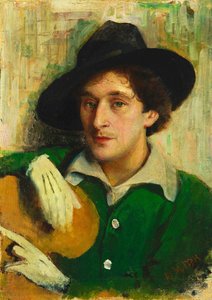
1887–1985, Belarus
Marc Chagall
Early Life, Family and Training Marc Chagall enters the world on July 7, 1887, in Vitebsk, Russian Empire, born Moishe Segal. He is the first of nine children in a modest Jewish family. Life is defined by the rhythms of labor and small-scale commerce. His father, Khatskel Segal, works as a herring pickler at a warehouse, while his mother, Feïga-Ita Tchernina, manages a small grocery store.
Also by Marc Chagall
 I and the Village1911
 White Crucifixion1938
 The Birthday1915
 Over the town1918
Essays around The Tablets of Law
 Dreaming in Color: The 25 Most Iconic Masterpieces by Marc ChagallStep into the dreamlike world of Marc Chagall. Explore our curated list of 25 iconic masterpieces, from vibrant surrealist canvases to soul…
 The Alchemy of Acid: Examining the Technical Sophistication of Etching and Intaglio PrintmakingMaster the technical mastery of intaglio, from acid etching to drypoint. Explore the alchemy of printmaking with our expert guide.
 Marc Chagall: The Chromatic Poetics of Memory and Modernist FormExplore the profound chromatic poetry and modernist legacy of Marc Chagall. Discover the soul behind his masterpieces today.