Switch to Print
 Read More







































 For artworks or reproductions larger than 105 cm (approximately 41 inches) on any side, the frame will be shipped as a kit, disassembled. This method ensures safe delivery and prevents damage during transport.


A Symphony of Light and Classical Ideal
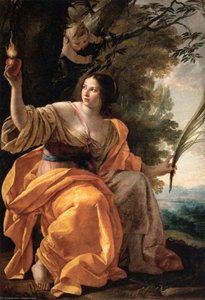
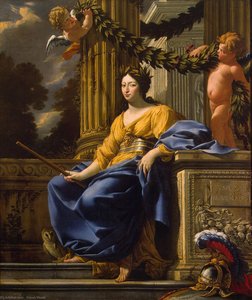
In the delicate detail of Simon Vouet’s "Parnassus or Apollo and the Muses," we encounter a breathtaking moment of divine harmony captured in paint. This exquisite fragment serves as a window into the mid-17th century, a period where the French Baroque style began to flourish with unprecedented grace. The scene invites the viewer into a celestial gathering, focusing on a woman playing the harp with a serene, effortless poise. Dressed in a vibrant yellow gown that catches the light, her relaxed posture and crossed legs suggest a state of profound musical immersion. This is not merely a portrait of a musician; it is an evocative tableau designed to stir the soul and celebrate the heights of intellectual and artistic pursuit.
The technical mastery of Vouet is on full display through his sophisticated use of chiaroscuro. By masterfully manipulating the interplay between light and shadow, he breathes life into the textures of the scene—from the soft, luminous sheen of the woman's skin to the intricate, tactile details of the musical instruments. The light does not simply illuminate; it sculpts the figures, creating a sense of three-dimensional depth that draws the observer into this mythological realm. In the background, subtle figures observe the performance, their presence adding a layer of communal appreciation and quiet reverence to the composition.
Symbolism and the Baroque Spirit
Beyond its visual splendor, this detail of "Parnassus" is rich with the symbolic language of the Baroque era. The harp, central to this specific view, acts as a powerful emblem of harmony, eloquence, and the rhythmic balance of the universe. As part of a larger narrative involving Apollo Musagetes and his Muses, the painting celebrates the divine inspiration that flows through poetry, music, and dance. Every gesture and every instrument held by the surrounding figures serves as a testament to the various domains of artistic creation, weaving a complex tapestry of meaning that would have resonated deeply with the aristocratic patrons of Louis XIII.
For the discerning collector or interior designer, this work offers more than just aesthetic beauty; it provides an atmosphere of timeless elegance and intellectual depth. The painting embodies a transition from the dramatic tension of Caravaggio to a more refined, classical French sensibility. It is a piece that commands attention through its balanced composition and emotional resonance, making it an ideal centerpiece for spaces dedicated to contemplation, culture, and the appreciation of fine art history. To possess a reproduction of such a masterpiece is to bring a fragment of Mount Parnassus into one's own environment, surrounding oneself with the eternal light of the Muses.
Questions & Answers
What mood and emotion come together in "Parnassus or Apollo and the Muses (detail)"?
The recorded mood of "Parnassus or Apollo and the Muses (detail)" by Simon Vouet is elegant, and its emotional tone is calm.
In what period was "Parnassus or Apollo and the Muses (detail)" by Simon Vouet made?
"Parnassus or Apollo and the Muses (detail)" by Simon Vouet dates from the Early-Modern period. The period gives the historical context of the work.
What level of contrast does "Parnassus or Apollo and the Muses (detail)" by Simon Vouet show?
"Parnassus or Apollo and the Muses (detail)" by Simon Vouet shows a statement contrast between its light and dark areas.
More about this painting
 Preview
 Send
Send Share
Share
 Details
 Guide
Guide

 Download
 Similars
 X-Ray
X-Ray Diaporama
 Q&A
Q&A Stats
Stats