
 油画原件
 关于 Holy Cross Abbey - 的详情


































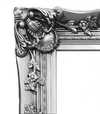

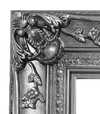


 对于任何边长超过 105 厘米(约 41 英寸)的艺术品或复制品,画框将以拆解后的组件形式发货。此方法可确保安全送达并防止运输过程中的损坏。


The Depiction of Holy Cross Abbey
In Holy Cross Abbey - by William Henry Bartlett, the viewer finds themselves standing before the weathered remains of a Cistercian monastery. The scene unfolds along the banks of the River Suir, where the water flows quietly past the stone structures. This site, located in Holycross near Thurles, County Tipperary, Ireland, appears through the artist's eyes as a place where nature and architecture have begun to merge. The abbey's ruins rise from the landscape, their pointed arches and heavy masonry catching the light in a way that suggests a long, quiet history of presence and decay.
William Henry Bartlett captures the abbey not as a static monument, but as a living part of the Irish countryside. The river provides a reflective surface for the surrounding trees and the skeletal remains of the monastic buildings. There is a sense of stillness here. The architecture, once a center of religious life, now rests amidst the foliage and the shifting shadows of the riverbank. Every line in the engraving traces the texture of the stone and the movement of the water, grounding the viewer in this specific, tranquil corner of Tipperary.
Composition and Visual Elements
The abbey sits centrally within the frame, its weathered stone architecture anchoring the landscape. To the left, a stone bridge reaches into the scene, its path guiding the eye toward the heart of the ruins. In the foreground, the water rests in a calm, reflective surface that mirrors the sky and the surrounding structures. This liquid plane adds a sense of depth, pulling the viewer toward the architectural remains. On the left side of the image, two figures appear to be resting or observing the view, their presence providing a sense of scale against the massive stone walls.
Trees and dense foliage frame the sides of the view, creating a natural enclosure that focuses all attention on the abbey. The interplay of light and shadow defines the scene, with bright highlights catching the edges of the pointed arches and the ripples on the water. These highlights contrast against deep, dark shadows tucked within the crevices of the masonry and the thickets of the trees. The verticality of the abbey's ruins cuts through the horizontal lines of the bridge and the shoreline, creating a structured tension between the man-made stone and the organic shapes of the natural world.
Technique and Artistic Style
The scene unfolds through the meticulous precision of a fine-line engraving. Every stone in the abbey and every ripple in the water emerges from a web of delicate, intersecting lines. This work belongs to the tradition of 19th-century Romantic landscape art, where the atmosphere carries a heavy sense of drama and history. The artist does not rely on color to convey mood; instead, the entire composition lives within a strict monochromatic realm of gray, black, and white. Deep shadows pool in the recesses of the architecture, while bright, stark whites catch the light on the edges of the ruins and the surface of the river.
Before the steel plate ever met the engraver's tool, the vision began as a sepia wash drawing. These initial sketches captured the subtle nuances of light and shadow, providing a blueprint for the intense detail seen in the final print. The artist then transferred these observations onto steel plates, where the metal was cut with exacting care to translate soft washes into sharp, permanent lines. This transition from the fluid movement of a drawing to the rigid, disciplined nature of steel engraving allows for a clarity that brings the textures of foliage and weathered masonry into sharp relief.
The History of the Abbey Site
The stones of this Cistercian monastery hold memories reaching back to the 1180s, when Dónal Mór Ó Briain founded the site. For centuries, it functioned as a sacred space, drawing pilgrims who sought the presence of a relic of the True Cross. This spiritual life faced a sudden fracture in 1536 during the Henrician Reformation, when the abbey was suppressed. The landscape of power shifted as the lands were granted to Thomas Butler, the 10th Earl of Ormond, in 1561.
As the years pass, the abbey transitioned from a place of active prayer to a site of quiet decay. Following the Cromwellian conquest, the buildings fell into ruins. After 1740, local people began to use these roofless remains as a burial place. The site eventually gained official protection when it became a scheduled national monument in 1880. Despite the long silence of the ruins, the site eventually returned to its original purpose, seeing restoration as a place of Catholic worship in 1969.
Theft and Recovery of Relics
Shadows fall heavily over the site following a sudden robbery on 11 October 2011. The silence of the ruins is broken by the news that two crosses have been stolen. These are no ordinary objects; they carry the weight of history and the presence of the True Cross. The loss leaves a void in the spiritual heart of the abbey, a sudden absence where sacred remnants once rested.
Hope returns as the months pass. In January 2012, the authorities, specifically An Garda Siochána, successfully locate the missing items. The relics are recovered, appearing once again after their brief, uncertain disappearance. They are returned to the Abbey, restored to their place within the stone walls, ensuring the continuity of the site's long history of veneration.
The Artist's Career and Travels
Born in 1809 in Kentish Town, London, United Kingdom, William Henry Bartlett begins his path not with a brush, but through the disciplined eyes of an apprentice. Under the guidance of John Britton, he learns to see the world through the lens of time, absorbing the intricate details of architecture and the stories etched into stone. This early training shapes a man who seeks to capture the very essence of a place through meticulous observation.
His life is one of constant movement across vast distances. He moves beyond the familiar shores of Britain to explore the rugged landscapes of the Balkans and the ancient reaches of the Middle East. Between 1836 and 1852, he makes four visits to North America, documenting a rapidly changing landscape with a precision that brings distant vistas into the homes of many. His sketches and drawings are the precursors to detailed steel engravings that record the textures of a world in transition.
The movement eventually leads him toward the Mediterranean. On 13 September 1854, his travels reach a sudden end off the coast of Malta, where he passes away while aboard a French ship. His life remains a collection of these observed sights, from the quiet corners of Europe to the expansive territories of the New World.
The Legacy of William Henry Bartlett
The influence of this British topographical artist and illustrator ripples through the history of nineteenth-century visual documentation. His intricate steel engravings possess a clarity that draws the eye toward every fine line and shadow. These works find their way into the hands of many through collaborative volumes, where they accompany descriptive texts to bring distant landscapes to life. Because his vision is so distinct, his engravings are widely copied by other artists, spreading his specific way of seeing across many different mediums and collections.
He remains a prominent figure in the study of topography from this era. His ability to translate a scene into a detailed print allows the viewer to feel the presence of the architecture and the weight of the stone. Through his meticulous technique, he captures the essence of a place, ensuring that the details of the landscape remain fixed for those who study his work. His legacy lives on in the precision of his lines and the enduring popularity of his published views.
常见问题与解答
Holy Cross Abbey -是手绘的还是印刷的?
手工绘制:由专业画家在亚麻画布上,以油画形式临摹 Holy Cross Abbey -。
Holy Cross Abbey - 我该选择什么尺寸?
尺寸从 26.3 x 38.0 cm (¥1629) 到 167.7 x 242.6 cm (¥11541) 不等;本页表格列出了主要步骤及其价格。
物流配送需要多长时间?
送货时间为 4 至 5 周,并提供全球免费快递服务;本页面还提供加急制作选项。您可以在 100 天内无条件退货并获得全额退款。
威廉·亨利·巴特利特 在创作《Holy Cross Abbey -》时使用了什么媒介?
Engraving
 实景预览

 分享
 分享
 详情
 作品详情表


 下载作品
 相似作品
 X射线
 幻灯片播放
 问答

 统计数据


