

 实景预览
实景预览
 发送
发送 分享
分享
 详情
详情 指南
指南

 下载图片
下载图片
 相似作品
相似作品 X射线
X射线 幻灯片播放
幻灯片播放 统计数据
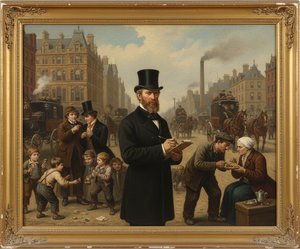
统计数据Joseph Hardcastle
 Acrylic On Canvas
- WallArt
- Victorian Sensibility Sublime
 85.0 x 64.0 cm
 剑桥大学博物馆
 阅读全文
阅读全文
艺术微喷/版画
博物馆级艺术微喷或帆布版画,制作高效,并提供多种饰面选择。 ( 订购此收藏品的纯手工复刻画作 切换至数字图像销售渠道)




P118B ¥10

P118H ¥10

P118W ¥10

P438Z ¥10

P508JH ¥12

P508YH ¥12

P805H ¥10

P805Z ¥10

P919BZ ¥10

P919G ¥10

P919XJ ¥10

P959ZH ¥10

P968JZ ¥12

W106C ¥8

W218G ¥10

W218JH ¥8

W218Y ¥10

W307PJ ¥10

W316G ¥10

W316PJ ¥8

W316Y ¥10

W398PJ ¥8

W4111J ¥10

W500HY ¥15

W500JH ¥15

W692G ¥12

W849H ¥8

W940BG ¥15

W953PJ ¥8




您可以从与原作比例一致的预设尺寸中进行选择。

请输入您所需的宽度和高度,以适配您的画框或墙面。由于印刷品只能进行裁剪,无法超出原图尺寸,因此若比例不一致,画面的一部分将会被裁切。在正式印刷之前,我们会为您发送一份数字效果图供您确认。本页面显示的图片并非最终裁剪后的效果——只有效果图才能展示真实的裁剪情况。


 玻璃选项仅适用于110厘米以下的尺寸。

Joseph Hardcastle
艺术微喷/版画
复刻品尺寸说明
-


总计金额
¥ 537
A Pioneer of Victorian Sensibility: Exploring William Etty’s “Joseph Hardcastle”
William Etty (1787-1849) stands as an enigmatic figure within the landscape of 19th-century British art, a sculptor whose dramatic historical paintings and groundbreaking nude figures challenged conventions and captivated audiences alike. Born in York on March 10, 1787, amidst the bustling atmosphere of his father’s bakery – a stark contrast to the refined studios where he would later hone his craft – Etty's artistic journey began with an apprenticeship at twelve years old, immersing him in the practical realities of printmaking before ultimately gravitating towards the transformative influence of London and the Royal Academy Schools. This formative period instilled within him a meticulous attention to detail and a profound understanding of anatomy, skills that would prove invaluable as he ascended to prominence as one of Britain’s most celebrated sculptors.- Subject Matter: “Joseph Hardcastle” depicts a portrait of Joseph Hardcastle, a prominent Yorkshire landowner known for his philanthropic endeavors and unwavering commitment to the arts. Etty skillfully captures Hardcastle's dignified countenance, conveying both strength and vulnerability through subtle gestures and expressive eyes.
- Style & Technique: Etty’s approach exemplifies Victorian Romanticism, prioritizing emotional intensity and psychological realism over mere topographical accuracy. He employed a masterful technique of tonal modeling – layering thin glazes of pigment to create nuanced gradations of light and shadow – achieving an astonishing level of detail that brought the subject to life with remarkable immediacy.
- Historical Context: Painted circa 1830, “Joseph Hardcastle” reflects the prevailing artistic sensibilities of its time, aligning with the burgeoning interest in portraying human emotion and exploring themes of morality and virtue. It stands as a testament to Etty’s ambition to elevate sculpture beyond mere representation, striving instead for an immersive experience that resonated deeply with viewers.
Detailed Examination: Sculptural Mastery & Anatomical Precision
Etty's dedication to anatomical accuracy is evident in every aspect of “Joseph Hardcastle.” He meticulously studied cadavers—a controversial practice at the time—to gain an unparalleled understanding of human musculature and skeletal structure. This commitment translated into breathtaking realism, capturing the subtle nuances of flesh tone and bone contour with astonishing precision. The sculptor’s painstaking attention to detail extended beyond mere anatomical correctness; he sought to convey not just what Hardcastle looked like but also how he *felt*, imbuing the statue with palpable emotion.Legacy & Influence: Shaping Victorian Portraiture
“Joseph Hardcastle” cemented Etty’s reputation as a visionary sculptor and profoundly impacted the trajectory of Victorian portraiture. His pioneering use of tonal modeling established a new standard for sculptural realism, inspiring subsequent artists to embrace similar techniques. Furthermore, his willingness to depict nude figures – albeit sparingly – challenged societal norms and paved the way for greater artistic freedom. Today, “Joseph Hardcastle” remains a celebrated masterpiece, admired for its technical brilliance and enduring psychological depth—a poignant reminder of Etty’s unwavering commitment to capturing the essence of human experience.Further Exploration: Rediscovering William Etty
To delve deeper into the artistic world of William Etty, consider visiting these resources:- William Etty: Explore the life & work of this British Royal Academician, famed for dramatic historical paintings and pioneering nude figures. Discover his controversial yet influential art! Learn More
- william joseph kennedy: Explore the evocative narratives of William Joseph Kennedy, a master of Southern literature & American realism. Discover his poignant tales of family, history, & the Mississippi Delta.Discover His Work
William Etty: Rediscovering Victorian Sensibility & the Sublime in Historical Painting
Read Our Analysis
问答详情
威廉·艾蒂 的《Joseph Hardcastle》 的亮度是多少?
威廉·艾蒂 的《Joseph Hardcastle》 记录的亮度为 Dark。
威廉·艾蒂 的《Joseph Hardcastle》 的整体基调是什么?
威廉·艾蒂 的《Joseph Hardcastle》 的艺术氛围被描述为 Elegant。这种分类有助于将作品与特定的空间环境相匹配。
在哪里可以找到关于威廉·艾蒂 的《Joseph Hardcastle》的数据统计?
威廉·艾蒂 的《Joseph Hardcastle》 的 统计数据 页面展示了公开访问统计数据:该作品的每月访问量、与艺术家最受关注作品的对比,以及访客的来源地。
艺术家简介
A Pioneer of the British Nude: The Life and Art of William Etty
William Etty, a name perhaps less instantly recognizable than his contemporaries like Turner or Constable, nevertheless occupies a pivotal position in 19th-century British art. Born in York on March 10, 1787, above his father’s bakery, Etty's journey from humble beginnings to Royal Academician was one marked by relentless dedication, artistic innovation, and no small measure of controversy. His early life offered little indication of the path he would forge. Apprenticed at age twelve to a printer in Hull, seven years were spent immersed in the practicalities of typography – a world far removed from the canvases that would eventually bear his signature. Yet, even amidst the mechanical demands of printmaking, Etty nurtured a burgeoning passion for drawing, an impulse that ultimately propelled him towards London and the hallowed halls of the Royal Academy Schools in 1807. There, under the tutelage of Thomas Lawrence, he honed his skills through diligent copying, laying the foundation for a career defined by masterful depictions of the human form. His Artistic Beginnings & Influences Etty’s formative years instilled within him a profound appreciation for observation and anatomical accuracy—qualities that would become central to his artistic vision. Like many artists of his time, he was deeply affected by the Romantic movement, which championed emotion, imagination, and individualism. Artists such as Titian and Rubens – masters whose Venetian paintings captivated Etty’s youthful sensibilities during his travels in Italy – served as enduring models for his technique and compositional style. These influences shaped his approach to portraying human figures with unprecedented realism, prioritizing emotional intensity alongside meticulous anatomical detail. The desire to capture the sublime—the awe-inspiring grandeur of nature—also resonated within him, informing his later historical paintings and contributing to a broader aesthetic preoccupation with beauty and moral contemplation. The Rise to Prominence: Nudes and Controversy Etty’s breakthrough arrived in 1821 with Cleopatra's Arrival in Cilicia, a painting that immediately ignited both admiration and scandal. The work, teeming with nude figures, was exhibited to widespread acclaim, yet simultaneously earned him a reputation for indecency. This duality would become a defining characteristic of his career. He wasn’t merely depicting nudity; he was exploring the human form with an unprecedented realism and anatomical precision for a British artist of that era. His commitment to accurately rendering flesh tones, light, and shadow – influenced by his study of Venetian masters like Titian and Rubens during travels in Italy and France – set him apart. He continued to produce historical scenes populated with nudes, often drawn from classical mythology or literature, such as The Sirens and Ulysses. These works were commercially successful, allowing Etty to thrive despite the constant criticism leveled against his subject matter. In 1828, he was elected a Royal Academician, solidifying his position within the established art world, even as whispers of impropriety followed him. Beyond the Nude: Portraits and Still Life While Etty is most celebrated for his nudes, his artistic range extended beyond this controversial domain. Recognizing the need to broaden his appeal – and perhaps secure a more stable income – he ventured into portraiture during the 1830s. Though not as groundbreaking as his figure paintings, these portraits demonstrate his technical skill and ability to capture character. Furthermore, Etty became one of the first English painters to seriously engage with still life, demonstrating an eye for detail and a sensitivity to texture that rivaled the Dutch masters he admired. This diversification reveals a pragmatic side to Etty’s artistic practice, a willingness to adapt to market demands while remaining true to his core aesthetic principles. He continued, however, to return to the nude form throughout his life, driven by an unwavering fascination with its beauty and expressive potential. Legacy and Rediscovery William Etty died in York on November 13, 1849, leaving behind a substantial body of work that initially enjoyed considerable popularity. However, tastes shifted in the decades following his death, and his paintings fell into relative obscurity. By the late 19th century, his once-celebrated works were largely forgotten, dismissed as outdated or simply too shocking for Victorian sensibilities. A remarkable rediscovery began in the early 21st century. His inclusion in Tate Britain’s landmark Exposed: The Victorian Nude exhibition (2001–2002) sparked renewed interest in his art, prompting critical reevaluation and a reassessment of his place in British art history. The restoration of The Sirens and Ulysses in 2010 further cemented this revival, revealing the brilliance of his technique and the enduring power of his vision. Today, William Etty is recognized as a pioneering figure who challenged artistic conventions, celebrated the human form with unparalleled realism, and left an indelible mark on the landscape of British art. His works stand as testaments to his skill, dedication, and unwavering commitment to capturing the beauty and complexity of the human experience.Key Works
- Cleopatra's Arrival in Cilicia (1821): The painting that launched Etty’s career and established his reputation for depicting nudes.
- The Sirens and Ulysses (1837): A dramatic depiction of Homer’s epic, showcasing Etty’s mastery of composition and anatomy.
- Reverend William Jay (c. 1836-40): An example of his portraiture work, demonstrating a keen eye for character.
- Standing Female Nude (date unknown): A study showcasing Etty’s exceptional skill in rendering realistic flesh tones and form.

威廉·艾蒂
1787 - 1849 , 英国
快速概览
- Artistic Movement Or Style: 浪漫主義
- Artists Who Influenced This Artist: ['托馬斯·羅森斯']
- Date Of Birth: 1787年3月10日
- Date Of Death: 1849年11月13日
- Full Name: 威廉·霍加斯
- Nationality: 英國人
- Notable Artworks:
- 克勞狄亞公主 прибытие в Киликия
- 奧德修斯與塞壬
- 站立的女性裸體
- Place Of Birth: 約克,英國
相关文章
R.A. Benjamin Williams: Victorian Genre Painting & Social Commentary
Explore the captivating world of Benjamin Williams Leader's Victorian genre paintings. Discover his mastery of naturalism, social commentary & lasting influence on British art. Expert insights at OriginalUniqueArt.

William Etty: Rediscovering Victorian Sensibility & the Sublime in Historical Painting
Explore the captivating world of William Etty, a pioneering Victorian artist famed for his dramatic historical paintings and groundbreaking nude figures. Discover his life, controversial reception, and enduring legacy with our expert analysis.

William Salter: A Life Immersed in Colour – Victorian Botanical Art & Social Vision
Explore the life & art of William Salter (1804-1875), a Victorian master renowned for his botanical illustrations and striking portraits. Discover his social vision & legacy at OriginalUniqueArt.

William James Müller: Navigating Victorian Sentiment & Realism in British Landscape Painting
Explore the captivating landscapes of William James Müller, the leading artist of the Bristol School. Discover his Victorian masterpieces, Egyptian travels & Lycian sketches – a journey through 19th-century art and technique.

William Powell Frith: Narratives of Victorian Society & the Rise of Realist Painting
Explore the life & works of William Powell Frith, the 'greatest British painter of social scenes.' Discover his iconic Victorian genre paintings and learn about his lasting impact on realist art. Hand-painted reproductions available.

