油画原件
 关于 Rustic Civility 的详情


































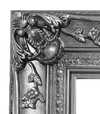


 对于任何边长超过 105 厘米(约 41 英寸)的艺术品或复制品,画框将以拆解后的组件形式发货。此方法可确保安全送达并防止运输过程中的损坏。


The Identification of Rustic Civility
Rustic Civility is an oil on canvas genre painting by the British artist William Collins. Created in 1832, the work was first presented to the public at the Royal Academy Exhibition of 1832 at Somerset House, London.
The composition captures a specific moment within an English country lane. Through this setting, William Collins explores the intersection of rural life and social etiquette, focusing on a brief interaction between local inhabitants and a traveler.
The Composition and Visual Elements
The scene is set along an English country lane, centered on a rustic wooden gate. Two village children, dressed in simple nineteenth-century rural attire, occupy the foreground. They are captured in a moment of coordinated deference, holding the gate open to facilitate the passage of a traveler. While the horseman remains unseen, his presence is articulated through a subtle shadow cast upon the ground, a compositional device that invites the viewer to complete the interaction.
The figures are positioned to emphasize a sense of polite, natural etiquette. One child performs a formal salute by touching his forelock, a gesture directed toward the approaching rider. The other child gazes expectantly, awaiting the completion of the encounter. This interaction between the small, stationary figures and the implied movement of the passer-by creates a quiet tension within the pastoral setting.
The History and Provenance of the Work
Following its exhibition at the Royal Academy in 1832, the original oil on canvas was acquired by the Duke of Devonshire for his estate at Chatsworth House, Derbyshire. This acquisition secured the work within one of the most significant private collections of the era.
In 1833, the art collector John Sheepshanks commissioned a smaller replica of the scene, executed in oil on panel. This version bears the artist's signature and date, 'W Collins 1833', inscribed on the lower bar of the gate. The replica's existence reflects the immediate demand for the composition among contemporary collectors.
The Sheepshanks Gift, a substantial bequest of works, eventually brought the replica to public hands. In 1857, the piece was donated to the Victoria and Albert Museum, where it remains part of the Prints, Drawings & Paintings Collection.
The Replica Held in a Museum
A smaller replica of the work was commissioned in 1833 by the collector John Sheepshanks. This version is an oil on panel, measuring 45.6 cm by 61 cm. The artist signed and dated the piece 'W Collins 1833' on the lower bar of the gate.
The painting entered the Victoria and Albert Museum in 1857 as part of the Sheepshanks Gift. It is currently held within the museum's Prints, Drawings & Paintings Collection under the accession number FA.27[O].
Related Works by William Collins
The artist’s career included several significant genre paintings that explored themes of rural life and childhood. In 1813, The Sale of the Pet Lamb was sold for 140 guineas. This work helped establish his reputation for depicting humble subjects with moral undertones. Another notable piece from his early period is At The Cottage Gate.
His formal recognition within the Royal Academy is marked by Young Anglers, which served as his diploma picture in 1820. Later, around 1836, he produced Happy as a King, a work inspired by a story of a country boy finding contentment while swinging on a gate.
常见问题与解答
Rustic Civility是手绘的还是印刷的?
手工绘制:由专业画家在亚麻画布上,以油画形式临摹 Rustic Civility。
Rustic Civility 我该选择什么尺寸?
尺寸从 27.1 x 36.9 cm (¥1462) 到 180.4 x 245.7 cm (¥12282) 不等;本页表格列出了主要步骤及其价格。
物流配送需要多长时间?
送货时间为 4 至 5 周,并提供全球免费快递服务;本页面还提供加急制作选项。您可以在 100 天内无条件退货并获得全额退款。
威廉·柯林斯 在创作《Rustic Civility》时使用了什么媒介?
Oil On Canvas
 实景预览

 分享
 分享
 详情
 作品详情表


 下载作品
 相似作品
 X射线
 幻灯片播放
 问答

 统计数据