效果预览
效果预览
 分享
分享 分享
分享
 详情
详情

 下载
下载
 相似作品
相似作品 X射线
X射线 幻灯片播放
幻灯片播放 统计数据
统计数据Composition with locomotive


 展开详情
展开详情
艺术微喷/版画
博物馆级艺术微喷或帆布版画,制作高效,并提供多种饰面选择。 ( 购买手绘画作 切换至数字图像销售渠道)




P118B $10

P118H $10

P118W $10

P438Z $10

P508JH $12

P508YH $12

P805H $10

P805Z $10

P919BZ $10

P919G $10

P919XJ $10

P959ZH $10

P968JZ $12

W106C $8

W218G $10

W218JH $8

W218Y $10

W307PJ $10

W316G $10

W316PJ $8

W316Y $10

W398PJ $8

W4111J $10

W500HY $15

W500JH $15

W692G $12

W849H $8

W940BG $15

W953PJ $8




从与原作比例一致的预设尺寸中进行选择。

您可以输入自定义尺寸,以适配特定的画框或空间。如果您选择的尺寸与原图比例不符,我们将对作品进行裁剪,或通过镜像填充/纯色填充边缘的方式来扩展图像。在开始制作之前,我们会向您发送一份数字效果图供您确认。
请注意,屏幕上的预览并不能反映实际的裁剪或扩展效果。只有效果图才能准确展示最终的构图。
虽然我们提供定制尺寸,但为了保持原图比例,我们建议您从预设列表中选择尺寸。


 玻璃选项仅适用于110厘米以下的尺寸。

Composition with locomotive
艺术微喷/版画
复制品尺寸
-


最终总价
$ 80
René Magritte’s “Composition with Locomotive”: A Dream of Industrial Reality
René Magritte's "Composition with Locomotive," painted in 1923, isn’t merely a depiction of a train; it’s an invitation to question the very nature of perception and representation. This iconic work, housed within the Winterbotham Collection at the Art Institute of Chicago, exemplifies Magritte’s unique brand of surrealism – a deliberate disruption of familiar realities that compels viewers to actively engage with the artwork and their own assumptions about what they see.
The painting immediately draws the eye with its stark geometric composition. Bold, angular lines delineate planes of color—primarily shades of brown, grey, blue, white, and black—creating a fragmented cityscape or interior space. The locomotive itself is rendered in simplified forms, almost as if constructed from basic shapes rather than faithfully representing a specific machine. This abstraction isn’t arbitrary; it reflects Magritte's fascination with deconstructing objects to reveal their underlying structure and challenging the viewer’s ability to easily recognize familiar subjects. The influence of Cubism, particularly its emphasis on flattened perspective and multiple viewpoints, is undeniable, yet Magritte transcends mere imitation, imbuing these techniques with a distinctly personal and unsettling quality.
A Dialogue Between Industrial and Domestic
What makes “Composition with Locomotive” so compelling isn’t just the formal arrangement but also the subtle interplay of contrasting elements. The industrial power of the train—symbolic of modernity, progress, and perhaps even alienation—is juxtaposed against the domesticity of a fireplace. The billowing smoke from the locomotive is cleverly integrated with the plumes rising from the chimney, creating a visual metaphor for connection and shared experience. This pairing suggests that even seemingly disparate elements can be linked through abstract associations, prompting viewers to consider how our minds construct meaning from seemingly unrelated sensory information.
Magritte’s choice of color palette further enhances this duality. The cool blues and greys of the locomotive contrast sharply with the warmer browns and blacks of the fireplace, creating a visual tension that mirrors the conceptual one. The limited range of colors contributes to the painting's overall sense of stillness and contemplation, inviting viewers to linger and decipher the hidden connections within the composition.
Roots in Futurism and Surrealist Exploration
To fully appreciate “Composition with Locomotive,” it’s crucial to understand Magritte’s artistic journey. Early influences included Impressionism and Cubism, but a pivotal moment arrived in 1916 when he encountered the work of Italian futurists like Gino Severini. The dynamism and rhythmic energy of Futurist painting—particularly their use of lines and color to convey movement—resonated deeply with Magritte’s own desire to break free from traditional representational conventions. He described this encounter as a revelation, stating that it opened his eyes to “thought for the first time.”
Magritte's engagement with Surrealism, spearheaded by André Breton, provided him with a framework for exploring the subconscious and challenging rational thought. However, Magritte’s surrealism wasn’t driven by dreamlike imagery or irrationality in the traditional sense. Instead, he sought to expose the inherent strangeness of everyday reality—to reveal the “hidden” aspects of our perception that we often overlook. “La duree poignadee,” as it was known at the time, exemplifies this approach, presenting a familiar scene (a train and a fireplace) in an arrangement that defies immediate comprehension.
A Legacy of Ambiguity and Intrigue
“Composition with Locomotive” remains one of Magritte’s most enduringly enigmatic works. It's not a painting that offers easy answers or straightforward narratives; rather, it invites viewers to engage in a process of active interpretation. The ambiguity inherent in the composition—the blurred boundaries between industrial and domestic, reality and representation—is precisely what makes the painting so captivating. It’s a testament to Magritte’s genius that he could create an artwork that simultaneously challenges our assumptions about the world and invites us to contemplate the mysteries of perception itself.
Reproductions of this piece offer a remarkable opportunity to bring this surreal vision into your own space, allowing you to experience the same sense of wonder and contemplation that Magritte intended. Its geometric precision and evocative color palette make it a striking addition to any collection, sparking conversation and inviting viewers to question the familiar.
艺术家简介
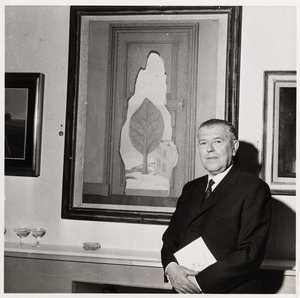
勒内·马格里特:超现实主义的诗意探寻
勒内·马格里特(René Magritte,1898-1967)是比利时最负盛名的超现实主义画家之一。他并非像某些超现实主义者那样沉溺于潜意识的狂热探索,而是以一种冷静、精确的方式,将日常事物置于奇异的环境中,引发人们对现实本质和视觉认知的深刻思考。他的作品充满了谜语般的意象,挑战着我们习以为常的世界观,如同在平静的水面上投下一颗石子,激起涟漪般,触动着我们内心深处的疑问。
马格里特的童年经历对他的艺术创作产生了深远的影响。1898年出生于列松的小镇,他目睹了母亲的自杀事件,这个悲剧性的记忆在他心中留下了难以磨灭的阴影。关于母亲的死亡,流传着一个说法是她被发现时,衣物遮蔽了面容,这或许也解释了他晚期作品中频繁出现的蒙面人物形象,象征着隐藏、神秘和无法触及的真相。早年的经历塑造了他对现实的怀疑态度,并促使他寻求一种能够超越表象,揭示事物内在联系的方式。
从印象派到超现实主义:艺术风格的演变
马格里特的早期绘画受到印象派的影响,描绘着风景和人物,但很快他就意识到这种风格无法满足他对艺术表达的需求。在经历了短暂的未来主义和立体主义探索之后,1922年他偶然发现了乔治奥·德·基里科的作品,这对他产生了巨大的启发。德·基里科那充满梦幻色彩、超现实主义氛围的场景,如同打开了一扇通往未知世界的大门,彻底改变了马格里特的艺术方向。他开始尝试将日常事物以一种出人意料的方式组合在一起,创造出既熟悉又陌生的视觉体验。
1920年代中期,马格里特正式加入了超现实主义运动,但他的作品却与当时主流的超现实主义风格有所不同。他拒绝了自由联想和自动书写的技巧,而是坚持以一种冷静、客观的方式来描绘超现实的场景。他笔下的事物并非扭曲变形或充满象征意义,而是保持着其原有的形态,只是被放置在不恰当的环境中,从而产生了一种令人不安的疏离感。这种独特的风格使马格里特成为超现实主义运动中最具个性的艺术家之一。
标志性作品与艺术理念
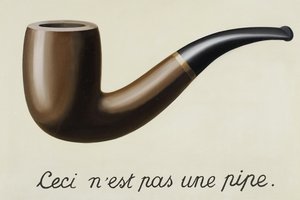
马格里特的代表作包括《人造风景》(The Human Condition)、《时间凝固》(Time Transfixed)和《这个不是烟斗》(This is Not a Pipe)。《人造风景》巧妙地将一幅画框置于现实场景中,模糊了绘画与现实之间的界限,引发人们对艺术的本质进行思考。而《时间凝固》则描绘了一列火车穿透砖墙的情景,打破了我们对时间和空间的固有认知。《这个不是烟斗》是最具代表性的作品之一,它直接挑战了语言和图像之间的关系,提醒我们绘画只是对事物的象征性表达,而非事物本身。这些作品都体现了马格里特对现实的质疑和对视觉认知的反思。
马格里特的艺术理念的核心在于“诗意”。他认为艺术不应该仅仅是情感的宣泄或潜意识的投射,而应该是一种能够唤起人们思考、激发想象力的诗意表达。他通过将日常事物置于奇异的环境中,创造出一种充满谜语般的氛围,引导观众进入一个充满疑问和探索的世界。他的作品并非提供明确的答案,而是引发人们对现实本质进行持续的思考。
超现实主义大师与持久的影响
尽管马格里特在生前并未获得广泛的认可,但他在去世后逐渐获得了国际声誉,成为20世纪最具影响力的艺术家之一。他的作品不仅对波普艺术、极简主义和观念艺术产生了深远的影响,也启发了无数的电影导演、设计师和作家。他独特的艺术风格和深刻的思想,至今仍吸引着世界各地的观众,并激励着人们以一种全新的视角去审视周围的世界。
马格里特的作品不仅仅是绘画,更是一种哲学思考,一种对现实的反叛,一种对诗意的追求。他用画笔构建了一个充满谜团和想象力的世界,邀请我们一同探索现实的边界,并重新定义我们对世界的认知。他的艺术遗产将继续激励着一代又一代的艺术家和观众,在超现实主义的领域中留下永恒的光辉。
主要作品
- 《人造风景》(The Human Condition)
- 《时间凝固》(Time Transfixed)
- 《这个不是烟斗》(This is Not a Pipe)
- 《恋人们》(The Lovers)
- 《失落的骑手》(The Lost Jockey)
马克里特
1898 - 1967 , 比利时
艺术家简介
- Artistic Movement Or Style: Surrealism
- Artists Who Influenced This Artist: ['Giorgio de Chirico']
- Date Of Birth: November 21, 1898
- Date Of Death: August 15, 1967
- Full Name: René François Ghislain Magritte
- Nationality: Belgian
- Notable Artworks:
- Les Amants
- The Treachery of Images
- Time Transfixed
- The Human Condition
- Place Of Birth: Lessines, Belgium
相关文章

Cubist Expressionism: The Profound Intersection of Geometric Structure and Raw Emotion
Discover the profound intersection of geometry and emotion in Cubist Expressionism. Explore art history through our expert analysis of modern masters and find museum-quality, hand-painted oil reproductions of iconic masterpieces for your collection.

几何抽象艺术十大杰作:定义现代家居装饰的经典之作
探索几何抽象艺术的十大杰作!康定斯基、蒙德里安等大师作品,色彩构成与非具象之美。OriginalUniqueArt.com提供博物馆级艺术复制品,为您的家居带来现代艺术灵感。立即在线探索完整系列!

Kandinsky's Masterpieces: 25 Paintings That Define Abstract Art | OriginalUniqueArt
Journey through Wassily Kandinsky's 25 most iconic abstract paintings. Explore his revolutionary use of color, form & spiritual expressionism. Find museum-quality Kandinsky reproductions and elevate your home decor with OriginalUniqueArt.com. Discover all masterpieces on OriginalUniqueArt.com!

Beyond Form & Color: Geometric Abstraction's Evolution in 20th/21st Century Art
Explore the evolution of geometric abstraction from Cubism to contemporary art. Discover key artists like Malevich & Mondrian, investment insights, and expert collecting advice at OriginalUniqueArt.

Neo-Abstract Art: The High-Impact Evolution of Modern Visual Energy and Geometric Sophistication
Discover the power of Neo-Abstract art. Explore how bold geometric forms and high-impact visual energy are redefining modern design. Learn to curate sophisticated, high-energy spaces with the latest trends in contemporary abstraction and structural color.