
 实景预览
实景预览
 分享
分享 分享
分享
 详情
详情 指南
指南

 下载作品
下载作品
 相似作品
相似作品 X射线
X射线 幻灯片播放
幻灯片播放 问答
问答 统计数据
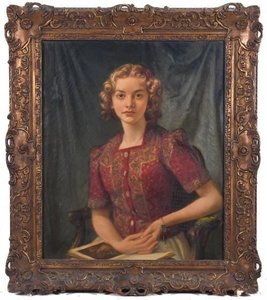
统计数据Romance

- 50.0 x 43.0 cm

 展开全文
展开全文
艺术微喷/版画
博物馆级艺术微喷或帆布版画,制作高效,并提供多种饰面选择。 ( 订购纯手工绘制画作 切换至数字图像销售渠道)




































您可以从与原作比例一致的预设尺寸中进行选择。

请输入您所需的宽度和高度,以适配您的画框或墙面。由于印刷品只能进行裁剪,无法超出原图尺寸,因此若比例不一致,画面的一部分将会被裁切。在正式印刷之前,我们会为您发送一份数字效果图供您确认。本页面显示的图片并非最终裁剪后的效果——只有效果图才能展示真实的裁剪情况。


 玻璃选项仅适用于110厘米以下的尺寸。

Romance
艺术微喷/版画
复刻品尺寸
-


最终结算价
¥ 543
艺术家简介
A Master of Light and Form
The legacy of Peter Alexander Hay is etched into the delicate textures of watercolor and the commanding presence of oil on canvas. A versatile Scottish artist, his talent spanned a wide range of genres, allowing him to move seamlessly between the intimate world of still-life and the grand, sweeping narratives of landscape and portraiture. His mastery was not merely in the application of pigment, but in his ability to capture the very essence of his subjects, whether they were the quiet dignity of a single flower or the complex social tapestries of a formal gathering.
His technical prowess earned him prestigious recognition within the artistic community, as evidenced by his affiliations with esteemed institutions such as the Royal Institute of Painters in Water Colours and the Royal Scottish Society of Painters in Watercolour. These credentials speak to a lifetime of dedication to the craft, reflecting a skill set that was both refined and deeply rooted in the traditions of his era. Through his work, one can observe a profound connection to the natural world and a keen eye for the human condition.
The Art of Portraiture and Narrative
In his portraiture, Hay possessed a remarkable ability to convey character and status through meticulous detail and thoughtful composition. His works often serve as historical windows, capturing the gravity of notable figures with a realism that breathes life into the past. One might gaze upon his John Millar Thomson and feel the weight of the subject's formal red robe, or find themselves drawn into the commanding presence of Captain William Gordon Rutherford. These paintings are more than mere likenesses; they are studies in light, shadow, and the psychological depth of the sitter.
Beyond individual portraits, Hay demonstrated a unique capability for capturing collective moments and historical significance. His large-scale oil painting, College Meeting, 1889, stands as a testament to his ability to orchestrate complex scenes involving multiple figures within a setting of great institutional importance. In such works, the artist utilizes color and composition to create a sense of atmosphere and permanence, ensuring that the historical gravity of the event is felt by the viewer long after they have turned away from the canvas.
A Versatile Artistic Vision
The breadth of Hay's repertoire allowed him to explore various facets of the visual experience. While his oil paintings often leaned toward the dramatic and the monumental, his watercolor works offered a more ethereal and delicate perspective. This duality is central to understanding his contribution to the art world; he was an artist who could command the heavy textures of oil to create depth and drama, yet also possessed the restraint required for the subtle gradations of watercolor.
His artistic journey was marked by several notable achievements and recognitions:
- Genre Versatility: An accomplished practitioner of genre, still-life, portrait, and landscape painting.
- Institutional Recognition: A respected member of the Royal Institute of Painters in Water Colours and the Royal Scottish Society of Painters in Watercolour.
- Historical Documentation: A creator of works that serve as vital visual records of significant figures and institutional gatherings.
Peter Alexander Hay
1926 - 2011 , Austria
艺术家简介
- Artistic Movement Or Style: Genre, still-life, portrait and landscape
- Full Name: Peter Alexander Hay
- Nationality: Scottish
- Notable Artworks:
- Charles Bernard Hodgson
- Captain William Gordon Rutherford
- John Millar Thomson
- College Meeting, 1889
- Place Of Birth: Vienna, Austria
- Date Of Birth: 1926
- Date Of Death: 2011