

 效果预览
效果预览
 切换至版画销售渠道
 分享
分享 分享
分享
 详情
详情

 下载
下载
 相似作品
相似作品 X射线
X射线 幻灯片播放
幻灯片播放 统计数据
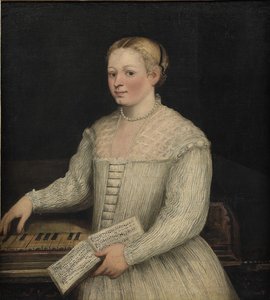
统计数据Venetian Woman (attributed)


 展开详情
展开详情
购买高分辨率增强版数字图像,其品质远超在线预览。
每一份文件都由我们的内部专家使用先进工具与专业的后期润色技术精心打造。我们确保每一张图像都具备卓越的清晰度、精准的色彩还原度以及细腻的细节表现。
最终文件将在 72 小时内通过电子邮件交付,并针对专业、编辑及印刷用途进行了优化。其品质与顶级设计工作室、出版社和画廊所信赖的标准完全一致。
每份数字图像订单均包含
专业数字图像交付,品质保障
选择 OriginalUniqueArt.com,您获得的不仅仅是一张图像——您收到的是经过专业级增强、精雕细琢的数字艺术作品,并享有满意保证。以下是您的订单中自动包含的所有内容:

邮件快速送达
您的高分辨率数字图像文件将在下单后 72 小时内通过电子邮件发送给您 —— 即可立即使用。

AI 增强型数字文件
您的艺术品经过专业优化,结合先进的 AI 技术与人工修饰,确保呈现极致的细节、清晰度与色彩准确度。

终身免费重发服务
不小心删除了文件或找不到了?没关系——我们将随时为您免费重发。

无需进口费用,始终如一
即刻拥有您的艺术作品,无需支付任何关税、税费或运费——数字下载始终免税。

色彩精准保证
我们通过专业工具与色彩管理技术,确保您的数字图像尽可能真实地还原原作色彩。

100天满意保证
如果您对所购数字图像不满意,我们将在100天内为您进行修改或提供100%的全额退款——无需任何理由。

100% 退款保证
不满意?在收到数字文件后的100天内,您可以申请全额退款——无需任何理由。

批量订单优惠
购买 3 张图片可享 10% 折扣 - 购买 5 张可享 15% 折扣 - 购买 10+ 张可享 20% 折扣。非常适合创意项目、画廊和机构使用。
A Glimpse of Venetian Grace: Unveiling Marietta Robusti’s “Venetian Woman”
The world of 16th-century Venice pulsed with artistic fervor, a crucible where innovation and tradition intertwined to produce some of the most enduring masterpieces in Western art. Within this vibrant milieu emerged Marietta Robusti, daughter of the legendary Tintoretto, a woman whose talent was often overshadowed by circumstance yet whose singular vision shines through in works like “Venetian Woman” (attributed), a captivating portrait that offers a rare glimpse into the life and artistry of a remarkable female artist.
This intimate half-length painting, likely executed on canvas around 1560, immediately draws the viewer into its world. The subject, a Venetian noblewoman or woman of considerable status, is presented with an understated elegance that speaks volumes about her bearing and social standing. Her gaze, direct and engaging, establishes a powerful connection with the observer – a hallmark of Renaissance portraiture designed to convey both dignity and personality. The composition itself is deceptively simple: a focus on the face and upper torso, framed by a dark, almost theatrical background that serves only to heighten the subject’s presence. The careful arrangement of her hands—one resting gently on her chest, the other subtly gesturing—adds layers of nuance to her expression, hinting at both composure and perhaps a touch of vulnerability.
A Symphony of Color and Light: Technique and Style
“Venetian Woman” is a masterful example of late Renaissance style, deeply rooted in the artistic traditions of Venice while simultaneously exhibiting a subtle shift towards Mannerism. The color palette is rich and warm, dominated by deep reds, earthy browns, and creamy whites – tones characteristic of Venetian painting at this time. Dürer’s influence is evident in the meticulous attention to detail, particularly in the rendering of fabrics and textures. Note the delicate layering of glazes—thin applications of oil paint that create a luminous quality, capturing the subtle sheen of silk and velvet. The use of soft lines contributes to an overall sense of realism, while strategically placed shadows define the contours of her face and body, lending depth and volume.
The lighting is diffused and directional, originating from the left side of the composition. This creates a gentle interplay of light and shadow that sculpts her features and adds drama to the scene. The artist’s skillful manipulation of perspective—a relatively flat approach typical of portraits of this era—further enhances the sense of realism while maintaining an elegant formality.
Whispers of Symbolism: Unpacking the Details
Beyond its aesthetic beauty, “Venetian Woman” is laden with symbolic elements that offer clues to her social status and perhaps even her personal life. The pearl necklace she wears—a common motif in Venetian portraiture—has been interpreted as a symbol of purity or marital status, though interpretations can vary. The rich fabrics and elaborate jewelry suggest wealth and privilege, reflecting the subject’s position within Venetian society. Some scholars have speculated that the dark background may represent the shadows of her past, while the light emanating from the figure symbolizes hope and prosperity.
Interestingly, the painting's attribution to Marietta Robusti is itself a fascinating story. For centuries, her work was largely overlooked, overshadowed by the fame of her father, Tintoretto. Despite this historical erasure, recent scholarship has begun to recognize her unique artistic voice and contribution to Venetian art. The portrait’s existence serves as a poignant reminder of the challenges faced by female artists during the Renaissance—obstacles that often prevented them from receiving the recognition they deserved.
A Legacy Preserved: Reproduction and Appreciation
Today, “Venetian Woman” stands as a testament to Marietta Robusti's artistic skill and a window into the vibrant world of 16th-century Venice. High-quality reproductions capture the painting’s luminous colors, intricate details, and evocative atmosphere, allowing art lovers around the world to appreciate its beauty and significance. Whether displayed in a private collection or adorning a wall in a sophisticated interior space, this captivating portrait continues to inspire and enchant, offering a timeless glimpse into the life of a remarkable artist.
艺术家简介
Marietta Robusti: A Venetian Daughter’s Brushstroke
The world of 16th-century Venice, a crucible of artistic innovation and social constraint, produced a remarkable figure – Marietta Robusti, often known as “la Tintoretta.” Daughter of the celebrated master Jacopo Robusti, better recognized as Tintoretto, she navigated a challenging landscape for female artists, leaving behind a legacy of subtle brilliance and a poignant story of ambition, family, and untimely death. Her life, shrouded in some mystery due to limited primary sources, offers a fascinating glimpse into the dynamics of Venetian art production during a pivotal era.
Born around 1560 – though the exact year remains debated between 1555 and 1560 – Marietta’s early life was inextricably linked to her father's workshop. Tintoretto’s studio wasn’t merely a place of work; it was a vibrant, collaborative environment where artistic techniques were honed through shared experience. While the precise nature of her training remains somewhat elusive, it is believed that she contributed significantly to Tintoretto’s projects, primarily executing backgrounds and blocking out figures – tasks typically assigned to women within the established workshop hierarchy. This wasn't simply menial labor; it was a crucial element in the creation process, allowing her to absorb the master’s techniques and develop her own artistic sensibility.
A Daughter’s Apprenticeship and Artistic Identity
Marietta’s nickname, “la Tintoretta,” reflects both her lineage and her distinctive style. It translates as "little dyer girl," a nod to her grandfather's profession – a tintore, or dyer – and subtly alludes to the vibrant colors that characterized Tintoretto’s work. Her family history was complex; her father had married Faustina Episcopi, who later died, and he subsequently remarried, adding three half-brothers to his immediate family. This blended familial structure undoubtedly influenced Marietta's upbringing.
Interestingly, accounts from the time reveal that Marietta adopted a masculine guise – dressing as a boy – during her early years with Tintoretto. This unconventional choice wasn’t simply a childish whim; it was a deliberate strategy to gain access to the workshop and participate more fully in the artistic process, defying societal expectations for women at the time. Carlo Ridolfi, Tintoretto's biographer, vividly describes this period, highlighting Marietta’s close bond with her father and his evident affection for her.
Notable Works and Artistic Style
Despite the limitations placed upon female artists, Marietta Robusti managed to leave a discernible mark on Venetian art. While she didn’t receive independent commissions for major religious works like altarpieces – a common path for male painters – her contributions are nonetheless significant. The most widely accepted attribution is to her “Venetian Woman” (circa 1580), currently housed in the Uffizi Gallery in Florence. This portrait, rich with opulent colors and elegant detail, showcases her ability to capture likeness and convey a sense of dignified composure.
Furthermore, she assisted her father on several notable paintings, including “Portrait of Ottavio Strada” (1567), demonstrating her understanding of Tintoretto’s signature *chiaroscuro* technique – the dramatic use of light and shadow that defines his style. Her work often involved creating atmospheric backgrounds and subtly shaping figures within a composition, contributing to the overall harmony and dynamism of the paintings.
A Tragic End and Lasting Legacy
Marietta’s life was tragically cut short in 1590 at the age of thirty. She died during childbirth, a common fate for women of that era. Her death profoundly affected Tintoretto, who reportedly created a poignant posthumous portrait of her on her deathbed – an image that speaks volumes about their deep and enduring connection.
Following her demise, Marietta’s artistic achievements were largely overshadowed by those of her father. However, in more recent decades, scholars have begun to recognize the significance of her contributions and challenge the traditional narrative that has relegated her to a footnote in Venetian art history. Her story serves as a powerful reminder of the obstacles faced by female artists during the Renaissance and the enduring legacy of a talented woman who defied convention through her skill, determination, and familial ties.
Further Exploration
- Marietta Robusti (1554 - 1590) - OriginalUniqueArt.com: Explore her biography and artworks on OriginalUniqueArt.com
- Portrait of Ottavio Strada: Discover this masterpiece on OriginalUniqueArt.com
- Venetian Woman (attributed): View the ‘Venetian Woman’ on OriginalUniqueArt.com
- Wikipedia - Marietta Robusti: Read more about her life and work on Wikipedia
Marietta Robusti
1554 - 1590