
 实景预览
实景预览
 分享
分享 分享
分享
 详情
详情 指南
指南

 下载作品
下载作品
 相似作品
相似作品 X射线
X射线 幻灯片播放
幻灯片播放 问答
问答 统计数据
统计数据Armchair

- 61.0 x 65.0 cm


 展开全文
展开全文
艺术微喷/版画
博物馆级艺术微喷或帆布版画,制作高效,并提供多种饰面选择。 ( 订购纯手工绘制画作 切换至数字图像销售渠道)




P118B ¥10

P118H ¥10

P118W ¥10

P438Z ¥10

P508JH ¥12

P508YH ¥12

P805H ¥10

P805Z ¥10

P919BZ ¥10

P919G ¥10

P919XJ ¥10

P959ZH ¥10

P968JZ ¥12

W106C ¥8

W218G ¥10

W218JH ¥8

W218Y ¥10

W307PJ ¥10

W316G ¥10

W316PJ ¥8

W316Y ¥10

W398PJ ¥8

W4111J ¥10

W500HY ¥15

W500JH ¥15

W692G ¥12

W849H ¥8

W940BG ¥15

W953PJ ¥8




您可以从与原作比例一致的预设尺寸中进行选择。

请输入您所需的宽度和高度,以适配您的画框或墙面。由于印刷品只能进行裁剪,无法超出原图尺寸,因此若比例不一致,画面的一部分将会被裁切。在正式印刷之前,我们会为您发送一份数字效果图供您确认。本页面显示的图片并非最终裁剪后的效果——只有效果图才能展示真实的裁剪情况。


 玻璃选项仅适用于110厘米以下的尺寸。

Armchair
艺术微喷/版画
复刻品尺寸
-


最终结算价
¥ 542
The LC2 Armchair: A Testament to Minimalist Elegance
The Le Corbusier LC2 Armchairs stand as an enduring emblem of mid-century modern design, embodying principles of functionality and sculptural form that continue to resonate with contemporary aesthetics. Created in 1931 by Ludwig Mies van der Rohe and Pierre Jeanneret for the Maison Citroën showroom in Paris, these chairs represent a pivotal moment in architectural history—a deliberate rejection of ornate decoration in favor of clean lines and geometric precision. Their influence extends far beyond the design world, shaping countless interiors and inspiring generations of designers to prioritize simplicity and beauty.- Design Philosophy: Mies van der Rohe’s unwavering commitment to “less is more” drove the LC2's conceptual framework. Rejecting superfluous ornamentation, the duo sought to distill furniture into its essential elements—structure, material, and form—creating a piece that speaks volumes without resorting to visual clutter.
- Materials: The LC2’s construction utilizes three primary materials: bent plywood for the frame, chrome steel tubing for structural support, and cowhide leather upholstery for comfort and textural contrast. This careful selection reflects the modernist ethos of utilizing industrial processes to achieve refined results.
- Geometric Precision: The chair's design is characterized by impeccable geometric accuracy—tubular frames intersecting at precise angles, creating a stable yet visually arresting structure. The plywood panels are bent into elegant curves that complement the straight lines of the frame, resulting in an harmonious balance between form and function.
Historical Context: Bauhaus Influence & Citroën’s Vision
The LC2 Armchairs emerged during the Bauhaus movement—a German art school founded in Weimar in 1919 that championed functionalist ideals and challenged traditional artistic conventions. Mies van der Rohe, a former Bauhaus instructor, absorbed these principles into his architectural practice and subsequently applied them to furniture design. Simultaneously, Citroën’s desire for a showroom space that reflected the company's innovative spirit fueled the project—a bold statement against prevailing decorative trends. The LC2 Armchairs became synonymous with Citroën’s commitment to modernity and technological advancement.- Bauhaus Legacy: Mies van der Rohe’s Bauhaus training instilled in him a profound understanding of industrial design, emphasizing efficiency and aesthetic harmony. This influence is palpable in the LC2's meticulous construction and restrained materiality.
- Citroën Showcase: The showroom was conceived as an experimental space—a deliberate departure from conventional retail environments. The LC2 Armchairs served as a focal point for this vision of understated elegance, demonstrating how simplicity could convey sophistication.
Symbolism & Emotional Impact
Beyond its technical brilliance, the LC2 Armchair carries symbolic weight—representing the triumph of rational thought over ornamentation and embodying the humanist ideals of Bauhaus. Its sleek form conveys a sense of calm and serenity, inviting contemplation and relaxation. The tactile qualities of cowhide leather contribute to this emotional resonance—providing warmth and texture against the cool sheen of chrome steel. “The LC2 Armchair is not merely furniture; it’s an embodiment of architectural principles translated into domestic comfort,” remarked renowned design historian Norbert Schiele. “It speaks to a desire for clarity, restraint, and timeless beauty—values that continue to define modern interior spaces.” The chair's enduring popularity testifies to its ability to capture the spirit of an era while offering unparalleled aesthetic pleasure.Technique & Reproduction Considerations
The LC2 Armchairs exemplify masterful craftsmanship—a testament to the precision required in bending plywood and assembling tubular frames. Reproductions strive to faithfully recreate these original qualities, utilizing high-quality materials and employing meticulous fabrication techniques. When selecting a reproduction, consider factors such as upholstery material (genuine leather offers superior durability and patina), frame finish (polished chrome maintains its luster over time), and overall dimensional accuracy—ensuring that the resulting piece captures the essence of Le Corbusier’s iconic design.相关文章
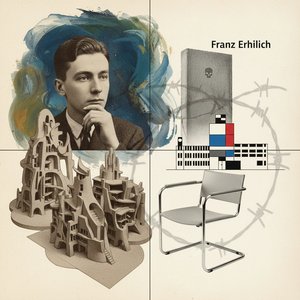
Franz Ehrlich: Bridging Expressionism, Bauhaus & the Shadows of History
Explore the life of Franz Ehrlich, a pivotal Bauhaus architect whose career spanned Expressionism, resistance during Nazi Germany, and GDR reconstruction. Discover his complex legacy & view museum-quality reproductions at OriginalUniqueArt.

Top 25 Masterpieces by Valentin Laurent de Courcey: The Pinnacle of Modern Art Deco Luxury
Explore 25 iconic Art Deco masterpieces by Valentin de Courcey. Discover museum-quality elegance on OriginalUniqueArt.com.

25 Masterpieces by Valentin Laurent de Courcey: The Pinnacle of Modern Art Deco Luxury
Explore 25 iconic Art Deco masterpieces by Valentin de Courcey. Discover museum-quality elegance on OriginalUniqueArt.com.

Framed for Success: How Premium Presentation Transforms Hotel Art into Luxury Focal Points
Discover how premium art presentation and bespoke framing transform hotel interiors into luxury focal points. An expert guide for designers on elevating visual narratives through architectural integration and museum-grade curation.

Biedermeier Style: The Elegant Art of Comfort, Simplicity, and Bourgeois Sophistication
Discover the refined elegance of Biedermeier style. Explore how this 19th-century movement blended simplicity with comfort, shaping the art and design of the middle class through Romanticism and functional beauty. An expert guide for classic art enthusiasts.