

 实景预览
实景预览
 发送
发送 分享
分享
 详情
详情 指南
指南

 下载图片
下载图片
 相似作品
相似作品 X射线
X射线 幻灯片播放
幻灯片播放 统计数据
统计数据Moving waves


 阅读全文
阅读全文
手工油画复制品
由我们的艺术家按需定制,为您提供您所选尺寸及画框的布面手工油画。 ( 切换至版画销售渠道 切换至数字图像销售渠道)




































您可以从与原作比例一致的预设尺寸中进行选择。

请输入您需要的宽度和高度,以适配您的画框或墙面。由于作品为手工绘制,若您选择不同的尺寸比例,艺术家可能会在画面边缘多画一些或稍作裁剪 —— 由您决定。在开始绘画之前,我们会为您发送一份数字效果图供您确认。本页面上展示的图片并非最终实物 —— 只有效果图才能反映真实结果。
下单后,OriginalUniqueArt.com 团队将通过电子邮件联系客户获取具体要求,并提供效果预览图


 玻璃选项仅适用于110厘米以下的尺寸。

Moving waves
复制品材质
复刻品尺寸说明
-


总计金额
¥ 2014
艺术家简介
Julio Le Parc: A Life in Motion
Julio Le Parc (born September 23, 1928) is an Argentina-born artist celebrated for his pioneering work in both Op Art and Kinetic Art. His career has been marked by a commitment to challenging traditional artistic conventions and engaging viewers through interactive experiences.
Early Life and Education
Le Parc’s early life was shaped by modest economic circumstances. At the age of thirteen, he moved with his mother and brothers to Buenos Aires, where he attended the School of Fine Arts. This period proved formative, exposing him to the burgeoning artistic avant-garde movement in Argentina.
Artistic Development & Influences
Le Parc’s artistic journey began with a growing interest in exploring new forms of visual expression. He was influenced by:
- Constructivism: The emphasis on geometric abstraction and industrial materials resonated with his developing aesthetic.
- Concrete Art: This movement's focus on non-representational art, devoid of symbolic meaning, provided a foundation for his later work.
He quickly became a precursor to both Kinetic and Op Art, seeking to create artworks that engaged the viewer’s perception and challenged static notions of form.
Founding GRAV & International Recognition
A pivotal moment in Le Parc's career was his co-founding of the Groupe de Recherche d’Art Visuel (GRAV) in Paris in 1960. This collective aimed to investigate the possibilities of visual art through experimentation and collaboration. His work gained international acclaim, culminating in winning the Grand Prize for Painting at the 33rd Venice Biennale in 1966.
Key Characteristics & Themes
Le Parc’s artworks are characterized by:
- Geometric Abstraction: He employs precise geometric forms and patterns.
- Optical Illusions: His works often create dynamic visual effects that play with the viewer's perception of space and movement.
- Kinetic Elements: Many of his pieces incorporate actual or implied motion, inviting active participation from the audience.
- Light & Color: He masterfully utilizes light and color to enhance the perceptual experience.
Political Activism & Exile
Le Parc was not only an artist but also a socially conscious individual. In May 1968, he participated in the Atelier Populaire, a workshop that produced protest posters during the student uprisings in France. His involvement led to his expulsion from France, highlighting his commitment to political activism.
Later Life & Legacy
Following his exile, Le Parc continued to live and work in Cachan, France. He has remained a significant figure in modern art history, influencing generations of artists with his innovative approach to visual perception and interactive art. He was again bestowed the Konex Award from Argentina in 2022, recognizing his enduring impact.
Major Achievements & Historical Significance
Julio Le Parc’s contributions have been instrumental in expanding the boundaries of modern art. He:
- Pioneered the development of Op and Kinetic Art.
- Challenged traditional notions of artistic authorship and spectatorship.
- Demonstrated the power of art to engage with social and political issues.
His work continues to be exhibited in museums and galleries worldwide, solidifying his place as a leading figure in 20th and 21st-century art.

Julio Le Parc
1928 - , Argentina
快速概览
- Name: Julio Le Parc
- Movement:
- Op Art
- Kinetic Art
- Birth Date: September 23, 1928
- Birth Place: Mendoza, Argentina
- Nationality: Argentinian
- Date Of Birth: 1928
- Notable Works:
- Form in Contortion over Thread
- Moving waves
- Untitled
- Place Of Birth: Mendoza, Argentina
相关文章

抽象表现主义:十幅定义艺术史的杰作
探索抽象表现主义的十幅经典杰作!波洛克、罗斯科等大师作品,揭秘艺术史上的重要瞬间。OriginalUniqueArt.com为您呈现高品质艺术品复制和精选家居装饰方案,感受现代艺术的力量与魅力。立即浏览全系列!

几何抽象艺术十大杰作:定义现代家居装饰的经典之作
探索几何抽象艺术的十大杰作!康定斯基、蒙德里安等大师作品,色彩构成与非具象之美。OriginalUniqueArt.com提供博物馆级艺术复制品,为您的家居带来现代艺术灵感。立即在线探索完整系列!

Dark Masterpieces: 10 Iconic Paintings Dominated by Black Tones |
Explore 10 iconic paintings dominated by black tones, from Rembrandt’s chiaroscuro to Goya's dark expressions. Discover the stories behind these masterpieces & find museum-quality art reproductions for your home at .

Kandinsky's Masterpieces: 25 Paintings That Define Abstract Art | OriginalUniqueArt
Journey through Wassily Kandinsky's 25 most iconic abstract paintings. Explore his revolutionary use of color, form & spiritual expressionism. Find museum-quality Kandinsky reproductions and elevate your home decor with OriginalUniqueArt.com. Discover all masterpieces on OriginalUniqueArt.com!
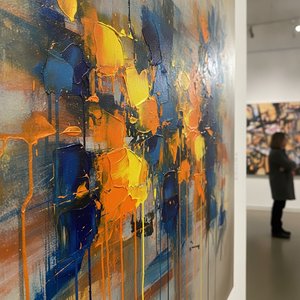
Beyond the Lines: Mastering the High-Impact World of Contemporary Abstraction
Master the high-impact world of contemporary abstraction. Discover how bold colors, textures, and modern movements like Abstract Expressionism can transform your space with premium, high-energy art curated for the design-conscious professional.