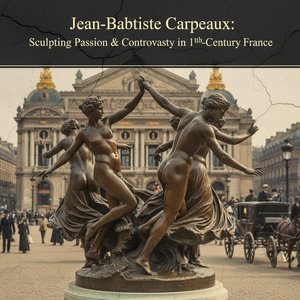
![让-巴蒂斯特·卡波”, "Artist_Names_Other": [ "让-巴蒂斯特-卡波", "让-巴蒂斯特·卡波" ] 创作的《The Dance》,亚麻布油画,手工绘制](/media/artworks/images-full/40/f9/40f9f700ea50f7794ea0b1c48ec84159.jpg)
 切换至版画销售渠道
 展开全文
展开全文







































 对于任何边长超过 105 厘米(约 41 英寸)的艺术品或复制品,画框将以拆解后的组件形式发货。此方法可确保安全送达并防止运输过程中的损坏。


The Ephemeral Joy Captured in Stone
To stand before this depiction of The Dance is to be enveloped by a wave of vibrant, almost palpable energy. It is not merely a sculpture; it is a moment wrested from the ceaseless flow of time, frozen at its zenith of joyous abandon. The grouping of figures, rendered in what appears to be cool, aged marble or stone, seems caught mid-waltz, their forms suggesting both the weight of history and the lightness of pure exhilaration. One’s eye is immediately drawn into the intricate choreography—the overlapping limbs, the lifted drapery, the shared focus that binds this collective performance together.
Mastery in Movement: Carpeaux's Dynamic Touch
This work bears the unmistakable signature of Jean-Baptiste Carpeaux. His genius lay in his ability to imbue static material with breathtaking dynamism. Having trained under masters who valued classical structure, Carpeaux infused that rigor with a raw, almost visceral emotionality. Observe the musculature suggested beneath the flowing garments; it speaks to an understanding of the human body not as an idealized form, but as a vessel for intense feeling. The inclusion of details, such as the figure holding a hat near the window, adds a narrative whisper—a suggestion of life continuing just beyond the frame, grounding the ethereal dance in a recognizable, lived-in moment.
Historical Echoes and Emotional Resonance
Dating to 1869, this piece emerges from the height of late 19th-century artistic fervor. This era saw sculpture moving away from purely academic idealism toward narratives rich with human experience. The Dance embodies that shift; it is passionate, dramatic, and deeply connected to the social fabric of its time. The natural light filtering in through the depicted window acts as a symbolic spotlight, illuminating not just the dancers, but perhaps the fleeting nature of such perfect happiness. It invites contemplation on memory, celebration, and the enduring human need for communal joy.
Bringing Renaissance Spirit Home
For the discerning collector or designer seeking an anchor piece that speaks volumes without shouting, this reproduction offers unparalleled depth. The tactile quality suggested by the stone—its cool patina hinting at centuries of admiration—lends immediate gravitas to any interior space. Imagine it placed where natural light can graze its curves; the interplay between shadow and polished marble will make the figures seem to breathe anew. It is a piece that elevates a room from mere dwelling to a stage for enduring beauty.
常见问题与解答
"The Dance" 的色彩表现如何?
让-巴蒂斯特·卡波”, "Artist_Names_Other": [ "让-巴蒂斯特-卡波", "让-巴蒂斯特·卡波" ] 的《The Dance》 的色彩呈现出 Muted 的饱和度与 Monochromatic 的强度。
让-巴蒂斯特·卡波”, "Artist_Names_Other": [ "让-巴蒂斯特-卡波", "让-巴蒂斯特·卡波" ] 的《The Dance》 的创作媒介和创作日期是什么?
"The Dance"创作于1869年,采用了Marble技法。材质与日期说明了原作的创作方式及时间。
如何将 让-巴蒂斯特·卡波”, "Artist_Names_Other": [ "让-巴蒂斯特-卡波", "让-巴蒂斯特·卡波" ] 的《The Dance》 应用于家居装饰中?
建议将“The Dance”用于Accent,推荐摆放空间为Living Room。
 分享
分享 分享
分享
 详情
详情 指南
指南

 下载作品
下载作品
 相似作品
相似作品 幻灯片播放
幻灯片播放 问答
问答 统计数据
统计数据


![让-巴蒂斯特·卡波”,
"Artist_Names_Other": [
"让-巴蒂斯特-卡波",
"让-巴蒂斯特·卡波"
]](/media/artists/images/thumbnails/37/47/3747801df4e8423996583a042ac07c2f.jpg)