实景预览
实景预览
 发送
发送 分享
分享
 详情
详情 指南
指南

 下载图片
下载图片
 相似作品
相似作品 X射线
X射线 幻灯片播放
幻灯片播放 统计数据
统计数据The Rainbow.


 阅读全文
阅读全文
艺术微喷/版画
博物馆级艺术微喷或帆布版画,制作高效,并提供多种饰面选择。 ( 订购此收藏品的纯手工复刻画作 切换至数字图像销售渠道)




P118B ¥10

P118H ¥10

P118W ¥10

P438Z ¥10

P508JH ¥12

P508YH ¥12

P805H ¥10

P805Z ¥10

P919BZ ¥10

P919G ¥10

P919XJ ¥10

P959ZH ¥10

P968JZ ¥12

W106C ¥8

W218G ¥10

W218JH ¥8

W218Y ¥10

W307PJ ¥10

W316G ¥10

W316PJ ¥8

W316Y ¥10

W398PJ ¥8

W4111J ¥10

W500HY ¥15

W500JH ¥15

W692G ¥12

W849H ¥8

W940BG ¥15

W953PJ ¥8




您可以从与原作比例一致的预设尺寸中进行选择。

请输入您所需的宽度和高度,以适配您的画框或墙面。由于印刷品只能进行裁剪,无法超出原图尺寸,因此若比例不一致,画面的一部分将会被裁切。在正式印刷之前,我们会为您发送一份数字效果图供您确认。本页面显示的图片并非最终裁剪后的效果——只有效果图才能展示真实的裁剪情况。


 玻璃选项仅适用于110厘米以下的尺寸。

The Rainbow.
艺术微喷/版画
复刻品尺寸说明
-


总计金额
¥ 538
A Symphony of Light and Hope
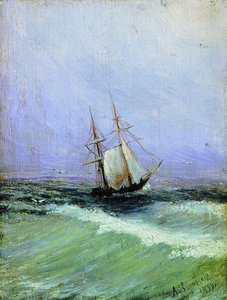
To gaze upon Ivan Konstantinovich Aivazovsky’s 1873 masterpiece, “The Rainbow,” is to witness a profound dialogue between the heavens and the sea. Aivazovsky, a titan of Romantic marine painting, possessed an almost supernatural ability to act as a conduit for the ocean’s soul. In this particular work, we find ourselves not merely observing a seascape, but participating in a moment of celestial alchemy. The painting captures that fleeting, ethereal instant where sunlight and rain converge to fracture white light into a breathtaking spectrum of color, casting a prismatic promise over the undulating waves. It is a scene that transcends mere maritime documentation, offering instead a meditative exploration of transition and the divine intersection of the earthly and the ethereal.
The composition is anchored by the delicate interplay of two vessels navigating the vast expanse. One small boat rests toward the left, while a larger vessel occupies much of the right-hand side, their presence providing a sense of scale against the infinite horizon. Within these boats, figures can be seen—some standing, some preparing for the journey ahead—adding a layer of human narrative to the elemental drama. There is a palpable sense of quiet anticipation; the atmosphere is at once serene and picturesque, capturing a moment of calm that feels both fragile and enduring.
The Mastery of Romantic Technique
Aivazovsky’s technical prowess is on full display through his sophisticated use of light and shadow. While many of his contemporaries, such as Turner, leaned into bold and vibrant palettes to depict maritime drama, Aivazovsky chose a more restrained, contemplative approach for “The Rainbow.” He employs a subdued tonal range—a delicate tapestry of muted blues, deep greens, and earthy ochres—to create an atmosphere of grandeur rather than mere spectacle. This deliberate restraint serves to heighten the emotional resonance of the work, drawing the viewer’s eye toward the subtle shifts in luminosity that define the water's surface.
The artist’s brushwork captures the very texture of the sea, from the translucent crest of a wave to the heavy, salt-laced weight of the deep. Through his mastery of light, he guides us through the turbulent seascape, emphasizing the vulnerability of the human element against the backdrop of nature's immense power. For the collector or interior designer, this technique offers a unique visual depth; the painting does not simply sit upon a wall but seems to breathe with an inner light, making it a captivating centerpiece for any sophisticated space.
Symbolism and Emotional Resonance
Beyond its aesthetic brilliance, “The Rainbow” carries deep symbolic weight. In the lexicon of art history, the rainbow has long served as a symbol of hope, a bridge between the turbulent storms of life and the promise of peace. By juxtaposing the potential for maritime struggle with the serene beauty of the atmospheric phenomenon, Aivivelysky creates a powerful metaphor for resilience. The painting speaks to the human spirit's ability to find beauty and light even amidst the unpredictable and often dangerous currents of existence.
For those seeking to bring a sense of tranquility and intellectual depth into their homes or galleries, this work offers an unparalleled emotional impact. It is a piece that invites long periods of contemplation, rewarding the viewer with new layers of meaning upon every encounter. Whether viewed as a triumph of 19th-century Romanticism or as a timeless emblem of hope, Aivazovsky’s vision remains as potent today as it was when the final brushstroke was applied in 1873.
问答详情
艾瓦佐夫斯基 的《The Rainbow.》 的色彩和谐度如何?
艾瓦佐夫斯基 的《The Rainbow.》 的色彩呈现出一种 Unified Palette 的和谐感。这种和谐感描述了色彩之间的相互关系。
在艾瓦佐夫斯基反复探讨的主题中,"The Rainbow."处于怎样的地位?
"The Rainbow." 描绘了 seascape, rainbow, hope, sailors, stormysea, lightshadow, atmosphericpainting,而 艾瓦佐夫斯基 记录在案的主题则是 maritimetradition, romanticidealism, symbolicrepresentation, optimisticvision, iconicmasterpiece。通过两者的对比,可以看出此作与艺术家惯用题材之间的关联。
在购买之前,我可以在自己的墙上预览 艾瓦佐夫斯基 的《The Rainbow.》 吗?
通过兼容设备访问 艾瓦佐夫斯基 的《The Rainbow.》 的 AR 预览 页面,即可利用增强现实技术将艺术品呈现在您自己的空间中。
艺术家简介
A Life Embraced by the Waves
Ivan Konstantinovich Aivazovsky, born Hovhannes Aivazian in 1817, was more than just a painter of seascapes; he embodied the very spirit of Romanticism—a profound connection to nature and an unwavering pursuit of emotional truth. His existence seemed inextricably intertwined with the Black Sea—that vast, turbulent expanse which would forever dominate his artistic vision and propel him to unparalleled fame throughout his lifetime. Born in Feodosia, Crimea, a city steeped in maritime history and culture, Aivazovsky’s formative years instilled within him an instinctive understanding of the ocean's moods and majesty. From a young age, Jacob Koch, a local architect who recognized his prodigious talent, nurtured this fascination—a seed that blossomed under the tutelage of Saint Petersburg’s Imperial Academy of Arts, where he honed his skills in meticulous observation and masterful technique. Yet, formal training could never fully capture the essence of Aivazovsky's artistic soul; it was the salty air, the cries of gulls circling overhead, and the ceaseless rhythm of the waves that truly shaped his sensibility.Early Influences and Artistic Formation
Aivazovsky’s Armenian heritage—his baptism at St. Sargis Armenian Church in Feodosia—provided him with a bedrock of cultural identity, subtly informing his artistic worldview. He absorbed influences from artists like Eugène Delacroix and Théodore Rousseau, embracing the Romantic movement's core tenets: emotion, imagination, and reverence for the sublime beauty of untamed landscapes. These formative experiences instilled within him a conviction that art should strive to capture not merely what is seen but what is felt—a principle he would carry throughout his prolific career. His early works demonstrated an acute sensitivity to light and color, foreshadowing the luminous textures and dramatic compositions that would characterize his mature style. He meticulously studied topographical sketches and nautical charts, diligently preparing for expeditions into uncharted waters.The Navy Painter and Maritime Inspiration
A pivotal moment arrived in 1849 when Aivazovsky was appointed as the main painter of the Russian Navy—a position that granted him unparalleled access to naval life and provided an inexhaustible source of inspiration. This wasn’t merely a prestigious title; it was immersion—immersing himself in shipboard routines, witnessing battles firsthand, and observing the relentless forces of nature shaping the seascape. He became intimately acquainted with the daily lives of sailors, capturing their resilience and camaraderie with remarkable accuracy. The Navy's patronage fueled his output – approximately 6,000 paintings—allowing him to explore ambitious themes and experiment with innovative techniques. His canvases pulsed with dynamism, conveying a palpable sense of movement and grandeur. He famously remarked that “the sea is my teacher,” and this conviction permeated every brushstroke.Style and Technique: Capturing the Sublime
Aivazovsky’s artistic style—characterized by dramatic compositions, masterful use of color, and meticulous attention to detail—became synonymous with Romantic seascape painting. He championed plein air painting, venturing out onto the open sea to capture fleeting moments of atmospheric beauty. His technique involved applying paint in thin layers, building up textures gradually to achieve luminous effects that mirrored the shimmering surface of the ocean. Like Delacroix and Rousseau before him, he sought to evoke emotion rather than simply reproduce visual reality—to transport the viewer into the heart of a storm or onto the deck of a ship battling towering waves. His canvases are imbued with an almost palpable energy, reflecting the turbulent forces of nature and conveying a profound sense of awe. Notable works include *The Ninth Wave*, depicting a harrowing shipwreck scene; *Ship in a Stormy Sea*, showcasing the destructive power of the ocean; and *Seascape with Full Moon*, capturing the ethereal beauty of nocturnal seascapes.Legacy and Enduring Influence
Ivan Konstantinovich Aivazovsky’s contribution to Russian art—and indeed, to Romantic painting globally—is undeniable. He elevated seascape painting to new heights of artistic expression, establishing himself as one of Russia's greatest masters. His paintings continue to inspire artists today, demonstrating the enduring power of observation and emotion. Beyond his technical brilliance, Aivazovsky’s unwavering devotion to capturing the sublime—the awe-inspiring grandeur of nature—solidified his place in art history. He served as a symbol of Russian patriotism and maritime prowess, bolstering national pride during a period of significant expansion. His legacy extends far beyond the canvases themselves; it resides in the indelible impression he left on generations of artists who followed him—artists who recognized the importance of conveying feeling alongside visual accuracy. Aivazovsky’s paintings remain treasured masterpieces, testament to his extraordinary talent and unwavering passion for the sea.
艾瓦佐夫斯基
1817 - 1900 , 俄羅斯
快速概览
- Artistic Movement Or Style: 浪漫主義,海洋藝術
- Artists Or Movements Influenced By This Artist: ['俄羅斯風景畫']
- Artists Who Influenced This Artist: ['雅各·柯赫']
- Date Of Birth: 1817年7月29日
- Date Of Death: 1900年5月2日
- Full Name: Ivan Konstantinovich Aivazovsky
- Nationality: 俄羅斯愛爾蘭尼亞人
- Notable Artworks:
- 第九號浪濤
- 風暴中的船隻
- 滿月的海景
- Place Of Birth: 俄羅斯黑海城市費奧多西亞
相关文章

Masterpieces of the Sea: An Authoritative Guide to Iconic Maritime Artworks and the Eternal Horizon
Embark on a scholarly journey through the history of maritime art. Discover the evolution of seascapes from navigational records to Romantic masterpieces. Explore museum-quality, hand-painted oil reproductions of the world's most iconic marine artworks at OriginalUniqueArt.com.
Ivan Aivazovsky: Mastering Light & Emotion in 19th-Century Marine Painting
Explore the captivating world of Ivan Aivazovsky, a master of 19th-century marine painting. Discover his techniques, iconic artworks & lasting legacy in this expert guide.

Mastering the Tempest: The Sublime Power of Stormy Seas in Fine Art History
Explore the sublime beauty of stormy seas through the lens of art history. From Turner to Aivazovsky, discover how masterfully captured tempests evoke profound emotion and luxury in fine art collections and high-end interior design.
The Allure of the Horizon: A Comprehensive Exploration of Seascape Art Through History & Emotion
Explore the captivating world of seascape art! Discover its history, key artists & movements – from Dutch Masters to Impressionism. Expert insights for collectors and enthusiasts at OriginalUniqueArt.

10 Masterpieces Defined by Stunning Sea Green Tones
Immerse yourself in the serene beauty of sea green tones. Explore 10 iconic masterpieces, from Impressionist landscapes to coastal classics, and find inspiration for your decor with museum-quality reproductions. Discover all masterpieces on OriginalUniqueArt.com.