菜单
免费艺术咨询

艾瓦佐夫斯基

1817 - 1900

人物简介

  • Vibe:
    • 浪漫
    • 戏剧性
  • Lifespan: 83 years
  • Top-ranked work: 第九波
  • Museums on APS:
    • 列夫托尔斯泰美术馆
    • 列夫托尔斯泰美术馆
    • 列夫托尔斯泰美术馆
    • 普林斯顿美术馆
    • 萨克普·萨班哲博物馆
  • Gift suitability:
    • other-none
    • 周年纪念
  • Nationality: 俄羅斯
  • Mediums: 布面油画
  • Works on APS: 1006
  • Movements: romanticism
  • Born: 1817, 葉奧斯多夫亞, 俄羅斯
  • 展开隐藏的快速详情栏
  • Top 3 works:
    • 第九波
    • 日落时分从山间眺望大海。克里米亚。
    • 那不勒斯湾海岸上的渔民会面
  • Art period: 19世纪
  • Best occasions: 陈述词
  • Copyright status: Public domain
  • Died: 1900
  • Color intensity:
    • 鲜艳
    • 均衡
  • Emotional tone: <p>恬静</p>
  • Creative periods: mature period
  • Room fit: 起居空间
  • Also known as:
    • 伊萬·康斯坦丁諾維奇·阿伊瓦佐夫斯基
    • 奧伊瓦佐夫斯基

艺术知识测试

每道题只有一个正确答案。

题目 1:
艾瓦佐夫斯基出生于哪个城市?
题目 2:
艾瓦佐夫斯基在俄罗斯海军担任什么职务?
题目 3:
艾瓦佐夫斯基一生创作了大约多少幅画作?
题目 4:
艾瓦佐夫斯基绘画风格的主要特点是什么?
题目 5:
艾瓦佐夫斯基的艺术背景是什么?

A Life Embraced by the Waves

Ivan Konstantinovich Aivazovsky, born Hovhannes Aivazian in 1817, was more than just a painter of seascapes; he embodied the very spirit of Romanticism—a profound connection to nature and an unwavering pursuit of emotional truth. His existence seemed inextricably intertwined with the Black Sea—that vast, turbulent expanse which would forever dominate his artistic vision and propel him to unparalleled fame throughout his lifetime. Born in Feodosia, Crimea, a city steeped in maritime history and culture, Aivazovsky’s formative years instilled within him an instinctive understanding of the ocean's moods and majesty. From a young age, Jacob Koch, a local architect who recognized his prodigious talent, nurtured this fascination—a seed that blossomed under the tutelage of Saint Petersburg’s Imperial Academy of Arts, where he honed his skills in meticulous observation and masterful technique. Yet, formal training could never fully capture the essence of Aivazovsky's artistic soul; it was the salty air, the cries of gulls circling overhead, and the ceaseless rhythm of the waves that truly shaped his sensibility.

Early Influences and Artistic Formation

Aivazovsky’s Armenian heritage—his baptism at St. Sargis Armenian Church in Feodosia—provided him with a bedrock of cultural identity, subtly informing his artistic worldview. He absorbed influences from artists like Eugène Delacroix and Théodore Rousseau, embracing the Romantic movement's core tenets: emotion, imagination, and reverence for the sublime beauty of untamed landscapes. These formative experiences instilled within him a conviction that art should strive to capture not merely what is seen but what is felt—a principle he would carry throughout his prolific career. His early works demonstrated an acute sensitivity to light and color, foreshadowing the luminous textures and dramatic compositions that would characterize his mature style. He meticulously studied topographical sketches and nautical charts, diligently preparing for expeditions into uncharted waters.

The Navy Painter and Maritime Inspiration

A pivotal moment arrived in 1849 when Aivazovsky was appointed as the main painter of the Russian Navy—a position that granted him unparalleled access to naval life and provided an inexhaustible source of inspiration. This wasn’t merely a prestigious title; it was immersion—immersing himself in shipboard routines, witnessing battles firsthand, and observing the relentless forces of nature shaping the seascape. He became intimately acquainted with the daily lives of sailors, capturing their resilience and camaraderie with remarkable accuracy. The Navy's patronage fueled his output – approximately 6,000 paintings—allowing him to explore ambitious themes and experiment with innovative techniques. His canvases pulsed with dynamism, conveying a palpable sense of movement and grandeur. He famously remarked that “the sea is my teacher,” and this conviction permeated every brushstroke.

Style and Technique: Capturing the Sublime

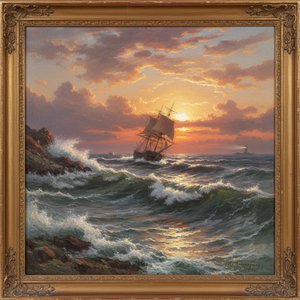
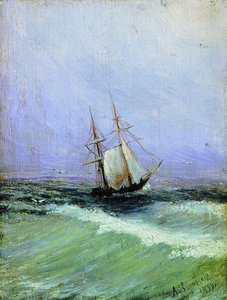
Aivazovsky’s artistic style—characterized by dramatic compositions, masterful use of color, and meticulous attention to detail—became synonymous with Romantic seascape painting. He championed plein air painting, venturing out onto the open sea to capture fleeting moments of atmospheric beauty. His technique involved applying paint in thin layers, building up textures gradually to achieve luminous effects that mirrored the shimmering surface of the ocean. Like Delacroix and Rousseau before him, he sought to evoke emotion rather than simply reproduce visual reality—to transport the viewer into the heart of a storm or onto the deck of a ship battling towering waves. His canvases are imbued with an almost palpable energy, reflecting the turbulent forces of nature and conveying a profound sense of awe. Notable works include *The Ninth Wave*, depicting a harrowing shipwreck scene; *Ship in a Stormy Sea*, showcasing the destructive power of the ocean; and *Seascape with Full Moon*, capturing the ethereal beauty of nocturnal seascapes.

Legacy and Enduring Influence

Ivan Konstantinovich Aivazovsky’s contribution to Russian art—and indeed, to Romantic painting globally—is undeniable. He elevated seascape painting to new heights of artistic expression, establishing himself as one of Russia's greatest masters. His paintings continue to inspire artists today, demonstrating the enduring power of observation and emotion. Beyond his technical brilliance, Aivazovsky’s unwavering devotion to capturing the sublime—the awe-inspiring grandeur of nature—solidified his place in art history. He served as a symbol of Russian patriotism and maritime prowess, bolstering national pride during a period of significant expansion. His legacy extends far beyond the canvases themselves; it resides in the indelible impression he left on generations of artists who followed him—artists who recognized the importance of conveying feeling alongside visual accuracy. Aivazovsky’s paintings remain treasured masterpieces, testament to his extraordinary talent and unwavering passion for the sea.