切换至版画销售渠道
 展开全文
展开全文







































 对于任何边长超过 105 厘米(约 41 英寸)的艺术品或复制品,画框将以拆解后的组件形式发货。此方法可确保安全送达并防止运输过程中的损坏。


A Breath of the Bernese Alps: Edward Theodore Compton’s ‘The Jungfrau’
Edward Theodore Compton's “The Jungfrau” isn’t merely a depiction of a mountain landscape; it’s an immersive experience, a frozen moment of awe and reverence for the raw power and sublime beauty of the Swiss Alps. Painted in 1890, this work stands as a pivotal example of early alpine watercolor, showcasing Compton's unique ability to capture not just the visual grandeur but also the very *feeling* of being amidst these colossal peaks. The painting immediately draws the eye into its heart – the imposing silhouette of the Jungfrau itself, rendered with a delicate yet confident hand, dominating the composition and radiating an almost palpable sense of majesty.

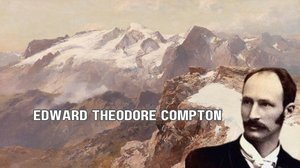
(Image: A portrait of Edward Theodore Compton, the artist behind ‘The Jungfrau’)
The Pioneer of Alpine Watercolor
Born in 1849, Edward Theodore Compton was a singular figure in late 19th-century European art. His journey to Darmstadt, Germany, fueled by his Quaker upbringing's emphasis on simplicity and observation, proved transformative. It was here he truly honed his skills, immersing himself in the vibrant artistic community led by Grand Duke Ludwig III. Compton’s dedication to meticulous observation is evident in every brushstroke of “The Jungfrau.” He wasn’t simply copying what he saw; he was translating a profound emotional response – a sense of humility and wonder – onto the canvas. His self-taught approach, combined with his experiences as a mountaineer (making over 300 ascents), imbued his work with an unparalleled understanding of alpine terrain and light.
Technique and Composition: A Symphony of Light and Shadow
Compton’s mastery lies in his watercolor technique. He employs a broken brushstroke method, layering translucent washes to build up the forms of the mountains – the snow-capped peaks shimmering with reflected sunlight, the shadowed valleys hinting at hidden depths. The composition itself is carefully balanced, drawing the viewer's eye upwards towards the Jungfrau’s summit while simultaneously grounding it in the lush greenery of the foreground. Notice how he uses atmospheric perspective—the subtle blurring of details and colors as they recede into the distance—to create a convincing sense of depth and scale. The scattered figures within the scene, likely tourists enjoying the view, aren't mere additions; they serve to emphasize the vastness of the landscape and our own insignificance in its presence.
Symbolism and Emotional Impact
“The Jungfrau” transcends a simple landscape painting. It embodies the Romantic fascination with nature’s power and beauty, reflecting a desire for escape and spiritual renewal. The Jungfrau itself – named after the Virgin Mary – adds a layer of religious symbolism, suggesting a connection between humanity and the divine within this awe-inspiring environment. The painting evokes a powerful sense of tranquility, solitude, and perhaps even a touch of melancholy—a recognition of the sublime and our own fleeting existence in the face of such enduring grandeur. It’s a piece that invites contemplation, prompting us to consider our place within the natural world and the timeless beauty of the Alps.
常见问题与解答
"The Jungfrau" 的创作艺术家是谁?
《The Jungfrau》被归为爱德华·西奥多·康普顿的作品。
爱德华·西奥多·康普顿 的《The Jungfrau》 传达了怎样的情感?
“The Jungfrau” 传达出一种 Tranquil 的情感。这种情感基调描述了作品给人的印象。
"The Jungfrau" 创作于哪一年?
"The Jungfrau"创作于1890年。这一时期将该作品置于爱德华·西奥多·康普顿的艺术生涯及其所处时代之中。
 实景预览
实景预览
 分享
分享 分享
分享
 详情
详情 指南
指南

 下载作品
下载作品
 相似作品
相似作品 X射线
X射线 幻灯片播放
幻灯片播放 Q&A
Q&A 统计数据
统计数据