切换至版画销售渠道
 展开全文
展开全文







































 对于任何边长超过 105 厘米(约 41 英寸)的艺术品或复制品,画框将以拆解后的组件形式发货。此方法可确保安全送达并防止运输过程中的损坏。


Landscape - Composition: In the Catskills – A Serene Vision of American Wilderness
Asher Brown Durand's "Landscape - Composition: In the Catskills," painted in 1848, is a captivating oil on canvas piece that showcases the artist’s skill in capturing serene and peaceful landscapes. Housed at the San Diego Museum of Art, this artwork exemplifies the Hudson River School style, celebrated for its romantic depictions of American scenery.
Compositional Elements & Artistic Technique
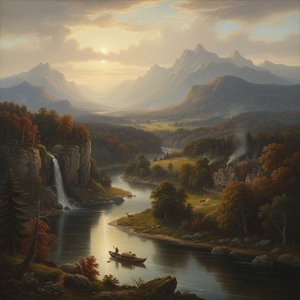
The painting features a mountainous area with trees in the foreground, two horses visible in the scene, and a group of people standing around them. The overall atmosphere appears to be peaceful and serene as the individuals interact with their surroundings. This spatial relationship emphasizes the awe-inspiring presence of the land itself.
- Foreground: Dominated by rocks, vegetation, and the figures of horses and people, establishing a sense of human interaction within nature.
- Middle Ground: A river winds through the valley, creating depth and leading the viewer's eye towards the distant mountains.
- Background: Towering mountains rise majestically, bathed in soft light, symbolizing grandeur and timelessness.
Durand masterfully employs atmospheric perspective, softening details in the distance to create a sense of vastness. The use of warm, rich light envelops the cultivated landscape, highlighting textures and forms with remarkable detail. Framing trees and distant views are typical traits of Durand's paintings.
Historical Context & Hudson River School
“Landscape - Composition: In the Catskills” emerged during a period of significant westward expansion in America. The Hudson River School, to which Durand belonged, sought to capture the beauty and sublimity of the American wilderness, reflecting a growing national pride and appreciation for nature's power.
- Hudson River School: A mid-19th century art movement characterized by realistic depictions of landscapes, particularly those found in the Hudson River Valley and surrounding areas.
- Transcendentalism: The painting aligns with Transcendentalist philosophies that emphasized the spiritual connection between humanity and nature.
- National Identity: Durand’s work contributed to a burgeoning sense of American identity by celebrating the unique landscapes of the nation.
Symbolism & Emotional Impact
Beyond its aesthetic appeal, "Landscape - Composition: In the Catskills" carries symbolic weight. The tiny figures in the foreground juxtaposed with the immensity of the mountains and land represent humanity's place within a larger natural order.
- Nature’s Power: The painting evokes feelings of awe and reverence for nature's power, reminding viewers of its enduring presence.
- Tranquility & Peace: The serene atmosphere and harmonious composition inspire a sense of tranquility and peace.
- Spiritual Connection: Durand’s depiction of the landscape as a manifestation of God reflects a spiritual connection between humanity and creation.
A Timeless Masterpiece
“Landscape - Composition: In the Catskills” remains a testament to Asher Brown Durand's artistic skill and his profound appreciation for the American wilderness. Its enduring beauty continues to inspire art lovers, collectors, and interior designers seeking to bring a touch of serenity and grandeur into their spaces.
常见问题与解答
"Landscape - Composition: In the Catskills"创作于哪一年,属于哪种艺术流派?
"Landscape - Composition: In the Catskills"创作于1848年,属于Romanticism运动。
"Landscape - Composition: In the Catskills" 的整体色调有多明亮?
总体而言,"Landscape - Composition: In the Catskills" 的亮度记录为 brilliant。感知亮度描述了作品呈现出的明暗程度。
阿歇·布朗·杜兰 的《Landscape - Composition: In the Catskills》 的推荐打印尺寸是多少?
建议为 阿歇·布朗·杜兰 的《Landscape - Composition: In the Catskills》 制作 Medium 的复制品。尺寸可以在保持比例不变的情况下进行调整。
 实景预览
实景预览
 分享
分享 分享
分享
 详情
详情 指南
指南

 下载作品
下载作品
 相似作品
相似作品 X射线
X射线 幻灯片播放
幻灯片播放 Q&A
Q&A 统计数据
统计数据