切换至版画销售渠道
 展开全文
展开全文







































 对于任何边长超过 105 厘米(约 41 英寸)的艺术品或复制品,画框将以拆解后的组件形式发货。此方法可确保安全送达并防止运输过程中的损坏。


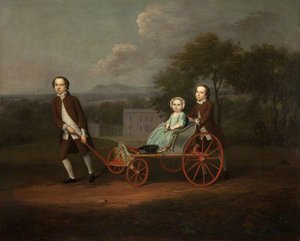
Thomas Hunt III (1721–1788): A Portrait of Dignified Reflection
Arthur William Devis’s “Thomas Hunt III” stands as a quintessential example of the conversation piece—a genre that flourished in Georgian England and captured the spirit of its age. Executed around 1743, this oil painting transcends mere likeness; it embodies an idealized vision of gentlemanly virtue and intellectual pursuits, reflecting the values championed by the Enlightenment.
The subject himself is presented with remarkable composure—Thomas Hunt III, a prominent barrister and landowner, occupies center stage within a richly appointed interior. Devis skillfully employs linear perspective to establish depth, guiding the viewer’s gaze across the room towards a distant windowpane. The muted palette of browns, blacks, and whites contributes to an atmosphere of solemn dignity, mirroring the seriousness of Hunt’s expression.
- Composition: Devis’s masterful arrangement emphasizes Hunt's figure against a backdrop of wooden paneling and windows, creating a sense of contained grandeur.
- Technique: The artist demonstrates meticulous attention to detail through visible brushstrokes—a hallmark of traditional oil painting—allowing texture to convey the materiality of fabric and wood surfaces.
- Lighting: Light emanates from the left side of the canvas, casting subtle shadows that accentuate Hunt’s form and imbue the scene with warmth and dimension.
- Style: Rooted in classical portraiture, “Thomas Hunt III” adheres to conventions established by artists like Rembrandt and Rubens, prioritizing realism and conveying an inner psychological state.
Beyond its technical prowess, the painting resonates with symbolic significance. Hunt’s posture—seated at a desk with a book in his left hand—represents erudition and moral responsibility – ideals central to Georgian society. The inclusion of classical motifs—such as the urn—references humanist philosophy and elevates Hunt's status within the intellectual landscape.
“Thomas Hunt III” continues to captivate viewers today not only for its aesthetic beauty but also for its ability to transport us back to a pivotal moment in British history. It serves as a testament to Devis’s artistic vision and his enduring legacy as one of England's most celebrated portraitists.
常见问题与解答
关于“Thomas Hunt III (1721–1788)”的建议打印规格——尺寸与方向为何?
建议将 亚瑟·威廉·戴维斯 的《Thomas Hunt III (1721–1788)》 打印为 Large 大小,并采用 Portrait 构图。
建议将“Thomas Hunt III (1721–1788)”打印成多大的尺寸?
建议将“Thomas Hunt III (1721–1788)”打印为 Large 尺寸。其他尺寸亦可按相同比例进行制作。
我可以在不同的光线下查看亚瑟·威廉·戴维斯 的《Thomas Hunt III (1721–1788)》吗?
您可以在作品的 X射线透视 页面上逐层探索 “Thomas Hunt III (1721–1788)”;该交互式查看器的设计灵感源自修复师使用的光源台,通过十一层光学读数呈现图像细节。
 实景预览
实景预览
 分享
分享 分享
分享
 详情
详情 指南
指南

 下载作品
下载作品
 相似作品
相似作品 X射线
X射线 幻灯片播放
幻灯片播放 问答
问答 统计数据
统计数据