- 首页

- 帆布打印
- Antoine Wiertz
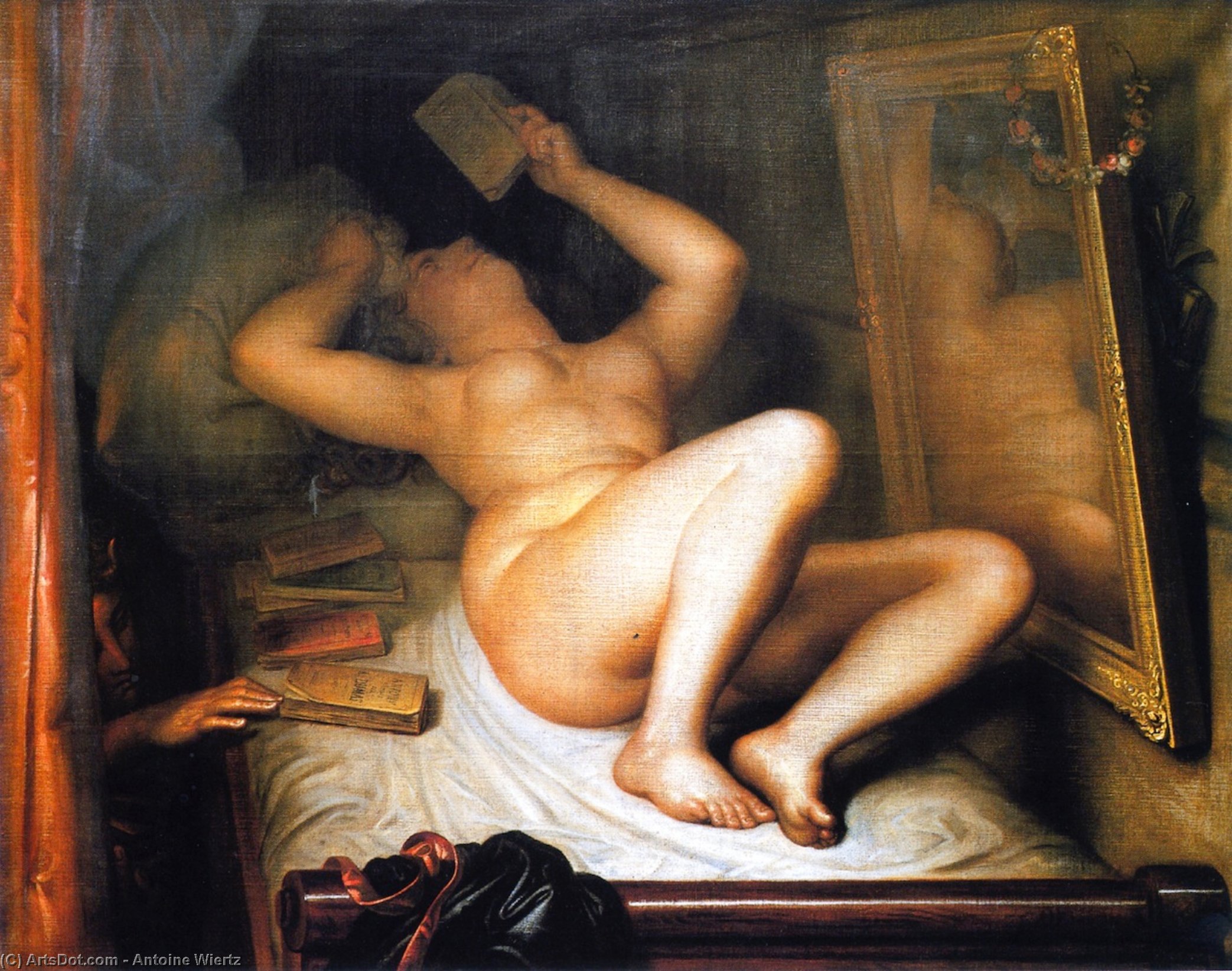
- The Novel Reader
 定制手绘复刻品
 分享
分享 分享
分享
 详情
详情

 下载
下载
 相似作品
相似作品 X射线
X射线 幻灯片播放
幻灯片播放The Novel Reader
 Acrylic On Canvas
- WallArt
- Romanticism
 1853
1853 125.0 x 155.0 cm
 Musée Wiertz
 展开详情
展开详情




P118B $10

P118H $10

P118W $10

P438Z $10

P508JH $12

P508YH $12

P805H $10

P805Z $10

P919BZ $10

P919G $10

P919XJ $10

P959ZH $10

P968JZ $12

W106C $8

W218G $10

W218JH $8

W218Y $10

W307PJ $10

W316G $10

W316PJ $8

W316Y $10

W398PJ $8

W4111J $10

W500HY $15

W500JH $15

W692G $12

W849H $8

W940BG $15

W953PJ $8




从与原作比例一致的预设尺寸中进行选择。

您可以输入自定义尺寸,以适配特定的画框或空间。如果您选择的尺寸与原图比例不符,我们将对作品进行裁剪,或通过镜像填充/纯色填充边缘的方式来扩展图像。在开始制作之前,我们会向您发送一份数字效果图供您确认。
请注意,屏幕上的预览并不能反映实际的裁剪或扩展效果。只有效果图才能准确展示最终的构图。
虽然我们提供定制尺寸,但为了保持原图比例,我们建议您从预设列表中选择尺寸。


 玻璃选项仅适用于110厘米以下的尺寸。

The Novel Reader
艺术微喷/版画
复制品尺寸
-


最终总价
-
藏品详情
A Glimpse into the Soul: Antoine Wiertz’s *The Novel Reader*
Antoine Wiertz's 1853 painting, *The Novel Reader*, isn’t merely a depiction of a woman lost in literature; it’s a potent distillation of Romanticism’s anxieties and aspirations. Captured with dramatic intensity and a touch of unsettling ambiguity, the work invites us to contemplate the solitary nature of reading, the allure of escape, and the subtle dance between intellect and emotion. Wiertz, a figure often relegated to the fringes of the Belgian art scene during his lifetime, created an image that resonates powerfully today, speaking to our own relationship with stories and the quiet moments of introspection they offer.
The painting immediately commands attention through its scale – measuring 125 x 155 cm – and its bold composition. A nude woman, draped in a simple robe, lies on her bed, completely absorbed in a book held delicately in her hand. The room itself is bathed in a muted light, creating an atmosphere of intimate seclusion. Yet, the inclusion of a mirror above the bed introduces a crucial element: a second figure mirroring the pose of the reader, also lost in their own literary world. This doubling effect subtly suggests that reading isn’t a purely solitary act; it's a shared experience, a communion with ideas and characters that transcends individual boundaries.
The Romantic Palette and Dramatic Technique
Wiertz was deeply influenced by the Baroque masters, particularly Peter Paul Rubens, whose dynamic compositions and expressive use of color he adopted for his own work. *The Novel Reader* exemplifies this influence through its dramatic lighting, rich textures, and a sense of palpable energy. The artist employs a loose, impasto technique – applying thick layers of oil paint directly to the canvas – which lends the scene a tactile quality, emphasizing the physicality of the figures and the materiality of the room. Notice how the brushstrokes themselves seem to vibrate with emotion, conveying both the woman’s absorption and the subtle tension within the composition.
The color palette is deliberately restrained, dominated by earthy tones – browns, ochres, and muted reds – that contribute to the painting's overall sense of intimacy. However, these subdued hues are punctuated by flashes of brighter color in the book itself and the surrounding details, drawing our eye to the central subject and highlighting the transformative power of literature.
Symbolism and a Hint of Unease
Beyond its immediate visual appeal, *The Novel Reader* is laden with symbolic meaning. The nude figure represents not just physical beauty but also vulnerability and intellectual curiosity. The book itself symbolizes knowledge, escape, and the potential for self-discovery. The mirror, however, introduces a layer of complexity. It suggests that reading isn’t simply an act of individual contemplation; it's a dialogue with another version of oneself, a confrontation with alternative realities. And then there is the shadowy figure reflected in the mirror – a subtle hint of darkness, perhaps representing temptation or the potential for distraction.
The inclusion of the vase and scattered books further reinforces this symbolic richness, suggesting a space dedicated to intellectual pursuits and artistic appreciation. The painting’s overall mood isn't one of serene tranquility; there’s an underlying current of unease, as if the woman is caught in a delicate balance between pleasure and peril.
A Legacy of Eccentric Genius
Antoine Wiertz remains a somewhat enigmatic figure in art history. Despite his undeniable talent and innovative style, he faced considerable criticism and struggled to gain widespread recognition during his lifetime. His work was often dismissed as overly dramatic or even morbid, reflecting the anxieties of a society grappling with rapid social and political change. However, today, Wiertz is increasingly appreciated for his unique vision and his ability to capture the emotional intensity of Romanticism. *The Novel Reader* stands as a testament to his artistic skill and his profound understanding of the human condition – a captivating image that continues to resonate with viewers centuries after its creation.
相关文章
纽约大都会艺术博物馆25幅必赏杰作:艺术、历史与家居灵感
探索纽约大都会艺术博物馆25幅传世杰作!从梵高、莫奈到达芬奇,深入了解艺术大师的故事与创作灵感。精美油画复制品,为您的家居带来艺术气息。立即在OriginalUniqueArt.com发现更多经典作品。
美国国家艺术馆精选:25幅大师级杰作,点亮您的艺术生活 | OriginalUniqueArt
探索美国国家艺术馆的25幅大师级杰作!深入了解塞尚、马蒂斯等艺术家的故事,感受印象派与现代艺术的魅力。OriginalUniqueArt.com提供高品质油画复制品,点亮您的家居空间。立即在线探索完整系列!

惠斯勒大师25幅杰作:艺术、家居与永恒之美 | OriginalUniqueArt
探索詹姆斯·惠斯勒25幅杰作!深入了解夜曲、静谧和谐等经典油画背后的故事与艺术魅力。OriginalUniqueArt.com提供博物馆级复制品,为您的家居带来永恒之美。立即在线探索完整系列!
马蒂斯大师25幅杰作:色彩与光影的艺术传奇 | OriginalUniqueArt
探索亨利·马蒂斯25幅杰作,感受野兽派色彩的魅力!从《舞蹈》到《红色和谐》,揭秘大师背后的故事与艺术灵感。OriginalUniqueArt.com提供博物馆级高质量油画复制品,为您的家居增添奢华艺术气息。立即在线探索完整系列!

丹特·加布里埃尔·罗塞蒂:25幅大师杰作,点亮您的艺术生活 | OriginalUniqueArt
探索丹特·加布里埃尔·罗塞蒂的25幅传世杰作!深入了解普拉拉斐利前派大师的艺术世界,感受维多利亚时代的浪漫主义与象征主义。在OriginalUniqueArt.com欣赏高清油画复制品,为您的家居增添诗意与格调。立即探索完整系列!

