- 首页

- 数字图像作品
- Antoine Wiertz
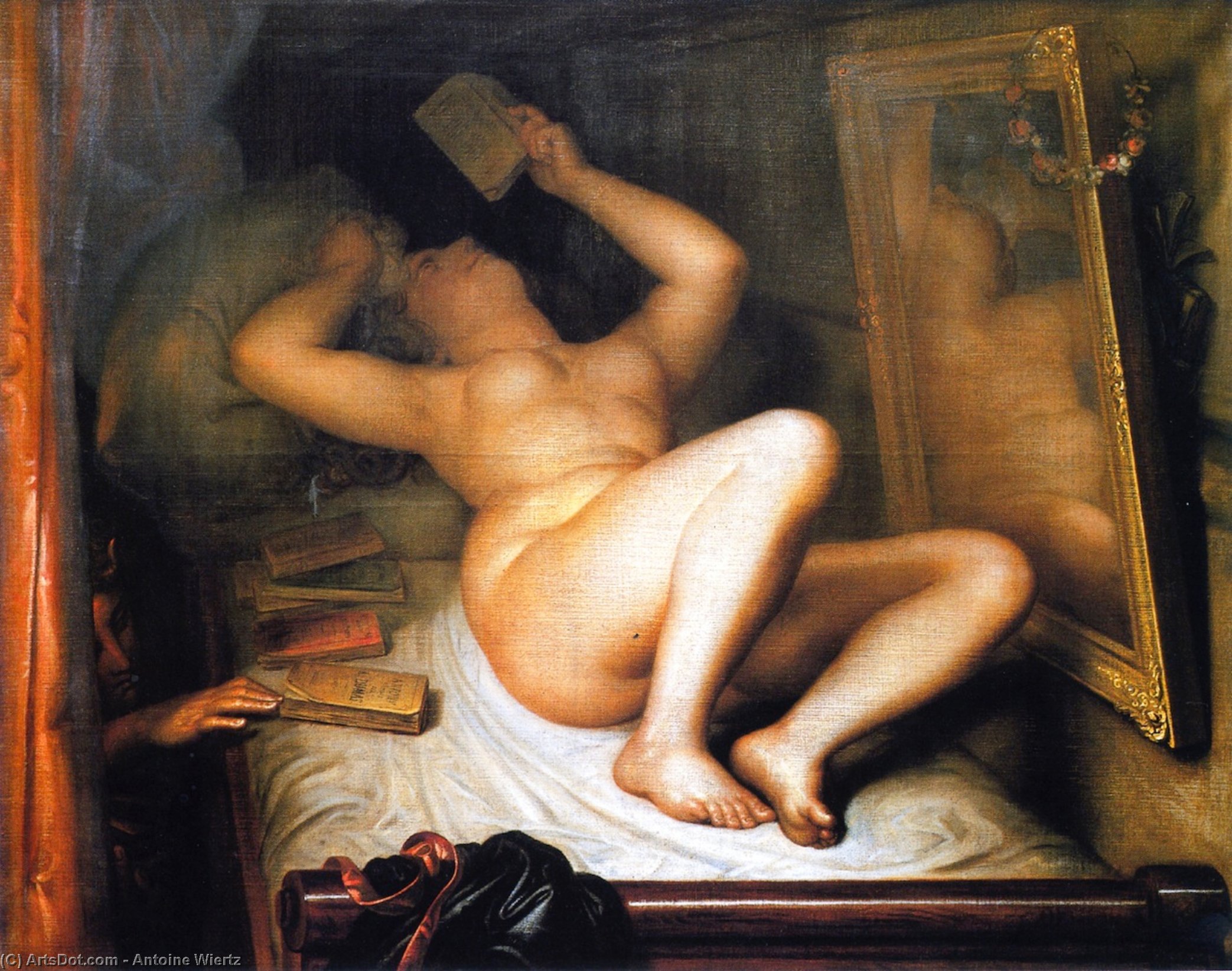
- The Novel Reader
 购买版画
购买版画 分享
分享 分享
分享
 详情
详情

 下载
下载
 相似作品
相似作品 X射线
X射线 幻灯片播放
幻灯片播放The Novel Reader
 Acrylic On Canvas
- WallArt
- Romanticism
 1853
1853 125.0 x 155.0 cm
 Musée Wiertz
 展开详情
展开详情
购买高分辨率增强版数字图像,其品质远超在线预览。
每一份文件都由我们的内部专家使用先进工具与专业的后期润色技术精心打造。我们确保每一张图像都具备卓越的清晰度、精准的色彩还原度以及细腻的细节表现。
最终文件将在 72 小时内通过电子邮件交付,并针对专业、编辑及印刷用途进行了优化。其品质与顶级设计工作室、出版社和画廊所信赖的标准完全一致。
每份数字图像订单均包含
专业数字图像交付,品质保障
选择 OriginalUniqueArt.com,您获得的不仅仅是一张图像——您收到的是经过专业级增强、精雕细琢的数字艺术作品,并享有满意保证。以下是您的订单中自动包含的所有内容:

邮件快速送达
您的高分辨率数字图像文件将在下单后 72 小时内通过电子邮件发送给您 —— 即可立即使用。

AI 增强型数字文件
您的艺术品经过专业优化,结合先进的 AI 技术与人工修饰,确保呈现极致的细节、清晰度与色彩准确度。

终身免费重发服务
不小心删除了文件或找不到了?没关系——我们将随时为您免费重发。

无需进口费用,始终如一
即刻拥有您的艺术作品,无需支付任何关税、税费或运费——数字下载始终免税。

色彩精准保证
我们通过专业工具与色彩管理技术,确保您的数字图像尽可能真实地还原原作色彩。

60天满意保证
如果您对所购买的数字图像不满意,我们将在60天内为您进行修改或退还100%的款项——无需任何解释。

100% 退款保证
如果不满意?在收到数字文件后的60天内,我们为您提供全额退款——无需任何理由。

批量订单优惠
购买 3 张图片可享 10% 折扣 - 购买 5 张可享 15% 折扣 - 购买 10+ 张可享 20% 折扣。非常适合创意项目、画廊和机构使用。
藏品详情
A Glimpse into the Soul: Antoine Wiertz’s *The Novel Reader*
Antoine Wiertz's 1853 painting, *The Novel Reader*, isn’t merely a depiction of a woman lost in literature; it’s a potent distillation of Romanticism’s anxieties and aspirations. Captured with dramatic intensity and a touch of unsettling ambiguity, the work invites us to contemplate the solitary nature of reading, the allure of escape, and the subtle dance between intellect and emotion. Wiertz, a figure often relegated to the fringes of the Belgian art scene during his lifetime, created an image that resonates powerfully today, speaking to our own relationship with stories and the quiet moments of introspection they offer.
The painting immediately commands attention through its scale – measuring 125 x 155 cm – and its bold composition. A nude woman, draped in a simple robe, lies on her bed, completely absorbed in a book held delicately in her hand. The room itself is bathed in a muted light, creating an atmosphere of intimate seclusion. Yet, the inclusion of a mirror above the bed introduces a crucial element: a second figure mirroring the pose of the reader, also lost in their own literary world. This doubling effect subtly suggests that reading isn’t a purely solitary act; it's a shared experience, a communion with ideas and characters that transcends individual boundaries.
The Romantic Palette and Dramatic Technique
Wiertz was deeply influenced by the Baroque masters, particularly Peter Paul Rubens, whose dynamic compositions and expressive use of color he adopted for his own work. *The Novel Reader* exemplifies this influence through its dramatic lighting, rich textures, and a sense of palpable energy. The artist employs a loose, impasto technique – applying thick layers of oil paint directly to the canvas – which lends the scene a tactile quality, emphasizing the physicality of the figures and the materiality of the room. Notice how the brushstrokes themselves seem to vibrate with emotion, conveying both the woman’s absorption and the subtle tension within the composition.
The color palette is deliberately restrained, dominated by earthy tones – browns, ochres, and muted reds – that contribute to the painting's overall sense of intimacy. However, these subdued hues are punctuated by flashes of brighter color in the book itself and the surrounding details, drawing our eye to the central subject and highlighting the transformative power of literature.
Symbolism and a Hint of Unease
Beyond its immediate visual appeal, *The Novel Reader* is laden with symbolic meaning. The nude figure represents not just physical beauty but also vulnerability and intellectual curiosity. The book itself symbolizes knowledge, escape, and the potential for self-discovery. The mirror, however, introduces a layer of complexity. It suggests that reading isn’t simply an act of individual contemplation; it's a dialogue with another version of oneself, a confrontation with alternative realities. And then there is the shadowy figure reflected in the mirror – a subtle hint of darkness, perhaps representing temptation or the potential for distraction.
The inclusion of the vase and scattered books further reinforces this symbolic richness, suggesting a space dedicated to intellectual pursuits and artistic appreciation. The painting’s overall mood isn't one of serene tranquility; there’s an underlying current of unease, as if the woman is caught in a delicate balance between pleasure and peril.
A Legacy of Eccentric Genius
Antoine Wiertz remains a somewhat enigmatic figure in art history. Despite his undeniable talent and innovative style, he faced considerable criticism and struggled to gain widespread recognition during his lifetime. His work was often dismissed as overly dramatic or even morbid, reflecting the anxieties of a society grappling with rapid social and political change. However, today, Wiertz is increasingly appreciated for his unique vision and his ability to capture the emotional intensity of Romanticism. *The Novel Reader* stands as a testament to his artistic skill and his profound understanding of the human condition – a captivating image that continues to resonate with viewers centuries after its creation.
艺术家简介
A Life Forged in Romantic Turmoil: Antoine Wiertz and the Spectacle of Emotion
Antoine Joseph Wiertz, born in Dinant, Belgium in 1806, was a figure perpetually wrestling with artistic recognition and societal indifference. His life unfolded against the backdrop of a rapidly changing Europe, marked by revolution, independence movements, and shifting aesthetic ideals. From humble beginnings – his father a soldier turned police brigadier, his mother a daily wage earner – Wiertz’s early talent for drawing was nurtured by Paul de Maibe, a local benefactor who recognized the spark within the young artist and secured him entry into the Antwerp Academy in 1820. This patronage proved crucial, providing not only formal training but also financial support from King William I of the Netherlands, allowing Wiertz to dedicate himself fully to his artistic pursuits. His formative years were steeped in the legacy of Flemish masters, particularly Peter Paul Rubens, whose baroque dynamism and emotional intensity would become a defining influence on Wiertz’s own style. He absorbed the lessons of the old masters during a period spent studying at the Louvre in Paris between 1829 and 1832, yet he remained critical of contemporary French art, preferring the grandeur of earlier traditions.The Pursuit of Classical Ideals and Romantic Expression
Wiertz’s ambition led him to compete for the prestigious Prix de Rome, ultimately securing it in 1832 after a previous attempt. This triumph afforded him the opportunity to study at the French Academy in Rome from 1834 to 1837, immersing himself in classical antiquity and Renaissance art. It was during this period that he began work on his monumental “Greeks and Trojans Fighting for the Body of Patroclus,” a powerful depiction of Homeric conflict completed in 1836. The painting, inspired by Book XVII of the *Iliad*, showcased Wiertz’s burgeoning talent for dramatic composition and emotionally charged figures. While it garnered some success upon its exhibition in Antwerp, his subsequent submission to the Paris Salon in 1838 was rejected due to a logistical oversight – arriving too late for consideration. This rejection foreshadowed a pattern of critical dismissal that would plague Wiertz throughout his career. A further showing at the 1839 Salon, featuring “Patroclus” alongside other works like "Madame Laetitia Bonaparte on her Deathbed" and “Christ Entombed,” was met with indifference and scathing criticism. This experience fueled a deep-seated resentment towards the Parisian art establishment, culminating in his polemical pamphlet *Bruxelles capitale, Paris province*, a defiant assertion of Belgian artistic identity against French dominance.Monumental Visions and Innovative Technique
Undeterred by critical setbacks, Wiertz continued to develop his unique artistic vision, characterized by monumental scale and an increasingly macabre sensibility. He revisited the theme of “Patroclus,” creating a second, even larger version in 1844 – a testament to his unwavering commitment to this subject matter. This period also saw the creation of "The Fall of the Rebellious Angels" (1841), a vast and chaotic canvas depicting the biblical expulsion from Heaven. The sheer size and dramatic intensity of these works were intended to overwhelm the viewer, evoking a sense of awe and terror. Wiertz’s artistic experimentation extended beyond subject matter; dissatisfied with the glossy finish of traditional oil painting, he developed a novel technique combining oil paints with turpentine and petrol on canvas. This “mat painting” method allowed for faster execution and a subdued surface quality, but ultimately proved unstable, contributing to the deterioration of some of his works over time. The death of his mother in 1844 deeply affected him, prompting a move to Brussels where he would remain for the rest of his life.Themes of Mortality, Social Commentary and Lasting Legacy
Wiertz’s later paintings often explored themes of mortality, social injustice, and human folly. Works like “Hunger, Madness and Crime” (1853), “The Reader of Novels” (1853), and “The Suicide” (1854) presented unsettling visions of societal decay and individual despair. He also continued to produce portraits, including numerous self-portraits that offer a poignant record of his aging and evolving persona. Despite the ongoing critical neglect, Wiertz remained prolific, driven by an inner compulsion to express his artistic vision. He tirelessly pursued recognition, eventually negotiating with the Belgian government to establish a museum dedicated to his work. This ambition was realized posthumously; after his death in 1865, the Belgian state purchased land and constructed a hall specifically designed to house his monumental paintings, fulfilling Wiertz’s wish that his art remain accessible to the public within his studio. His remains were even embalmed according to ancient Egyptian rites and interred in a vault in Brussels. Though often dismissed as *art pompier* – overly theatrical and academic – Wiertz's work foreshadowed elements of Symbolism and Surrealism, anticipating artistic currents that would gain prominence in the following decades. Today, his paintings stand as powerful testaments to a singular vision—a Romantic sensibility pushed to its most extreme and unsettling limits. His influence can be seen in the dramatic compositions and emotional intensity of later Belgian artists. Antoine Wiertz remains a compelling figure whose art continues to provoke and challenge viewers, inviting us to confront the darker aspects of human existence.
Antoine Wiertz
1806 - 1865

