
 实景预览
实景预览
 分享
分享 分享
分享
 详情
详情 指南
指南

 下载作品
下载作品
 相似作品
相似作品 X射线
X射线 幻灯片播放
幻灯片播放 问答
问答 统计数据
统计数据Walking Lion


 展开全文
展开全文
艺术微喷/版画
博物馆级艺术微喷或帆布版画,制作高效,并提供多种饰面选择。 ( 订购纯手工绘制画作 切换至数字图像销售渠道)




P118B ¥10

P118H ¥10

P118W ¥10

P438Z ¥10

P508JH ¥12

P508YH ¥12

P805H ¥10

P805Z ¥10

P919BZ ¥10

P919G ¥10

P919XJ ¥10

P959ZH ¥10

P968JZ ¥12

W106C ¥8

W218G ¥10

W218JH ¥8

W218Y ¥10

W307PJ ¥10

W316G ¥10

W316PJ ¥8

W316Y ¥10

W398PJ ¥8

W4111J ¥10

W500HY ¥15

W500JH ¥15

W692G ¥12

W849H ¥8

W940BG ¥15

W953PJ ¥8




您可以从与原作比例一致的预设尺寸中进行选择。

请输入您所需的宽度和高度,以适配您的画框或墙面。由于印刷品只能进行裁剪,无法超出原图尺寸,因此若比例不一致,画面的一部分将会被裁切。在正式印刷之前,我们会为您发送一份数字效果图供您确认。本页面显示的图片并非最终裁剪后的效果——只有效果图才能展示真实的裁剪情况。


 玻璃选项仅适用于110厘米以下的尺寸。

Walking Lion
艺术微喷/版画
复刻品尺寸
-


最终结算价
¥ 544
A Regal Presence: Deconstructing the Majesty of Barye’s Walking Lion
Antoine-Louis Barye's "Walking Lion," a bronze sculpture dating from the mid-19th century, isn’t merely a depiction of an animal; it’s a visceral embodiment of power, grace, and untamed wilderness. Born in Paris during a period of profound artistic transformation – the rise of Romanticism – Barye sought to move beyond the static formality of Neoclassical sculpture, instead capturing the dynamic energy and raw emotion inherent in the natural world. This particular piece, rendered with an almost palpable sense of movement, invites us into the heart of the lion’s spirit, a testament to Barye's revolutionary approach to animal representation.
The sculpture immediately commands attention through its sheer physicality. The bronze itself, meticulously cast and patinated to achieve a rich, burnished surface, speaks volumes about Barye’s mastery of lost-wax casting – a technique demanding both technical precision and artistic intuition. Notice the subtle variations in tone; the darker recesses of the musculature contrast beautifully with the highlights that accentuate the lion's powerful form. The texture is crucial: it’s not smooth or polished, but retains a tactile quality, hinting at the rough hide and formidable strength beneath. The wooden base, deliberately simple and rectangular, provides a grounding element, anchoring this embodiment of wildness within a contained space.
Capturing the Spirit of the Animalier
Barye’s work falls squarely within the burgeoning “animalier” movement – a trend that championed the study and representation of animals in sculpture. Prior to Barye, depictions of lions were often idealized or stylized, frequently serving as symbols of royalty or military might. However, Barye sought to capture the *essence* of the lion, its predatory instincts, its territoriality, and its inherent wildness. He achieved this through an intensely detailed anatomical study, meticulously rendering every muscle fiber, every ripple of fur, and every glint of light on the bronze surface. The pose itself – a deliberate stride forward, head held high – conveys a sense of confident authority and unwavering determination.
Consider the influence of Romanticism, which emphasized emotion, individualism, and the sublime power of nature. Barye’s lion embodies these ideals perfectly. It's not simply a beautiful animal; it’s a force of nature, a symbol of courage and resilience. The sculpture resonates with a primal energy, evoking a sense of awe and respect for the untamed wilderness.
Symbolism and Historical Context
The lion has long held significant symbolic weight across cultures – representing strength, nobility, justice, and vigilance. In ancient Egypt, it was associated with the sun god Ra; in Judeo-Christian tradition, it symbolizes Christ as “the Lion of Judah.” Barye’s sculpture taps into this rich tapestry of symbolism, reinforcing the lion's image as a creature of power and majesty. Furthermore, Barye’s work emerged during a period of significant social and political upheaval – the rise of nationalism, the Napoleonic Wars, and the burgeoning industrial revolution. His sculptures served as a powerful antidote to the rigid formality of classical art, offering instead a celebration of the natural world and its inherent beauty.
A Legacy in Bronze: Barye’s Enduring Influence
Antoine-Louis Barye remains one of the most celebrated sculptors of the 19th century. His pioneering work as an animalier fundamentally changed the way artists approached the representation of animals, paving the way for future generations of sculptors and artists. “Walking Lion” stands as a prime example of his genius – a captivating blend of technical skill, artistic vision, and profound understanding of the natural world. Today, reproductions of this iconic sculpture continue to inspire and delight, offering a tangible connection to a bygone era of artistic innovation and romantic fervor.
常见问题与解答
安托万-路易·巴里 的《Walking Lion》 描绘了怎样的场景,又传达了怎样的意境?
安托万-路易·巴里 的《Walking Lion》 描绘了 bronze sculpture, lion, barye, animalier, power, grace, movement,营造出 Romantic 的意境。其主题与氛围共同构成了这件作品的精髓。
《Walking Lion》的创作者 安托万-路易·巴里 是否还有其他艺名?
关于《Walking Lion》的创作者 安托万-路易·巴里,其记录在案的其他名称包括 安托万·路易·巴里, 安托万·巴里。
“Walking Lion” 是什么类型的作品?
安托万-路易·巴里 的《Walking Lion》 被归类为 WallArt。该类别描述了原作的艺术形式。
艺术家简介
动物雕塑的先驱:安托万-路易·巴里的一生与传奇
1795年9月24日出生于巴黎的安托万-路易·巴里,在19世纪雕塑界崛起为一位举足轻重的核心人物。他不仅仅是在描绘动物,更是赋予了它们前所未有的戏剧张力与解剖学的精准度,从而有效地将“动物雕塑”(animalier)这一专注于动物形态的流派推向了纯艺术的殿堂。巴里的艺术旅程并非始于雕塑家的工作室,而是追随父亲的脚步,从一名金匠学徒做起。这段早期的训练培养了他对细节近乎苛刻的关注以及对技艺的精湛掌握,这些品质在其整个职业生涯中都发挥了无可估量的价值。随后,他在弗朗索瓦-约瑟夫·博西奥和安托万-让·格罗斯男爵等雕塑家的指导下进一步磨炼技艺,在吸收古典主义原则的同时,也逐渐孕育出一种独特的浪漫主义情怀。虽然他在美术学院(École des Beaux-Arts)接受的正规教育为其奠定了坚实的基础,但真正点燃他艺术灵魂的,却是与真实世界的邂逅——确切地说,是1823年前后在巴黎植物园(Jardin des Plantes)中所观察到的那些生灵。从金匠到动物雕塑家:独特风格的蜕变
巴里对观察动物的热情近乎痴迷。他从不只是匆匆一瞥,而是通过研究、素描以及对动物解剖结构、动作和行为的细致分析来捕捉生命。然而,这种对写实主义的追求并非冰冷或机械的,它充满了浪漫主义运动特有的情感热忱。早期的作品,如学生时代创作的《被狮子吞噬的克罗塔纳的米洛》(1819)和《赫拉克勒斯与埃律曼托斯山猪》(约1820年),已然显露出他在动态构图和戏剧性叙事方面的天赋。真正确立其标志性风格的,是那些震撼人心的杰作,例如在沙龙上引起轰动的巨型石膏作品《虎食鳄鱼》(1831),以及青铜铸造的《狮子压制毒蛇》(1832)。这些作品并非静止的形态呈现,而是被凝固在时间里的原始力量瞬间,捕捉到了自然界生存斗争中那残酷而壮丽的美感。他超越了单纯的模仿,转而传达动物生命的本质——其力量、敏捷与不羁的灵魂。他的作品引起了当时公众对异域风情和荒野生物日益增长的着迷,反映了浪漫主义时期人们渴望突破文明社会束缚、追求远方体验的精神寄托。宏伟杰作与纪念碑式委约创作
在整个艺术生涯中,巴里创作了令人惊叹的系列雕塑,每一件都展示了他捕捉动物形态与动态的卓越技艺。除了标志性的《虎食鳄鱼》和《狮子压制毒蛇》,诸如《忒修斯与米诺陶洛斯》(1843)、《希波格里夫上的罗杰与安杰丽卡》(1846)、《拉皮斯与半人马》(1848)以及《美洲豹吞食野兔》(1850)等大师之作,充分展现了他的多变性与想象力。他的创作并不局限于捕食者的遭遇,他也涉足神话题材,并赋予这些场景同样的动态能量与解剖精度。此外,他的才华也延伸到了小比例青铜器之外。巴里曾获得过许多重要的纪念碑式委约任务,包括作为法国韧性象征的“七月柱狮像”,以及装饰在巴黎杜乐丽花园的雕塑群。这些大型项目证明了他将艺术愿景转化为公共艺术的能力,巩固了他作为法国顶尖雕塑家的地位。影响、磨难与永恒的意义
巴里的作品是多种影响力的集大成者。浪漫主义对情感和个人主义的强调,在他雕塑中那紧绷的戏剧张力中清晰可见;与此同时,他对解剖准确性和理想化形式的追求,也体现了从古典艺术中汲取的灵感。然而,真正让他脱颖而出的是他那种科学式的观察方法——这直接源于他在植物园度过的无数个研究动物的日夜。尽管获得了评论界的赞誉,巴里的生活却并非一帆风顺。由于缺乏商业头脑,他在职业生涯的大部分时间里都饱受财务困扰。1848年的破产迫使他变卖模型和模具,导致市场上出现了大量劣质仿品,一度损害了他的名誉。虽然他在1854年担任自然历史博物馆绘画教授期间获得了一定的稳定,但直到他去世后,他的天才才真正得到了应有的认可。今天,安托华-路易·巴里被公认为现代动物雕塑之父。他对后世艺术家的影响是无可辩驳的,他的作品因其力量、写实感和持久的美感而受人景仰。他将“动物雕塑”从一种小众追求提升为一种受人尊敬的艺术表达形式,在雕塑史上留下了不可磨灭的印记。他的传奇至今仍在激励着全世界的收藏家与博物馆。
安托万-路易·巴里
1796 - 1875 , 法国
艺术家简介
- Artistic Movement Or Style: 浪漫主义
- Artists Or Movements Influenced By This Artist: ['动物雕塑家']
- Artists Who Influenced This Artist:
- 弗朗索瓦-约瑟夫·博西欧
- 安托万-让-格罗男爵
- Date Of Birth: 1795年9月24日
- Date Of Death: 1875年6月25日
- Full Name: 安托万-路易·巴里
- Nationality: 法国
- Notable Artworks:
- 食鳄鱼虎
- 狮压蛇
- 忒修斯与米诺陶洛斯
- 罗杰与安杰丽卡
- 拉皮斯与半人马
- 美洲豹食野兔
- Place Of Birth: 法国巴黎
相关文章

青铜艺术的永恒遗产:历史、技艺与收藏家的鉴赏之道
探索青铜艺术的辉煌历史、精湛技艺与收藏价值。深入了解失蜡法铸造工艺,掌握青铜器鉴赏技巧,规避市场风险。OriginalUniqueArt.com为您提供专业的艺术咨询和定制服务。

Bronze Sculptures That Defined Art History | OriginalUniqueArt
Journey through art history with our Top 10 bronze sculptures! Explore masterpieces by Rodin, Michelangelo & more. Discover stories behind iconic statues and find museum-quality reproductions for your home decor at OriginalUniqueArt.com.
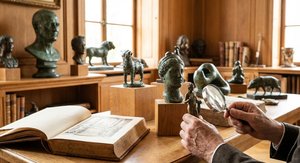
The Enduring Legacy of Bronze Sculpture: A Collector's Guide to Form & Cultural Significance
Explore the rich history & enduring appeal of bronze sculpture with expert insights for collectors at OriginalUniqueArt. Learn about casting techniques, iconic artists, and collecting tips to build a discerning art collection.

Bronze Age to Modern Masters: 10 Sculptures That Redefined Art | OriginalUniqueArt
Journey through art history with 10 legendary bronze sculptures – from Michelangelo's David to Rodin’s Thinker. Explore the stories, techniques & timeless beauty of these masterpieces. Find museum-quality reproductions & elevate your home decor on OriginalUniqueArt.com.

The Enduring Legacy of Bronze: A Historical & Artistic Exploration for the Collector
Explore the rich history & enduring appeal of bronze sculpture with expert insights for collectors at OriginalUniqueArt. Learn about casting techniques, iconic artists, collecting tips & contemporary interpretations.

