Hudson River School · 1847
Prometheus Bound (Томас Коул, 1847)
Томас Коул (1801–1848) створив Prometheus Bound. Дата створення — 1847. Він належить до напряму Hudson River School. Виконано в Олія. Екземпляр зберігається в Fine Arts Museums of San Francisco у Сан-Франциско, Сполучені Штати Америки. Розмір: 162 × 243 cm
- 1847
- Олія
- 162 × 243 cm
- Fine Arts Museums of San Francisco, Сан-Франциско

 Переглянути в інтер'єрі

 Картина олією ручної роботи
 Надіслати як листівку
 Поділитися
 Інформаційна картка


 Завантажити
 Схожі екземпляри
 Рентгенівське дослідження
 Слайд-шоу
 Питання та відповіді

 Статистика
Prometheus Bound коротко
- Назва
- Prometheus Bound
- Художник
- Томас Коул (1801–1848)
- Рік народження митця
- Болтон, Сполучене Королівство
- Дата
- 1847
- Матеріал
- Олія
- Розміри
- 162 × 243 cm
- Де подивитися
- Fine Arts Museums of San Francisco, Сан-Франциско, Сполучені Штати Америки
Що зображено на Prometheus Bound?
The Weight of Myth: Thomas Cole’s “Prometheus Bound”
Thomas Cole's "Prometheus Bound," painted in 1847, isn’t merely a landscape; it’s a profound meditation on defiance, punishment, and the enduring human spirit. This monumental canvas, now residing within the Fine Arts Museums of San Francisco, transcends its subject matter to become a powerful allegory for the struggles inherent in challenging authority and forging one's own destiny. Cole, a pivotal figure in the Hudson River School movement, masterfully blends Romanticism with an underlying moral urgency, creating an image that continues to resonate deeply with viewers today.
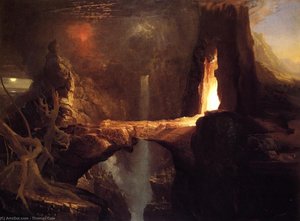
The scene depicts Prometheus, chained to a towering rock formation amidst a desolate, snow-laden mountainscape. The composition is strikingly dramatic – a vast expanse of jagged peaks dominates the background, dwarfing the solitary figure of the Titan and emphasizing his isolation and vulnerability. A vulture circles overhead, a constant reminder of Zeus’s relentless retribution, while a subtle hint of Jupiter, the Roman equivalent of Zeus, watches from above, embodying the cold indifference of divine power. Cole's use of light is particularly masterful; a diffused, almost ethereal glow illuminates the scene, casting long shadows and creating an atmosphere of both grandeur and despair. The color palette—primarily cool blues, grays, and whites—reinforces this sense of bleakness, punctuated by the fiery red underpaint used to render the snow-covered mountains – a deliberate choice that subtly hints at Prometheus’s stolen fire.
A Myth Made Manifest: Exploring the Narrative
The painting draws directly from Aeschylus's Greek tragedy, “Prometheus Bound,” a story of rebellion against the gods. Prometheus, in this narrative, is not simply a titan but a symbol of humanity’s relentless pursuit of knowledge and progress. He steals fire from Mount Olympus, gifting it to mankind – an act of defiance that ultimately earns him eternal torment at the hands of Zeus. Cole doesn't shy away from the brutality of the punishment; the stark depiction of Prometheus’s chains and the looming threat of the vulture vividly convey the weight of his transgression. However, within this scene of suffering, there is also a palpable sense of resilience. Prometheus’s gaze, fixed upon the viewer, exudes an almost defiant serenity—a refusal to succumb to despair.
The inclusion of the chorus, comprised of figures emerging from the depths of the mountains, adds another layer of complexity to the narrative. They represent the forces of nature, witnesses to Prometheus's plight, and perhaps even a subtle acknowledgment of his heroic struggle. Their hesitant approach, marked by curiosity and apprehension, suggests that even those seemingly untouched by divine wrath recognize the significance of Prometheus’s actions.
The Hudson River School: A New American Vision
“Prometheus Bound” is a quintessential example of the Hudson River School's artistic philosophy. Unlike earlier European landscape paintings that often focused on idyllic pastoral scenes, Cole sought to capture the raw power and sublime beauty of the American wilderness. He employed a technique known as “atmospheric perspective,” subtly blurring distant elements to create a sense of depth and vastness. This approach wasn’t simply about replicating reality; it was about conveying an emotional response—a feeling of awe and reverence for nature's grandeur.
Cole’s work also reflects the burgeoning American identity of the mid-19th century, grappling with themes of independence, self-reliance, and the relationship between humanity and the natural world. The painting can be interpreted as a metaphor for America’s own struggle to assert its sovereignty against established powers – a sentiment particularly relevant in the context of westward expansion and the nation's growing tensions with European empires.
A Timeless Masterpiece: Reproduction & Beyond
Reproductions of “Prometheus Bound” offer an exceptional opportunity to bring this powerful image into any setting. The meticulous detail, evocative atmosphere, and profound symbolism ensure that a high-quality reproduction will serve as both a beautiful work of art and a compelling conversation piece. Consider framing the artwork in a manner that complements its dramatic scale and reinforces its thematic resonance – perhaps within a contemporary interior space to juxtapose the ancient myth with modern life.
For those seeking an authentic experience, exploring the original painting at the Fine Arts Museums of San Francisco is highly recommended. It’s a truly immersive encounter with one of America's most significant artistic achievements—a testament to Thomas Cole’s genius and a timeless exploration of human courage in the face of overwhelming adversity.
У якому музеї зберігається Prometheus Bound?
Fine Arts Museums of San Francisco
Сан-Франциско, Сполучені Штати Америки
Історія Fine Arts Museums of San Francisco Шлях Fine Arts Museums of San Francisco розпочався з їхнього заснування у 1871 році. З часом інституція стрімко розвивалася, що було знакованим відкриттям музею де Янга у 1895 році та заснуванням Легіону честі у 1924 році. Протягом кількох десятиліть ці дві окремі установи функціонували незалежно, доки у 1972 році під керівництвом Іана Маккіббіна Вайта вони не були офіційно об'єднані в єдине ціле.


Зображення високої роздільної здатності Prometheus Bound

Суспільне надбання: художник помер у 1848 році.
Інші розміри, кадри та цитування →Томас Коул, Prometheus Bound (1847), Fine Arts Museums of San Francisco. Суспільне надбання
Відповіді на запитання про Prometheus Bound
Де можна побачити оригінал «Prometheus Bound» роботи Томас Коул?
Оригінал «Prometheus Bound» роботи Томас Коул зберігається в Fine Arts Museums of San Francisco, Сан-Франциско, Сполучені Штати Америки. Репродукція дозволяє прикрасити цим твором ваш дім.
У якому році було створено «Prometheus Bound» роботи Томас Коул?
«Prometheus Bound» роботи Томас Коул було створено у 1847 році.
Яка техніка використана у творі "Prometheus Bound"?
Для створення «Prometheus Bound» Томас Коул використав(ла) техніку Олія. Саме ця техніка визначає матеріальну природу оригінального твору.
Які розміри оригінального твору «Prometheus Bound» роботи Томас Коул?
Розмір оригіналу «Prometheus Bound» роботи Томас Коул становить 243 x 162 cm.
Чи не захищений твір "Prometheus Bound" авторським правом?
Щодо авторського права, «Prometheus Bound» є є суспільним надбанням — термін дії авторського права закінчився.
Якому художнику приписують роботу "Prometheus Bound"?
Автором твору «Prometheus Bound» є Томас Коул. Робота внесена до каталогу під іменем Томас Коул.
До якого художнього напряму належить «Prometheus Bound» роботи Томас Коул?
«Prometheus Bound» роботи Томас Коул належить до течії Hudson River School. Цей напрям визначає стилістичний контекст твору.
Яке місце посідає «Prometheus Bound» у творчому шляху Томас Коул?
«Prometheus Bound» належить до Late Period Томас Коул.
Скільки років було Томас Коул, коли створювався твір "Prometheus Bound" у 1847 році?
Томас Коул було 46 років, коли він створив «Prometheus Bound» у 1847 році. Вік обчислено на основі року народження митця, 1801.
Про художника Томас Коул

1801–1848, Сполучене Королівство
Томас Коул
Життя та мистецтво Томаса Кола Народившись 1 лютого 1801 року в Болтоні-ле-Мурз, графство Ланкашир, Англія, Томас Кол розпочав свій життєвий шлях далеко від тих ландшафтів, які згодом стануть його візитною карткою. У 1818 році його родина емігрувала до Сполучених Штатів, шукаючи нових можливостей на землях безкраїх, ще не вивчених територій. У ті ранні роки він пробував себе у різних ремеслах: працював гравюристом, а з 1822 року знайшов стабільний заробіток як портретист. Більшу частину свого навичок він здобув самостійно, розвиваючи художнє бачення через спостереження та вивчення книг, а не завдяки академічній освіті.
Також за участю Томас Коул
 Оксобоу
 Сон архітектора1840
 Вигнання. Місяць і світло місяця1828
 Вид Флоренції з Сан Мініато1837

Есе до твору Prometheus Bound
 Masterpieces of Light: The Top 25 Artworks by Duccio di BuoninsegnaJourney through the Sienese brilliance of Duccio di Buoninsegna. Explore 25 iconic masterpieces, from the Rucellai Madonna to the Maestà, f…
 Nature's Nation: The Hudson River School and the Art of the American SublimeExplore the spiritual depth of the Hudson River School through its masters. Discover the power of the American Sublime today.
 Топ-10 шедеврів Високого Відродження: мистецтво для вашого дому від OriginalUniqueArtВідкрийте для себе 10 шедеврів Високого Відродження! Леонардо да Вінчі, Рафаель та інші генії. Історія мистецтва, техніки живопису та натхн…